SUING FOR WAR

The sight of a parliament, normally embroiled in savage personal attacks, speaking as one and showing a remarkable unity of purpose, ought to be one that should cheer our hearts and restore our faith in politicians.  Strangely it has the opposite effect. When sworn enemies suddenly become friends and join in a common cause it is often more worrying and seldom for the good. I cannot ignore the deep suspicion of this temporary marriage of convenience and I wonder who is the common foe. It reminds me of the second Psalm where the Kings of the earth gather together in their futile and laughable attempt to plot against God.  In Westminster there was the unity at the start of the first and second wars in Iraq and there was the unity over Covid. History has shown where these have led.

So I took no comfort from the concocted harmony on display in the palace of Westminster this week, when the Prime Minister gave his report on the momentous events of the past days. I didn’t feel proud to be British then. What was on open display was a commitment to support with cash and lives (boots on the ground is a nice way of talking about real people who will be wearing these boots) the continuation of a war that has been going on for three years and shows no sign of stopping. I wanted to hear from the Peace Movement from Stop the War Coalition from the Anti-Nuclear campaigners, but in Westminster there was silence. And here is one of the biggest conundrums: our money, our taxes are paying for the terrible weapons that maim and kill thousands every week on our doorstep and we seem to be ok with that. This is not theoretical. This is not about weapons of mass destruction that have killed no-one for the past 80 years, this is about weapons manufactured in our land, today, that are being sent to blow up young men and women in a land not that far away from us and our politicians seem to be all for it.

It is hard to get your head round that one.

They are united in their condemnation of the one person, the one world leader who is screaming for peace. He is desperate to bring the terrible carnage to an end. He is using the massive power and influence of his office and his own skill in making deals for that purpose and our pathetic little parliament doesn’t like it. They want this war to go on, when it as plain as day that it cannot be won, unless, of course, it finally triggers the third world war when these weapons held in their silos for 80 years will finally be unleashed.

HISTORICAL GUILT

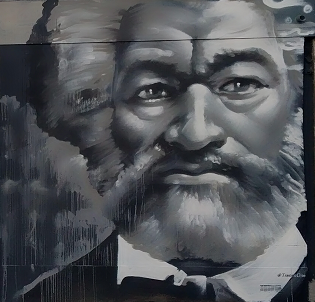
The denomination to which our local church belongs recently found it necessary to carry out an audit and examine what links the church may have had with the Trans-Atlantic Slave Trade.  As a relatively newcomer in the denomination, I was unaware of the controversy, that dated back to the early days of the church, which was founded in 1843. What at first was puzzling was that Slavery had already been outlawed in the antis-slavery act ten years earlier (though this only covered part of the British Empire) and it seemed strange that the church could be complicit in slavery when it was still unborn.  The reason for the controversy, however, was explained, by a visit which a delegation from the new church made to the American South in 1846. This group which included Thomas Chalmers were seeking the support of churches in America and you can understand why a secessionist movement would get a great deal of sympathy in the South. The delegation returned with a not insignificant gift of £3,000, but many within and out-with the church considered this money to be “tainted” as it likely came from slaveholders and a campaign to “Send the Money Back” was initiated. Fredrick Douglas, the abolitionist, was a strong and vocal advocate for the campaign, and lent his support while in Scotland, which included an attempt, with others, to carve the slogan on the cliffs of Salisbury Crags. His portrait now graces a wall in Gilmore Place, close to where he once lived. But the “blood money” was never returned. How the church resolved this at the time, I am not sure, but I suspect that a degree of pragmatism was involved. Even if an error was acknowledged, returning the money would not have helped the cause of those still enslaved in any practical way.

But why, more than 150 years after the event, the issue has now had to be revisited?  It seems strange in the extreme. Afterall, the history of these events has been well known to the church and this assessment could have been done at any time. Why now?  And why is that while the history of this hideous trade has been taught in school and accepted for what it is a heinous sin in our nation’s history, one on which there was national admission of guilt, repentance, the passing of anti-slavery laws and the costly efforts to have the trade banished world-wide, why now is there to be a another reckoning? 

Is it simply to do with the way these things come in waves in the public consciousness?  I remember in the 60’s the campaign for nuclear disarmament was a very hot issue, but strangely over the following decades, despite increased proliferation, the issue slipped into the background and only resurged again in the more recent decades. I remember one of my colleagues in our Architectural practice back in the early 70’s arriving at the office one day sporting a CND badge. We thought that rather quant at the time.

Could it be the very subtle infiltration of a way of thinking that owes more to Marx and Lenin than our Judeo-Christian heritage? A way of thinking that views the act of de-humanising another human, made in the image of God, not so much as a sin but simply part of the worldwide class struggle? The never-ending battle between the oppressed and the oppressor, the powerless and the powerful, the victim and the victimiser.  Guilt is not so much personal but historical and in Marxism there is no forgiveness. Czeslaw Milosz, in his classic work “The Captive Mind” which must stand alongside works by Orwell, Solzhenitsyn and Havel in exposing the depravity of totalitarian culture, explains this succinctly in a chapter entitled “Man- the enemy”. Here the real enemy of the Marxist-Leninist project turns out to be humanity itself.   

“The contradiction between Christianity and Stalinist philosophy cannot be overcome. Christianity is based on a concept of individual merit and guilt; The New Faith on historical merit and guilt. The Christian who rejects individual guilt denies the work of Jesus and the god he calls upon transforms himself into History”

The enemy then is the reactionary.

“The sin of the reactionary is argued very cleverly: every perception is orientated, i.e. at the very moment of perceiving, we introduce our ideas into the material of our observations; only he sees reality truly who evaluates it in terms of the interests of the class that is the lever of the future, i.e. the proletariat. The writings of Lenin and Stalin teach us what the interests of the proletariat are. Whoever sees reality other than the proletariat, sees it falsely; in other words, his picture of reality is deformed by the pressure of the interest of classes that are backward and so destined to disappear. Whoever sees the world falsely necessarily acts badly; whoever acts badly is a bad man; therefore, the reactionary is a bad man, and one should not feel sorry for him.”

So you can feel indifferent to the sufferings of those whose only crime is the blocking of “historical progress” and Milosz concludes :

“This line of reasoning has at least one flaw – it ignores reality”      

But I suspect there is also another reason. It is much easier and less troublesome to focus on vague historical communal guilt and show virtue over our passion for the sins, than it is to confront the brutal reality that slavery exists today. Added to that is the disturbing thought that we could in some way be complicit in and benefit from it.

My contention is that instead of wasting our efforts, handwringing and agonising over the crimes of the pasts, we should be grappling with the brutal reality of slavery today. Instead of exhuming skeletons, historic crimes, which have been acknowledged and confessed, which have been forgiven and forgotten by God, we should apply ourselves to the very real live suffering of others. I am thinking of trafficking of children, the sweat-shop factories and the mining of toxic minerals. Minerals, which are necessary for the production of our mobile phones, electric cars, and all sorts of devices, including the one that this is written on.

Crawford Mackenzie

UNDER THE INFLUENCE

I remember being drunk once. I am not proud. It was the last evening of a field trip with fellow students in my fourth year in Architecture and we were drinking in a barge moored on the Ouse in the centre of York.  It was a riotous evening and for the first time I was right in the centre of it and shared a wonderful new-found bond with my compatriots. There was a piano on the barge and when the landlord was trying to usher us out at closing time, (there was “closing time” in those days), three of us got onto it and started to play. One of the guys was actually an accomplished Jazz player, but together it seemed we produced the most amazing thrilling. When the only guy with a car drove us home, he was also drunk, we were doing some crazy things at speed around parks and up-side streets. I remember the terrible feeling that things were now quite out of control. Finally, when we got to our accommodation, I climbed the rickety stairs to the room in the attic, which I shared with three others, and threw up in the sink.  The next day, on the journey home, I felt terribly ill.

I remembered that event, recently, when thinking about what Paul said in his letter to the Christians in Ephesus “Don’t get drunk with wine but be filled with the Spirit.” We often refer to people who have had too much to drink as “being under the influence” we don’t need to say of what, we know. Paul seems to be saying don’t put yourself under the influence of strong drink, which can change your mood and your manners, sometime quite spectacularly. It can take over control of your mind and your body and your tongue, but put yourself under the influence of the Holy Spirit, let him control you.

It is not insignificant that potent alcoholic drinks, whisky brandy vodka etc are classified a “Spirits”. And you can see why. It begs the very difficult question “whose control are you under?”. Most people would answer “Me, of course, I am in control of myself” I decide, I chose to go and do and say and think. I chose to drink or not to drink. My life my choice. but if we are brutally honest with ourselves, do we really believe that? Do we really believe that we have full control of ourselves? Have we never regretted what we said or did or thought? Have we reacted in the way we wanted to:  when thrown a curved ball, when someone cuts us up on the road, when we suffer unjustified criticism, abuse, and slander or when our kind acts are returned to us with ingratitude?

When Paul describes the fruit of the Spirit, later in his letter, he puts in self-control as the final facet of the fruit of the Spirit.  And it follows that it is only under the influence of the Holy Spirit that we can have true self control.

I want to be under the influence of God’s Holy Spirit today.

LOVE AND HATE

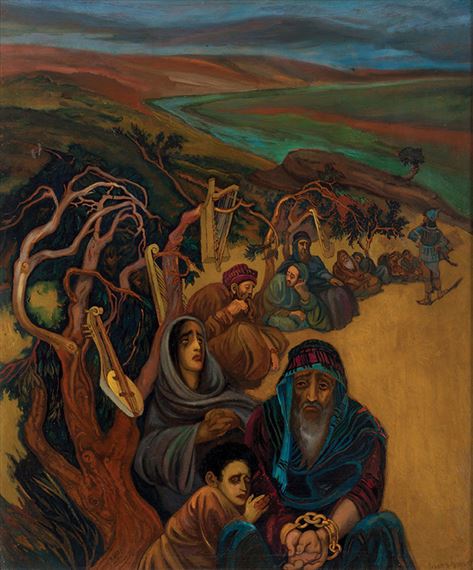
By the rivers of Babylon Saul Raskin

In our local church family, we, in common with many other churches, have several small pastoral groups that meet each week in individual homes, where we read and study the Bible together and pray for each other, for the church and for the world.  It is a very special time, with a wide range of ages experiences, backgrounds and stages in life, but with a common love for the lord Jesus and a bonding that transcends all human barriers.

We have just begun a short series of studies in the Book of Psalms in the Old Testament, not individual psalms but particular themes that run through this collection which deals with almost every human emotion: joy, loneliness, honesty, remorse, sadness, fear, anger.  In this we have been helped by James Montgomery Boyce, David Taylor, John Day, Gordon Wenham, Erich Zenger ,Derek Kidner and C S Lewis.

Inevitably, we will have to consider the Psalms that include cursing, of which there are many. Something like one-in-five have calls for vengeance or cursing in some form or other, with Psalms 58, 109 and 137 being amongst the most terrible. Throughout the centuries these have been a problem to Christians and it is not difficult to see why. They are also often quoted by those who argue against the divine inspiration and authority of scripture as reasons why we cannot believe in the bible. “How can we take the bible seriously” they will say, “as it is full of so many contradictions”. A good friend of mine, only the other day, said just that and gave this as the reason why he had stopped reading it. The authority of the bible was subject to a higher authority, in his case, that of his own rational mind. So, It is really only a problem for the Christian who believes in the authority, authenticity and inerrancy of scripture. For those who don’t, it should be of little interest or concern.

But here I have a disturbing thought. Could it be that the reason why Christians find these words, expressing outright hatred and white-hot rage, problematic, is that the problem is with us? Could it be that there is something about this God we are missing and just not getting? Could it be that we have not really grasped the absolute horror of evil, the heinousness of sin and where it inexorably leads? Maybe we haven’t stood by the remains of the furnace in Auschwitz and heard the guide tell us to be careful because we are standing among the dust of hundreds of murdered lives. Maybe we have never seen the heaps of bodies burning in Chin state in Myanmar. Maybe we have never been with the pastor visiting a village in the DRC, just a few months ago, and coming across the bodies of men women and children lying where they were shot with a single infant still alive in the arms of its dead mother. Maybe we have never recognised the corruption, deceit, selfishness and greed that knocks at the door of our own hearts. Maybe we still think the battleline between good and evil lies not in us, but somewhere out there. 

Christians, however, have coped with this “problem” in different ways.

One was simply to ignore the offending passages.  But that is hard to do, if you believe that “All Scripture is God-breathed and is useful for teaching, rebuking, correcting and training in righteousness”. So that doesn’t work.

Another is to see these expressions as wrong and should be condemned. Scripture includes many things that are wrong. David’s sin with Bathsheba being one. But that doesn’t really work either. because while David’s sin was condemned and he himself confessed it, the Bible, at no point, condemns the writers of these psalms for what they said or for the desire for vengeance which they expressed.

A third, which many have settled on, is the idea that these expressions belong to the Old Testament while in the New, Jesus and Paul have shown us a better way- how we should love our enemies, how we should bless and not curse. The Psalm writers under this explanation had a limited understanding of things and really didn’t know any better. But this falls too because love for your enemies was not a new idea or a new command. It is embedded in the Old Testament law and Jesus quoted the proverb which explicitly say we should feed our enemy when he is hungry and give him something to drink when he is thirsty. On the other side, Paul pronounced a curse on Elymas the magician and Jesus himself pronounced a curse on Israel.  So, we have love for the enemy in the Old and curses in the New.

What we found most helpful and illuminating when reading these psalms was to see what the writers were not saying. The writers of the three psalms listed above, who included David and the captured slaves in Babylon, were not describing their commitment to enact revenge on those who brutally persecuted them. They were not saying that they would exact vengeance and repay the preparators for what was done to them. The captives in Babylon, who had escaped the fate of the horrific siege of Jerusalem, the details of which are hard to read or stomach, were not expressing their own vengeance. Their appeal was simply to God for justice. And that is what it is about – Justice. The justice described in the Mosaic law – the principal of equal and just retribution.

Today, when we hear the cry of families of victims of vicious crimes, it is always an appeal for justice, justice for the ones they loved. That’s what they fight for. That’s what they demand from the courts and that is what they never give up on, because it is Justice that is at stake. This is exactly what the writers of the cursing psalms are doing, they are crying out for an equal and just retribution.  But for them the appeal is not to a human court, but to the highest court, to the Judge of all the earth.  And it is this act of taking it, in all its rawness, to God and leaving it with him, which at once, lances that boil, dissolves the rage, neutralises the anger and eliminates the personal desire for revenge. The outburst of outrage is more than just cathartic. It achieves something.

So, we have found, having taken these challenging passages, which sound pretty terrible to our ears, taken them head on, unflinchingly, we have found that they do not, in fact, contradict the law of love but they complement it and we see how the curses and the blessings, the love and the hatred stand together without contradiction.

A Purposeful Habit 4

Reading the Bible.

IMG_1542

It is hard to speak about private daily devotions, because they are, just that, private. In some ways it is an intimate thing. It is better to be doing it than talking about it. Sometimes sharing on the subject can be singularly unhelpful. When hearing about the person who gets up at 5am and reads through the whole of Jeremiah, one of the Gospels and Psalm 119, before spending two hours in prayer, for lists of people in their prayer book, you are tempted to say “Oh come on, get a life”. They are not usually people who have been up half the night dealing with a vomiting child, struggling to get a teenager out of bed, living with a flatmate who left the kitchen in a tip, coping with a husband on the drink, caring for a demanding elderly relative or someone who has to work night shifts.  These testimonies are given with an encouraging intention but the effect is demoralisation. You might just want to give up. So we are treading on thin ice, walking over glass here. It’s just a shame that we find it so hard to talk or enquire about. In all my Christian life no one has asked me “How are you finding your daily reading of the Bible, Crawford?”  I wish they had. There again, I guess I might have told them just to mind their own business.

I have been a Christian a follower of Jesus for as long as I remember. So it’s maybe quite strange and even shocking, (it’s shocking to me) that it is only in the past year or so, that I have finally learned something about the practice of daily bible readings. Something I should have known years ago. It was not that I was never taught, more that I was never listening.

With the strong influence of Scripture Union, Churches and other organisations, I have tried to follow schemes compiled to help us find a way through the bible. Often these would be supplied with helpful notes and encouragements to think through the passage as well as to see how this impacts our life with pointers for prayer. But I always found the imposition of this kind of discipline from outside hard to deal with, which probably says more about my stubbornness than anything else. The critical point came when I would embark on a scheme with very good intentions and then fail and fail again and it led to a spiral of discouragement and resignation.  That way of doing things clearly works for so many people, maybe be most Christians. I don’t know. But they didn’t work for me.

It was when a wise pastor told me, while in my teens, that the Christian life was an integrated life and not a disconnected deconstructed series of activities with boxes to tick, that the light dawned. A “quiet time” could be useful, but not if it became just another thing to do. Something to gain points and help make you feel better about yourself. That, like much of what this pastor said was liberating and I felt a tremendous freedom and a new delight in reading God’s word. Yet in this freedom there still needed to be some discipline, some order, some plan, some direction. It was easy to find yourself in the books of the bible that you liked, parts that suited your temperament. For me it was the Psalms, Proverbs, Ecclesiastes, Mark’s Gospel and Paul’s “happier” letters to the Thessalonians and Philippi. I didn’t go naturally to Romans or Ephesians, avoided Hebrews and pretty well ignored large swathes of the Old Testament. It was also easy to pick out nice helpful bits here and there, often quite out of context.

So over the years my bible reading has at best been sporadic, reading to prepare for something: preaching, leading a group, giving a talk, a children’s’ holiday club, working on material for a song, or anything that took my fancy.   Please don’t get me wrong. You do learn so much when you are trying to teach others. Sometime you only fully grasp a truth when you are trying to communicate with others. But the practice of daily bible reading, unconnected with any preparation or activity, for me, was a very hit and miss affair and there was no pattern to it.

So what has changed and what made the difference?

IMG_4113

Well a number of things. Coming to the church we now belong to, was one of them.  It was not the reason for coming, (that is another story) and in a way there was nothing especially different about it, but it was under the ministry of David Robertson that I found a new focus on the Bible as God’s word. It was not that the Bible was not central in the churches where we had previously belonged.  It was.  But here, for me, it took on a new dimension. It was moving up a gear. It was being pulled nearer to where I should have been. It was having my ears syringed. It seemed that the whole of the church’s life was soaked in the whole of God’s word. It was never an add-on.

Another was reading a book by Sinclair Ferguson “From the mouth of God”, which I can’t commend highly enough to anyone who wants to read the bible. It is straightforward, easy to understand, follow and demonstrates with great clarity why we can trust the Bible, how we read it and how we can apply it to every aspect of life.

Another was a comment by Dominic Smart in a monthly letter to his congregation in Aberdeen. It was that reading the bible should be first before anything else. Hearing what God has to say should be before listening to anyone else.

Another was something Billy Graham said in a video, following a campaign some years ago, when he described his daily practice of reading a psalm each day to re-orientate himself with God, and reading the Proverbs to relate to the world we live in.

Another was something from a book, I didn’t read, but which was quoted to me, on meditation and the serious contemplation of Scripture.

So this is what I try and do:

IMG_3326

I try, each day, to make God’s word the first thing that enters my mind: before reading what other people say about it, before listening to, or reading the news, before hearing the musings of clever people or the prattling of a radio commentator, before social media, before listening to music, because music itself speaks to you. Before all these I want to hear God’s voice.

So I read through books of the Bible, generally a chapter a day, with the intent of covering and continuing to cover the whole: a gospel, one of Paul’s letters, one of the prophets, a book of history or wisdom or from the Pentateuch. Then I read a Psalm, working consequently through the ancient songbook and finally I read a chapter from the book of Proverbs which is helpfully divided into 31 so you know where you are in the month. The practical wisdom alone in the later speaks right into the day whether it is work or any other activity.

Then I get outside for a walk: for the the fresh air, to meditate, to let the words, the thoughts, the pictures, the poetry, the wisdom soak into my being and to wonder at the reality of God’s presence and  bask in his love.

That is what I try to do but even as I write this, it sounds almost formulaic, prescriptive and the very thing I was railing against earlier in this piece. But I know that the experience, the reality and the blessings that pour from this purposeful habit, however that habit is integrated in a life, cannot be measured.

Crawford Mackenzie


Bartlett and the Bible

Glynn Harrison has written an extraordinary article in the new edition of “Solas”  “The long shadow” http://www.solas-cpc.org/wp/solas-resources/solas-magazine-launch/ with a very telling insight into the impact of the sexual revolution on our society, from a Christian world view. It is a challenging critique of how the church has failed to respond to this revolution, been caught napping and generally been unable to speak the good news into it. “Our culture has a good sense of what we are against, but what are we for?”  With some noble and notable exceptions, the church has, in the heat of the debate, been found wanting. There has been a deficit in intellectual integrity, a deficit in creativity, a deficit in articulation and a deficit in humour. In contrast the sexual revolution, which was a revolution of ideas, held all the cards and knew how to present the case: the use of the media, being one of the principal planks of that presentation.

For me, nothing exemplifies this more than “Bartlett and the Bible” a scene from the television series “The West Wing”. Jed Bartlett is the president of the USA and throughout the series he exudes a quality of humanity that somehow you do not expect in a politician, far less in the leader of the “free world”. You cannot but warm to him and take to the way he acts, how he responds to his aids and his family, how he seems to genuinely care for the people and takes the responsibility of his office so seriously and even how he shows his failings. It is very endearing. He comes over as such a genuinely good man that people often say they would vote for him if his name was on the ticket. Many have even tried to persuade Martin Sheen, who is a real person, to do just that to stand for president.

The scene in question can be found at https://www.youtube.com/watch?v=3CPjWd4MUXs but there is hardly any need to supply the link as you would have to be a stranger to YouTube or social media not to have come across it.  It is a very clever, funny and accomplished display by the president of the United States of America where he wipes the floor with the priggish upstart of a radio presenter, in what has become an iconic put down. At a stroke he exposes the inconsistency, hypocrisy, sheer stupidity, and the censorious and unloving attitude of the conservative biblical right. It’s a great laugh and so often as I have engaged with a facebook discussion on the subject it has been brought in to the thread to prove a point and it does just that. It is the killer punch which finally finishes off the argument. There is no more that can be said. The argument is won and lost.

But take a moment to look at the clip, for it is a perfect example of how the media can be used, not simply to make a point but, to close an argument. Ged Bartlett is a fictional character and the scene has been invented in someone’s mind. The dialogue has been written. It is not a real discussion. In fact it is not a discussion at all more of a monologue in which the president berates the limp presenter with a series of quick fire questions.  He does not allow her space or even the opportunity to answer the questions. The implication is clear. There are no answers. Any fool would see that.  He roundly castigates, viscously mocks and abuses her verbally, in way that would make any misogynist proud. It is a blatant display of merciless bullying by a powerful man, while his staff and advisors stand pathetically bye, sheepishly silent, unwilling or unable to take him to task. It ends when he completes the ritual humiliation by forcing her to stand, as everyone must do, in his presence. It is from every angle an appalling display yet I have heard nothing but applause for it and the way people continue to share the clip shows that they see nothing wrong with that aspect of it.

Leaving the bullying and the abuse to the side, the fact that there is no space for a response, a challenge or even offering answers to the questions, shows how propagandist the piece really is. Given the space and the opportunity, which any fair minded person would, there are very obvious responses that could be made. There are answers to the questions too. Timothy Keller at http://www.thegospelcoalition.org/article/making-sense-of-scriptures-inconsistency gives a perfectly reasoned and convincing response to the charge of inconsistency and others have done so too. But in the media world, these voices are hardly ever heard and it is left to a few to speak out, to challenge the omnidirectional flood of thought, to stick a head above the parapet and face the torrents of abuse and even death threats that come with the territory.

Glynn Harrison’s challenge to the church is simply to tell the good news into this long shadow. “The good news that God has not left us alone. In scripture he not only reveals who he is, but he shows us who we are: he speaks our identity to us.”. That will need resourcefulness, intellectual integrity commitment, creativity and courage, but more than anything, belief in it.

Crawford Mackenzie

Bearing Shame

Jerusalem

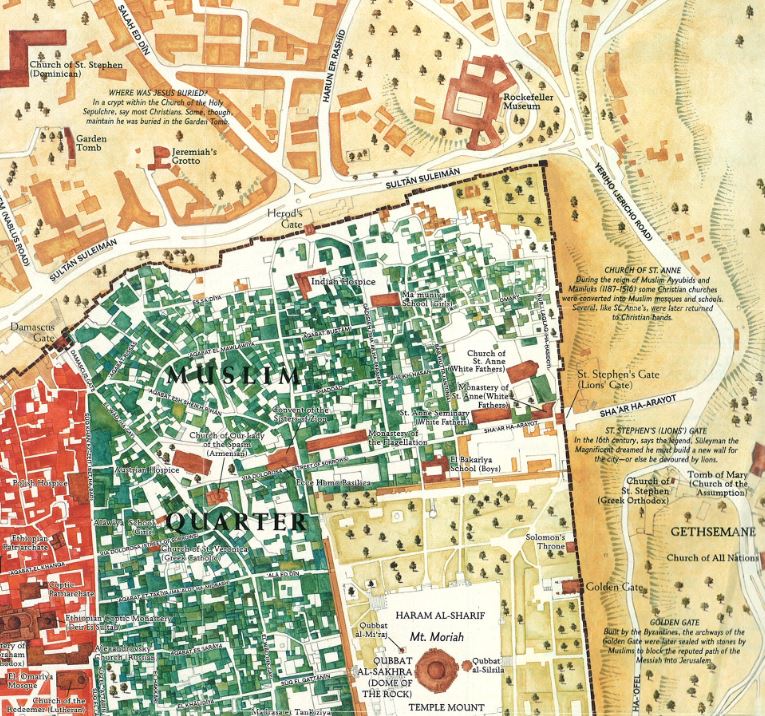
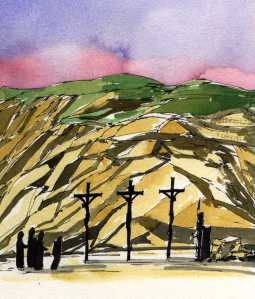
At the back of the hotel, where we were staying, just outside the walls of the old city and close to the Damascus gate there was a marshalling yard where buses were turning, reversed and revving with cars and taxis horns from early in the morning.  You couldn’t sleep after that.  At the edge of the yard was an outcrop of limestone rock pitted and hollowed with small caves and vegetation. If you looked closely it would not be too difficult to imagine the shape of a face or a skull in the fissured rock. I fancied it was here.  I somehow imagined it as a place like this, not up a hill, but on a principal artery leading out of Jerusalem to Damascus, a very public place for a very public spectacle, deliberately chosen by the Roman occupiers to make examples of those who would defy their authority, to terrorise any would be rebels and subdue these troublesome Jews.  The chosen execution of nailing the criminal through the hands and the feet to a wooden post was itself designed to inflict the greatest pain and prolonged suffering. But the greatest terror was the shame of it, the curse of it. The words written on the cross in three languages were “The King of the Jews”  but the word written across this whole defining scene, as if in six foot letters or in indelible ink was “SHAME”.

 They say that shame is an emotion that has been banished and eradicated from our contemporary life. I don’t believe it. I have seen it deeply ingrained on the faces of the men who I used to visit in prison. The awful sense of having been so bad that the punishment was incarceration, with their freedom removed and the forced separation from the friends, family and their normal lives. I found it a very powerful and strange experience on these visits and very hard to deal with. The worst point was when you said your farewells and left, they to their cells and we to our freedom. I have also known shame in my own heart: the emotion that goes beyond an awareness of guilt provoked by an active conscience that could not be silenced. It goes beyond the sense of failure and foolishness to the shock and realisation that you could be such a person who would think these thoughts say these words and do these deeds.  It is one, if not, the most powerful emotion in the human spirit, which has the ability to permanently cripple and ultimately destroy any sense of self-worth or value. It is present in the memory of punishments being meted out, the beltings, the penalties, the exclusions, the reprimands, the forfeit of freedom and, in the ultimate case, the forfeit of one’s life.

 There is something here that is so difficult to comprehend. It is hard to begin to feel yourself into the situation.  It is hard to make sense of it and it proffers a very disturbing and unsettling problem. The prospect that you could be found guilty of a crime so heinous that it could justify the forfeiting of your life, stirs at something so deep and so worrying, way beyond any fear or distress and I think it touches the rawness of shame.   You would have to be a clinical rebel if you could shut your heart to its sting.

 So on this day, this Good Friday and on every day, I want to remember the one who took my shame who bore it willingly so that I can stand guilt and shame free before the Holy God now and when I see him face to face.

calvary

As Philip Bliss has it:

Bearing shame and scoffing rude,

In my place condemned He stood…

Hallelujah,   What a saviour!

Crawford Mackenzie

A Purposeful Habit 2

cellThe Four Disciplines

I met Dan (not his real name) some years ago when I was visiting a local prison not far from where I live.  I was with a small group of volunteers who went into the prison once a week to meet, chat, share coffee and biscuits and have a bible study  with the men who were interested enough to come. Dan shared in the sessions and we talked a lot. He seemed genuinely interested in discovering Jesus and, I believe, came to faith in him over that time. As volunteers we would often ask after home, and family and work and how long they had before release, but we had one self-imposed rule, which we rigidly kept to – never to ask why they were there. It was simply not our business or our concern. Occasionally, however, some would tell us and Dan let me see his papers: the documents that had been put together to process his appeal for parole.  As well as making an assessment on his character and his suitability for release, they described the actual crime in forensic detail. It involved arson and murder and made for chilling reading. It was hard to reconcile these awful facts with the man sitting beside me drinking coffee and the kind of person that your heart seems to go out to. But sharing in our study of the bible I knew and we knew that before God we were all in the same boat and neither of us had a leg to stand on.

When it came close to his release date or “liberation” as they called it,  Dan became more anxious about how he would be able to continue in his Christian life outside, when he was back in his old environment and under the influence of his old friends. He feared that he would simply return to his old ways.  “I don’t think my faith is strong enough” he would say, “I don’t think I have a good enough hold on God”. I did my best to reassure him by pointing out that it was God who had a hold of him and I tried to offer some practical advice. I suggested four things that were essential in the Christian life: things that you had to work at and make your habit, because they didn’t come naturally. At times it would be a struggle, often a battle as malign and subtle forces pitted against you, intent on damaging your new life and your new desire to follow Jesus Christ.  You had to practice them and continue practising, so that they would become part of you. It had to be a discipline and a regular one – weekly, daily, hourly, and at all times.

If you know anything about the Christian Faith you will know that they are:

  • Praying to God by his Spirit in Jesus’ name
  • Reading the Bible, recognising it as God’s Holy Word, inspired by His Spirit proclaiming Jesus
  • Meeting with other followers of Jesus, to worship God
  • Doing Good, as an expression of your love for God, by serving others, with the help of his Spirit, in Jesus’ name

They are not, were not and never were rule things. Things you had to do to please God. Things if you do better and longer with more zeal and effort would somehow achieve for you a higher place in the scheme of things. It is not the legalism that Paul, in his letters, exposes with such ruthlessness, but aids, means, helps and the essential life blood, food, and fresh air to live a life in gratitude to God.

I lost contact with Dan soon after his release and often wonder where he is and how he is doing. I see him in my dreams sometimes. I keep praying for him, I have never forgotten him and I am slowly learning to listen to my own advice to him – to practice these disciplines.

Crawford Mackenzie

The Purposeful Habit 1

how to

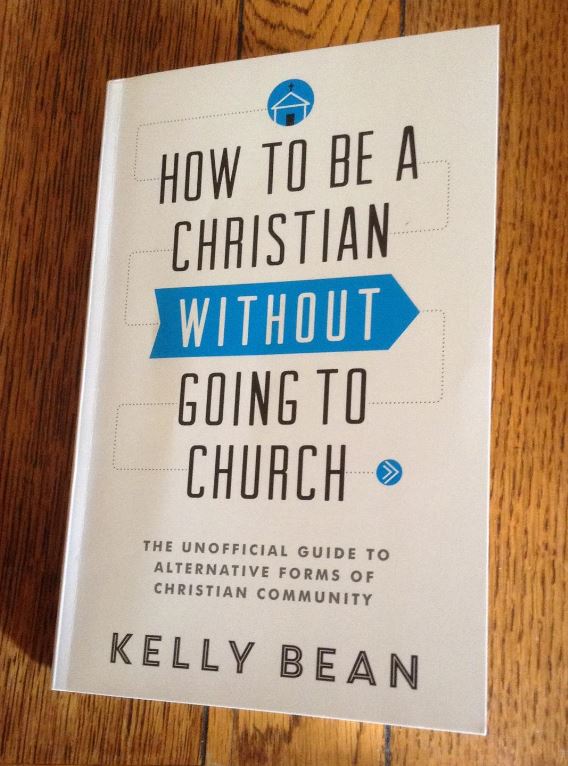
“How to be a Christian without going to church”  Kelly Bean       A Book Review

I am not in the habit of writing book reviews. I am such a slow reader and others do that so much better, but after creating a little stir with a rather flippant post using a play on the title of a book I had just read, I felt I had to explain myself. It was a light hearted jibe but one with a serious point.

It is “How to be a Christian without going to church”  by Kelly Bean, published by Baker Books.  The title catches the eye as it is clearly intended to do and the book addresses the issue of what the writer calls “No-Goers”, of which she is one. These are people who no longer go to church. They are not people who have been believers, have become disillusioned with the church , “lost their faith” and say that they no longer believe,  they are people who leave, yet maintain and continue to practice their orthodox Christian faith.  From the research, which the writer quotes, this has become, in recent years, an unstoppable flood.

There are a series of stories and testimonies from people who have left, to give put some flesh on the background and explain the reasons for leaving: “for their own sanity”, “the structure was killing my faith”,I felt undervalued”,  “I faced rejection and judgement”,  “The system was broken”, “It didn’t match my style” and many other painful stories. It seemed an endless list of damaged and frustrated people who appear to be stifled but flourish when they finally take the step to leave “After 17 years of not going to church my faith is stronger than ever”.  It is a sad and depressing catalogue of failure, but one than anyone who is involved in the church in the west today will easily recognise.

Kelly Bean makes it clear at the outset that she is not against the church. She wants it to be there, to continue and to grow. She would never discourage anyone from joining or sticking with it, she just feels, with a growing number of likeminded people, that it is not for her or for them. She is not, however, advocating being a solitary Christian in fact quite the opposite and here is where her argument seems a little confused and contradictory. She talks about the big shift from “Going to Church to “Being Church”. The first suggesting simply the activity of regularly going to a place, a building , to do whatever. It is understandable why this should be derided because we are called “to be” a holy nation, a people of God, a light to the world.  But if we are to share with any believing community, it involves some movement –we have to go there unless we are always living together. So “Going to Church” is just as relevant and expression. Towards the end of the book she describes intentional communities “ Something is taking shape and spreading as Christians far and wide come together (my emphasis) in a variety of small communities committed to a life lived in simplicity, humility and for others”  so clearly she sees the new movement of non-goers actually going somewhere and it looks like to another church.

I think she is also a little muddled. On the one hand she makes it clear that the church is, as we have always been taught, not a building, a structure, a denomination, an organisation, but the people of God, wherever they come together in twos or threes or in hundreds.  As a “Non-goer” she doesn’t want to be part of this church but, I believe, despite her protestations to the contrary, she is actually trying to set up another church. In her guide to “alternative forms of Christian community” there is alternative worship, alternative bible study, alternative money, alternative baptism and dedication of children, alternative missionary work and even alternative Sunday school and youth groups. In her turning away from all the structures of the church she has defined another church which looks remarkably like the one she has rejected. And what she fails to see is that this simply repeats so much of what has happened throughout the Church’s history.

All the problems she described in “Why are people leaving” are failings in the structures, the organisations, the leadership, and the people but not with its essential reason for being, or with its King and head. The church, I believe, needs reformation not rejection.

I was also struck by two things, which I have to say coloured my whole feeling about the book:

The first is that there is little or no mention of whose church it is. The church is seen as of the people, by the people, for the people, for the community and for the world, when all the time it is God’s. It belongs to him.  It is the church of Jesus Christ.  It is not ours. So we can’t decide what it should be, what it should be like or who should be in it. That is entirely God’s business not ours. Maybe this was taken as read but the fact that it was never stated makes me wonder if the thought was ever in the writers mind.

The second is that, while the Bible is mentioned in a few occasion and quoted very occasionally, there is no hint that these new alternative ways of being community are based or grounded at all on Scripture. Maybe that is also taken as read, but, again, I don’t think so. This omission is serious. At a stroke it knocks away the foundation, disconnects from the basis of the true faith and opens the way for any kind of whimsical and transient philosophy or personality cult to take over and lead to anywhere. The “Non Goers” movement doesn’t seem to be rooted in the Bible but centred on “shared values” and focused on “core beliefs” like those outlined in one quote:

  • God is good. I will practise trusting God with my life
  • God is love. I will practice taking care of myself and loving others
  • God is with me. I will practice peace and not being afraid
  • God wants to talk with me. I will practice listening to Him and talking with Him
  • God always forgives. I will practice forgiving myself and others
  • I feel blessed with this Good News. I will practice being thankful and celebrating moments
  • God has a story of love. He tells it through us. I will practice partnering with Him to bring it to others

At first sight it is maybe hard to find fault with this. But where does it come from? What is it based on? Where is the underlying authority for such statements? How are they defined? When you actually look at the list, there is nothing specifically Christian about it. There is nothing of Christ in it.  I am curious why his name is not mentioned. Is it because, in this creed, Jesus is unnecessary and redundant?  The “Good news” seems to be that “God always forgives”. He will forgive anyway. “It’s his job” as someone has said. If this is an example of where the “Non-goers” movement leads then it is not just alarming it is potentially very dangerous.

If you have read this far you, may not agree, but you will understand why I am concerned.

This is only my take. Go and read it yourself and see what you think and if you disagree let me know.

Crawford Mackenzie

The Bible Study

It is half past eight on Saturday morning. The room is dull dusty and sparsely furnished: a red painted concrete floor, two sofas covered with sheets, a table with some chairs, an empty bookcase, a make shift curtain separates an area for two double beds where a family sleeps, children pad in an out and a cat wanders through to the kitchen. We are four, three young men and myself. All three are married and two have lovely daughters. One is the new pastor of the local church; one has completed his studies and looking for work. One is blind. Those who can, read verses from the bible in turn. The study is focused on Ephesians 4: 17-32. The pastor leads while others chip in with thoughts reflections and questions. The aim is to understand. We speak about anger and abusive treatment of others, about how our thinking affects what we do and say, about practising honesty and forgiveness. The privilege (an overused word) of being able to share in this time is awesome (an even more overused word). Here in the dusty crumbling slopes of this great city, tucked away in an anonymous street, are a group of men who are grappling with what it means to live a life of faith. We are not talking about football, or cars or politics, we are talking about what really matters. When we finish, they ask me to pray, mercifully, in English. While my Spanish sometimes surprises me, I knew this is one occasion when it would not be up to the task.

It would be very hard to describe the breath-taking wonder and the sense of honour I felt, leading these men in prayer in that moment. I was humbled, challenged and, yes, truly blessed and it is something that I will never forget.

Crawford Mackenzie