I remember being drunk once. I am not proud. It was the last evening of a field trip with fellow students in my fourth year in Architecture and we were drinking in a barge moored on the Ouse in the centre of York. It was a riotous evening and for the first time I was right in the centre of it and shared a wonderful new-found bond with my compatriots. There was a piano on the barge and when the landlord was trying to usher us out at closing time, (there was “closing time” in those days), three of us got onto it and started to play. One of the guys was actually an accomplished Jazz player, but together it seemed we produced the most amazing thrilling. When the only guy with a car drove us home, he was also drunk, we were doing some crazy things at speed around parks and up-side streets. I remember the terrible feeling that things were now quite out of control. Finally, when we got to our accommodation, I climbed the rickety stairs to the room in the attic, which I shared with three others, and threw up in the sink. The next day, on the journey home, I felt terribly ill.
I remembered that event, recently, when thinking about what Paul said in his letter to the Christians in Ephesus “Don’t get drunk with wine but be filled with the Spirit.” We often refer to people who have had too much to drink as “being under the influence” we don’t need to say of what, we know. Paul seems to be saying don’t put yourself under the influence of strong drink, which can change your mood and your manners, sometime quite spectacularly. It can take over control of your mind and your body and your tongue, but put yourself under the influence of the Holy Spirit, let him control you.
It is not insignificant that potent alcoholic drinks, whisky brandy vodka etc are classified a “Spirits”. And you can see why. It begs the very difficult question “whose control are you under?”. Most people would answer “Me, of course, I am in control of myself” I decide, I chose to go and do and say and think. I chose to drink or not to drink. My life my choice. but if we are brutally honest with ourselves, do we really believe that? Do we really believe that we have full control of ourselves? Have we never regretted what we said or did or thought? Have we reacted in the way we wanted to: when thrown a curved ball, when someone cuts us up on the road, when we suffer unjustified criticism, abuse, and slander or when our kind acts are returned to us with ingratitude?
When Paul describes the fruit of the Spirit, later in his letter, he puts in self-control as the final facet of the fruit of the Spirit. And it follows that it is only under the influence of the Holy Spirit that we can have true self control.
I want to be under the influence of God’s Holy Spirit today.
In our local church family, we, in common with many other churches, have several small pastoral groups that meet each week in individual homes, where we read and study the Bible together and pray for each other, for the church and for the world. It is a very special time, with a wide range of ages experiences, backgrounds and stages in life, but with a common love for the lord Jesus and a bonding that transcends all human barriers.
We have just begun a short series of studies in the Book of Psalms in the Old Testament, not individual psalms but particular themes that run through this collection which deals with almost every human emotion: joy, loneliness, honesty, remorse, sadness, fear, anger. In this we have been helped by James Montgomery Boyce, David Taylor, John Day, Gordon Wenham, Erich Zenger ,Derek Kidner and C S Lewis.
Inevitably, we will have to consider the Psalms that include cursing, of which there are many. Something like one-in-five have calls for vengeance or cursing in some form or other, with Psalms 58, 109 and 137 being amongst the most terrible. Throughout the centuries these have been a problem to Christians and it is not difficult to see why. They are also often quoted by those who argue against the divine inspiration and authority of scripture as reasons why we cannot believe in the bible. “How can we take the bible seriously” they will say, “as it is full of so many contradictions”. A good friend of mine, only the other day, said just that and gave this as the reason why he had stopped reading it. The authority of the bible was subject to a higher authority, in his case, that of his own rational mind. So, It is really only a problem for the Christian who believes in the authority, authenticity and inerrancy of scripture. For those who don’t, it should be of little interest or concern.
But here I have a disturbing thought. Could it be that the reason why Christians find these words, expressing outright hatred and white-hot rage, problematic, is that the problem is with us? Could it be that there is something about this God we are missing and just not getting? Could it be that we have not really grasped the absolute horror of evil, the heinousness of sin and where it inexorably leads? Maybe we haven’t stood by the remains of the furnace in Auschwitz and heard the guide tell us to be careful because we are standing among the dust of hundreds of murdered lives. Maybe we have never seen the heaps of bodies burning in Chin state in Myanmar. Maybe we have never been with the pastor visiting a village in the DRC, just a few months ago, and coming across the bodies of men women and children lying where they were shot with a single infant still alive in the arms of its dead mother. Maybe we have never recognised the corruption, deceit, selfishness and greed that knocks at the door of our own hearts. Maybe we still think the battleline between good and evil lies not in us, but somewhere out there.
Christians, however, have coped with this “problem” in different ways.
One was simply to ignore the offending passages. But that is hard to do, if you believe that “All Scripture is God-breathed and is useful for teaching, rebuking, correcting and training in righteousness”. So that doesn’t work.
Another is to see these expressions as wrong and should be condemned. Scripture includes many things that are wrong. David’s sin with Bathsheba being one. But that doesn’t really work either. because while David’s sin was condemned and he himself confessed it, the Bible, at no point, condemns the writers of these psalms for what they said or for the desire for vengeance which they expressed.
A third, which many have settled on, is the idea that these expressions belong to the Old Testament while in the New, Jesus and Paul have shown us a better way- how we should love our enemies, how we should bless and not curse. The Psalm writers under this explanation had a limited understanding of things and really didn’t know any better. But this falls too because love for your enemies was not a new idea or a new command. It is embedded in the Old Testament law and Jesus quoted the proverb which explicitly say we should feed our enemy when he is hungry and give him something to drink when he is thirsty. On the other side, Paul pronounced a curse on Elymas the magician and Jesus himself pronounced a curse on Israel. So, we have love for the enemy in the Old and curses in the New.
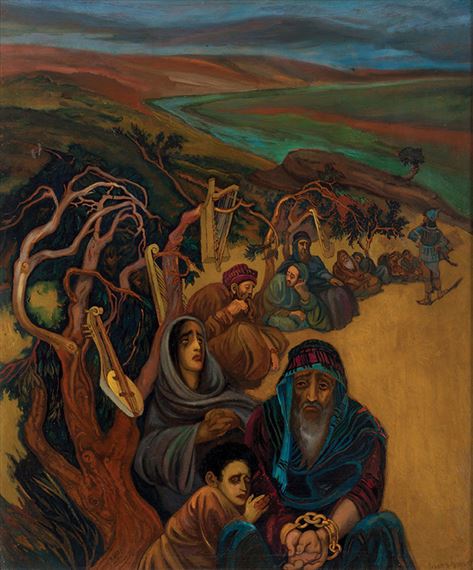
What we found most helpful and illuminating when reading these psalms was to see what the writers were not saying. The writers of the three psalms listed above, who included David and the captured slaves in Babylon, were not describing their commitment to enact revenge on those who brutally persecuted them. They were not saying that they would exact vengeance and repay the preparators for what was done to them. The captives in Babylon, who had escaped the fate of the horrific siege of Jerusalem, the details of which are hard to read or stomach, were not expressing their own vengeance. Their appeal was simply to God for justice. And that is what it is about – Justice. The justice described in the Mosaic law – the principal of equal and just retribution.
Today, when we hear the cry of families of victims of vicious crimes, it is always an appeal for justice, justice for the ones they loved. That’s what they fight for. That’s what they demand from the courts and that is what they never give up on, because it is Justice that is at stake. This is exactly what the writers of the cursing psalms are doing, they are crying out for an equal and just retribution. But for them the appeal is not to a human court, but to the highest court, to the Judge of all the earth. And it is this act of taking it, in all its rawness, to God and leaving it with him, which at once, lances that boil, dissolves the rage, neutralises the anger and eliminates the personal desire for revenge. The outburst of outrage is more than just cathartic. It achieves something.
So, we have found, having taken these challenging passages, which sound pretty terrible to our ears, taken them head on, unflinchingly, we have found that they do not, in fact, contradict the law of love but they complement it and we see how the curses and the blessings, the love and the hatred stand together without contradiction.

 Restless Spirit