THE LONG MARCH OF PROGRESSIVISM

There was something depressingly inevitable about the progress towards the legalising of assisted suicide. The details of the bill now published only confirms this. The list of robust safeguards “the strictest in the whole world” will be enough to win over the doubters and get the bill through the process and into law. The message is clear. This is no slippery slope. We will not be following Canada or the Netherlands, where mental health and even homelessness are justified reasons for ending lives. We will not be coercing doctors to be involved and there will be stringent legal sanctions against any who flout these measures. We have the most rigorous safeguards in place.

We all know, of course, how safeguards have worked out in the past. They never seem to be as safe as they are purported to be. The slide down the slippery slope is almost certain. Safeguards are useful in getting the thing over the line, but once there, they have served their purpose and can be dispensed with at will. That too is inevitable. 

Once the law is in place, you can be sure, different groups who will be excluded under the safeguards, will lobby justifiably so, for the law to be changed to cover their own circumstances. It would be unfair to those who expect to live longer than the legal nine months and whose suffering is prolonged. It would be inequitable to exclude the mentally ill. It would be unreasonable to exclude parents of children who are seriously disabled who are themselves unable to express their own suffering. It is almost as if the more robust the safeguards are, the easier they will be to circumvented.

Is that cynical alarmism? I don’t think so. The abortion act of 1967 was brought in to deal with a small number of difficult cases with robust safeguards in place. Since then, over 10 million lives have been legally destroyed and we hardly give it a thought, almost fourteen thousand in one year (2021) in Scotland alone. These precious vulnerable little beautiful lives are not even worthy of silent prayer.

This is how it works out and this is where progressiveness leads: the liquidation of the unborn, the dismantling of marriage and the family, the denial of biology, the culling of the old and sick and, and finally, the destruction of humanity itself.  Life is just another human construct, after all.  Arguing against it now seems futile.

We had a senior palliative care doctor speak to our home group on the vexed issue, a few months ago. While she was deeply troubled by the proposed change in the law and wholly against it, she felt that as a clinician she could not use her religious beliefs in a debate. The argument had to be made on other grounds to be accepted as valid. Interestingly this was the same position that Danny Kruger took in what was an excellent debate with Christine Jardine on Channel 4 https://www.channel4.com/news/mps-go-head-to-head-in-assisted-dying-debate. If Christian medics feel that they can’t argue from a Christian view of life, for fear that it would not be taken seriously and politicians can’t argue from their own deeply held religious views, then the cause is already lost. Danny Kruger almost admitted that in the interview.

How then can you object, if your religious beliefs carry no weight in the secular world?  What can you do when the battle is already lost and won?

Well, I remember, very clearly, a conversation I had with our Slovakian house guest, several years ago. She was with us for a year and early on in her stay she was puzzled by a controversy that was blowing up in the church. It was to do with the appointment of ministers who were living in openly same-sex adulterous relationships. I tried to explain the situation as openly and fairly as I could, detailing both sides of the argument (the traditional and the progressive) and how each took their authority from scripture. She was quiet. So, I asked innocently “What do you think?” She turned and looked at me with an expression I will never forget. It was a mixture of shock, unbelief and barely concealed hostility. “It is wrong!” was her vehement reply.

I know that this attitude wouldn’t get far in the current debate.  But, and here is the point, some issues, I am convinced, should not be up for debate. We should not be discussing whether the state should sponsor the killing of those who are ill. It is wrong. Life is not a human construct. Life is a gift, a precious gift from God.  We did not choose it and we did not buy it. We did not decide to born, we did not decide where or when or to which parents and no human institution has the authority to sanction its ending. 

Assisting suicide is wrong. It may be inevitable but it is still wrong.
POWERED BY BLOOD

It was just another of those celebrity travel programmes, an hour of wasted time, following the journey through tropical forests and vast desserts, encountering strange exotic animals and people, the scripted conversations and pre-arranged meetings, with the army of translators, camera, sound, and tech guys carefully out of shot and the now familiar drone view from above…you know the sort of thing. But it was the Congo that caught my attention “Into the Congo with Ben Fogle” the fearless adventurer of Castaway fame and Prince William look-alike. 

It had the predictable, lessons on man-made climate change and the horrors of colonisation. It would be hard to travel through the Congo without making reference to the industrial scale slavery instituted under King Leopold, in one of the darkest stains on European history. The significance of the slave plantations, was not lost, as they produced the rubber essential for the pneumatic tyres which powered the industrial revolution in Europe.

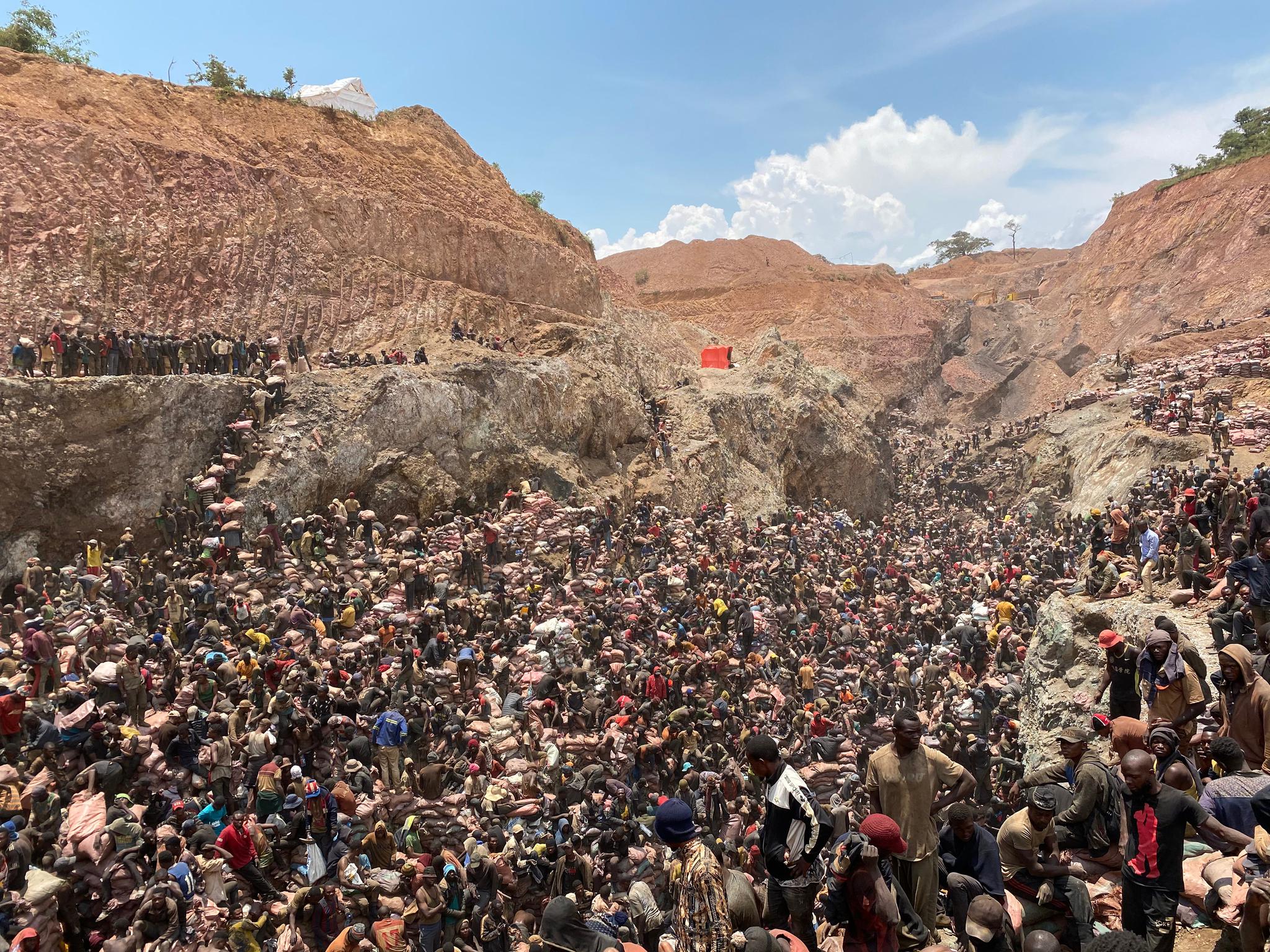
Ben Fogle’s journey was limited to the Congo and not to the Democratic Republic on security grounds and I am sure he would not have been able to bring his entourage through to the south of that vast nation and visit the cobalt and copper mines in Kolwezi close to the Zambian border.  For here is the irony so meticulously and harrowingly exposed by Siddharth Kara in “Cobalt Red, how the blood of the Congo powers our lives”.  The brutal slavery of thousands of people men women and children in the cauldron of these mines competes with King Leopold in his greed and savagery. The minerals, the cobalt lithium and copper they dig by hand out of these mines goes to supply the other world with the essentials for the green revolution. 

“ It would not be a stretch to suggest that much of the EV revolution rests on the weary shoulders of some of the poorest inhabitants of Kolwezi, yet few of them have the benefit of even the most basic amenities of modern life, such as reliable electricity, clean water, and sanitation, medical clinics and schools for children.”

“The global economy presses like a dead weight on the artisanal miners, crushing them into the very earth upon which they scrounge”

Much of his account is hard to read with descriptions of the unspeakable suffering of an enslaved people, which is happening now and which we are in some way connected. And yet…and yet, we hear so little of these things and would rather not hear when we do.

Siddharth Kara is a professor in global slavery and human trafficking and a truly fearless activist, making dangerous journeys into areas controlled by gangs and militia to uncover the truly shocking reality of what is happening in this heart of darkness. His account is a dreadful tale of human lives trapped in a hideous cycle of misery, men, women, mothers with babies, boys and girls clawing at the ground with metal rods, crawling through collapsing mine shafts, washing stones in toxic liquids, transporting heavy sacks with barely enough to survive. Accidents are not waiting to happen, they happen all the time. Boys carrying heavy loads malnourished and exhausted fall down the slopes of the pits and suffer fractured spine and leg injuries. the bodies of children trapped in collapsed mines are never retrieved and their mother’s weep as the walk over their graves every day. “We work in our graves” was what some say.  It is truly horrific and stomach churning. And it involves individual human lives. This was Elodie, orphaned by cobalt mining:

“After the loss of her parents Elodie, said she turned to prostitution to survive. Soldiers and artisan miners purchased her regularly. ‘The men in Congo hate women’ she said ‘They beat us and laugh’. Elodie became pregnant. After her son was born she started digging at lake Malo. She said that prostitution and digging for cobalt were the same. ‘muango yangu njoo soko’. My body is my market place. Elodie slept in an abandoned, half-finished brick hut near the southern edge of Kapata with a group of orphaned children. The children were known as Sheques a word derived from ‘Schengen area’ which indicates that they are vagabonds without families. There are thousands of shengues across the Copper Belt and they survive by any means necessary, be it scrounging for cobalt, doing petty jobs, or being purchased for sex. Elodie said she typically earned about CF 1,000 (about 1$) a day at lake Malo which was not enough to meet even the most rudimentary needs. She was forced to let soldiers do ‘unnatural things’ to her in order to survive. Elodie was one of the most brutalised children I met in the DRC. She had been thrown to a pack of  wolves by a system of such merciless calculation that it somehow managed to transform her degradation into shiny gadgets and cars sold around the world.”

Its easy too to blame other people when our hands are clean.  It is easy to be lost in our own self-righteousness pursuing the noble aim of saving the planet, while turning a blind eye and a deafy to the cries and the suffering of those outs of sight, further down the line, who carry the burden of it.  Those who pay the price in their bodies and blood of our grand projects. It makes me more and more convinced that the pursuit of “Net zero” is nothing but a vanity project, paid in blood, but not ours.