THEY THINK IT’S ALL OVER

You would think that now, four years after the day the world went mad and governments flipped like circus dolphins in near perfect unison, it would be a time to lay things finally to rest. Now that those responsible have had their day in court, been held to account, the truth now revealed and lessons learned, you would think that a line could be drawn, the whole sorry tale could be laid to rest and we can move on. It turns out not to be so.

It is not over, because even after four years there is still no definitive account on where the nasty virus came from and we are unlikely ever to get that. There seems no will or interest in finding out and anyway, does it really matter? Well, yes, it does. If this was deliberately created in a lab as part of a biological weapon programme and leaked by accident or on purpose, it would be good to know.  

It’s not over, because there has been so little recognition of the terrible harms that have been needlessly caused to the very fabric of our society.

Lockdowns were a holiday for those in secure jobs, a party for those making the decisions, a gift to those with latent ambitions to boss others around, a respite for those who like to be told what to do, and a middle-class indulgence with gardens and welcome time to spend with their kids . But for the rest, for most, the experience and the long-term effect on our society on our economy on our health, on respect for authority, on value for education, on our humanity, was a disaster and, critically, one needlessly and recklessly imposed upon us.

Masks were a fiasco. The virus was transmitted by aerosols not droplets. The scientists knew this from the start, which was why they told us, on camera, that the pieces of cloth were worthless. That was before they flipped because of political pressure. Not only were they worthless in halting transmission, they were dangerous. The warnings which should have been printed in the package of every mask would include a list of likely side effects; dermatitis, headaches, perpetuating fear, stunting infants’ cognitive and emotional development; excluding the hard-of-hearing, evoking fatigue, reducing lung efficiency, tormenting the autistic, increasing falls in the elderly, re-traumatising the historically traumatised, the inhalation of micro fibres, concentration impairment, reducing the quality of healthcare, discouraging patients from attending hospital, impeding school learning, the aggravation of existing anxiety problems, encouraging harassment of the mask exempt, enabling criminals to escape conviction, and polluting our towns and waterways.  I am still waiting for someone to put their hand up.

The vaccine might have saved lives but there is no actually proof that they did. With mass vaccination there could be never be a controlled test, so we will never know. We do know, however, that it was never fully effective and there were genuine doubts about its safety. Enough doubts for alarm bells to ring and the roll-out halted. But it wasn’t. Curiously, unlike what happened with other vaccines, no alarm bells were heard and nothing, it seemed, was to get in the way of the programme.  So many untruths were told: that it would stop you getting the disease, that it would stop you transmitting it, even though the manufacturers knew and have admitted that these were false from the start. No answers were given to the very reasonable question “ Why were the pharmaceutical giants given a free pass with no liability?”.  Anecdotally it is clear they had little, if any, effect. All the people I know who get covid have had the vaccine multiple times. People I know (a few) who refused the vaccine didn’t get covid. For myself, I took two doses of the Astra Zeneca vaccine before it was quietly withdrawn. I wasn’t aware of any bad side effects, but not long after I was serious ill and spend over two weeks in hospital with an unexplained large abscess in the liver.  The consultant couldn’t say why the bacteria lodged itself there, but the likely hood that the vaccine had tampered with my natural immunity made that a credible explanation.

It is not over, because there has been no proper accountability. The behemoth covid enquiry trundles on, studiously ignoring the very questions it should be asking and the key players with some exceptions are still there, many moving sideways in the revolving door of our corrupt institutions. And they are corrupt. When the institutions of government shuffle failed politicians and executives into other salaried positions carrying their pensions with them, then you know serious corruption is involved. So, an Inquiry wont’ cut it. Perhaps a “Truth and Justice” commission might be the thing, but I fear that a line can only be drawn once the matter comes to court.

Emily Oster wrote an astonishing piece in “The Atlantic” in October 2022 calling for “a pandemic amnesty”. The reason she gave for moving on was that governments and those making the decisions were well-intentioned and their pronouncement rested on benign ignorance. You know the sort of thing, “We were doing our best.. we might have done things better but .. it was all for the common good.” Oster’s generous forgiving attitude to those culpable is understandable and even commendable but it doesn’t serve the interests of justice.  

It is not over, because we still can’t talk about it. Many a social gathering has been ruined when someone carelessly mentions the dreaded C word, or when you innocently profess that you never believed in it, and everyone goes silent.  It is that awful moment among friends or family or just folks you know when they discover they have a traitor in the midst and the surprise is palpable.

It is not over until there is truth and justice and honesty and transparency and it’s not over until we can talk about it.

LUCY

I don’t believe it. From the beginning, I struggled to believe it and after reading the reports and the statements and the pile-on of repugnance, I am still not convinced that she is guilty. Like her close friend I could only believe it if she turned round and admitted it. Even then, people for all sorts of strange reasons, will admit to crimes they have never committed. The truth is, I don’t know, only God knows and I could be very wrong, as so often I am, but there is something deeply unsettling and unconvincing about the way the trial has run its course and the public reaction that disturbs me. My gut says “Maybe it’s not right”.

Again, I have not heard all the evidence or sat through the proceedings and so my judgement is at best flimsy, nor am I lawyer, still I have what could be considered reasonable doubts. Was there any direct evidence? How much was circumstantial? Are text messages and scribbled notes genuine evidence of guilt? Was there any real proof of motive? Were post-mortems conclusive? And behind it all was there an unholy rush, to find and identify someone, a scape goat to divert attention from other failings?

The big question remains. Is it possible for a jury to get it wrong? The answer is an unequivocal “Yes”. Jury’s do sometimes get it wrong; they don’t always get it right. There have been miscarriages in the past and likely to be in the future. Sometimes individuals have been wrongly denied justice and incarcerated for decades while others have died without hearing that their verdict was quashed.

I don’t believe it, but I recognise that my judgment could simply be based on a flawed feeling. Was it the fact that the images of the attractive caring nurse, with the baby pulled on my emotional weakness and made me not want to believe it? It certainly played a part. I recognise that. My experience as a prison volunteer may also colour my judgement. At the same time, I do not doubt that any one of us are capable of the most heinous of crimes. It is only by God’s mercy that we are restrained and spared that.   

But I am still not sure. The judgment, however, has been given, so we have to accept that and, if it doesn’t sound like a crass contradiction, I do hope the judgement was safe and that they got it right, because the horror of the alternative would be as great as the one experienced by the grieving parents.

THE BLACK CAP

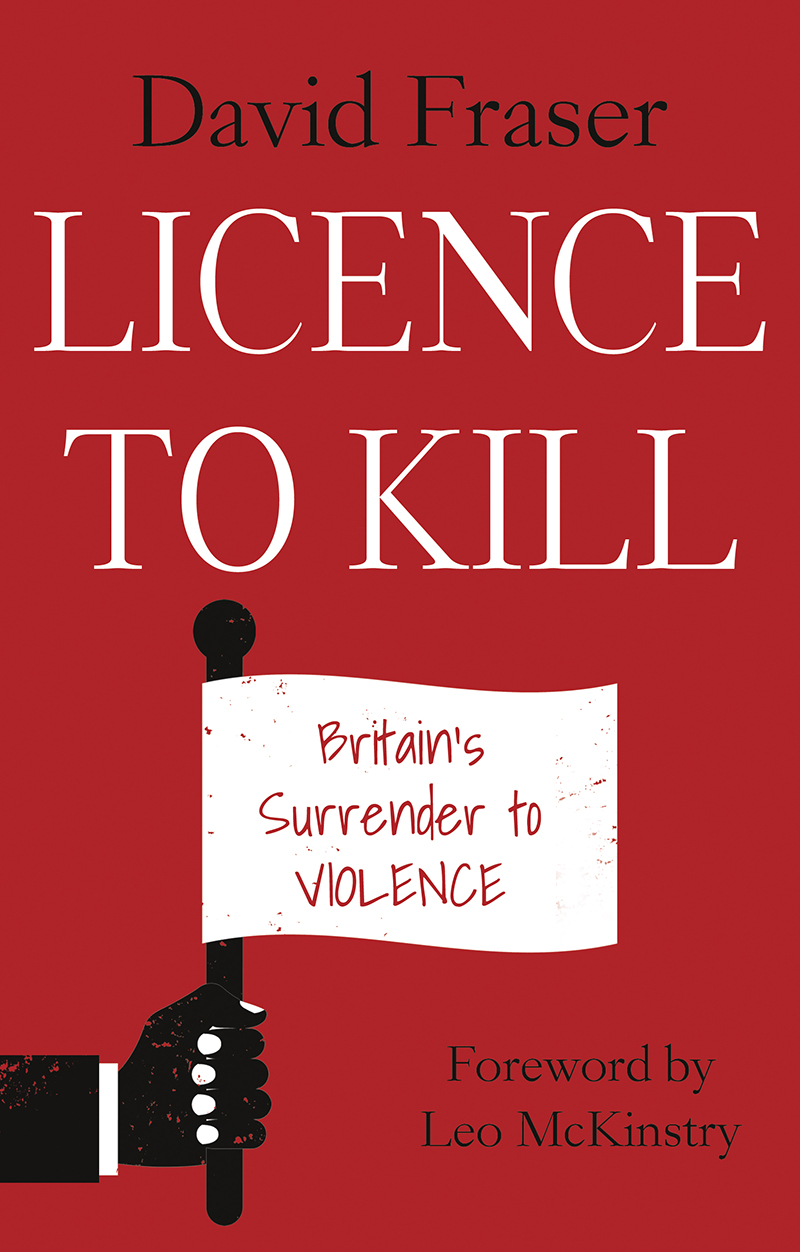
“Licence to Kill, Britians’ surrender to  violence” David Fraser

I remember my mother telling me how when a murderer was convicted and was about to be sentenced the judge would put on a black cap before detailing the gruesome means by which his life would be taken from him (it was most likely to be a man) and it sent a chill down my spine that I can still feel today. That was the early sixties when capital punishment was still enacted in the UK. It was abolished in 1964, temporarily at first, then permanently and finally made more secure through the adoption of the provision in the European convention of human rights in 1981. It was decision made by our representatives in parliament. The people, controversially were not allowed a vote. Public opinion seemed to have been against that decision for many years. The public mood today, however has changed and a plebiscite now is unlikely to achieve a return to “state killing”.

Despite my over vivid imagination and weak stomach, that decision troubled me at the time and does still. I was never convinced that it was right, but with the strength of emotion that it provoked, it has never been an easy subject to discuss. The idea that the state, to which I belonged, could sanction the taking of any life, doing so in my name, was utterly abhorrent. Strangely the same sympathy, somehow, was not extended to enemy combatants or civilians who were killed in war, to those yet unborn or those in a “vegetative” state. It was the taking the life of a fit viable person, who otherwise had a future, that was so appalling.  George Orwell’s essay “A Hanging” captures this emotion so grippingly especially in the way the condemned man avoids a puddle in the road on the way to his death.

So through the years, in my mind there has been this unresolved battle between the logic of just retribution and the emotional flood of sympathy for human life. To my mind, the logic of just retribution, the state taking vengeance for the individual is unrefutably.  It draws a line over the event in the sense that it has been paid for. The moors murders took place when I was only 15, and I often wondered if the murderers’ were executed then, there would be a genuine sense of public closure. As it happened, the presence of this evil was never far from the news throughout the next five decades. It also gives the victim’s family and loved ones some form of satisfaction in a sense of justice and at the same time takes away the impulse for revenge. Despite arguments to the contrary it does provide a demonstratable deterrence to would-be killers.

David Fraser in “Licence to kill”  points this out in his meticulous researched and powerful study “Licence to KillBritain’s surrender to violence”. He does not advocate a return to capital punishment, nor would I, but he does show with clear evidence and thorough research that the absence of this option has led to a steady increase in murder and not the opposite as is so often perceived.  

When it came to life sentence, I believed, as I guess most people did at the time, that it meant what it said; that the individual would lose their freedom for the rest of their life. It seemed at the time a just and fair outcome and avoided the state actually taking someone’s life.

Now we know how movers and shakers play with language often quite dishonestly to shape opinion in the way they want and make inconvenient facts more palatable. Tower blocks become “courts”,  killing innocents becomes “collateral damage”, unborn infants, “foetus”, euthanasia, “death with dignity”, but, at the time, I honestly believed that “life” meant life. But it never did it was 20 years halved for remission and here David Fraser’s exposure of the abject failure of the justice system combined with the probation service in a systemic propensity to lenient sentencing and careless early release, is devastating. Violent criminals, who knew how to work the system, were all to soon back on the streets to reignite their own brand of havoc and misery. The poor, as they inevitably do, were the ones who suffered. Meanwhile the people responsible for the leniency, the politicians, judges and probation officers were generally unaffected, living in quiet suburbs away from the urban war that was raging and able to sleep easily at night.

The issue is, of course, an ideological one.  It is whether we believe that every human being is inherently good with a propensity for doing bad things depending on environment, upbringing and circumstance or whether we believe that while individuals may be basically good there are those who are essentially evil, who given the freedom, will steal rape torture and maim at will and  who can only be restrained with proper retribution and with the fear that, if caught, they would face the most severe punishment. That’s the ideological battle and one that those in power in the UK have been winning since the sixties. Against the common sense of the people, Britain has surrendered to violence.