Let us go

Walking through the park in the beautiful yet eerie stillness of the morning, the words to Psalm 122 come to mind. I know them off by heart and recite them to myself. I also know them in the 1620  metrical form. We sang it as children to the 18c tune St Paul  with the almost clumsy double note at the end of the line in the second verse, to cope with the extra syllable. I remember singing it on one summer Sunday morning  on the Isle of Muck. We had travelled earlier in a launch from our home in the nearby island of Eigg and scrambled over the slippy rocks to be treated to tea and fresh scones before making our way up to the school building. Through the tall windows behind the make shift pulpit, some sheep had left off their grazing to stare at the strange creatures standing inside singing. Somehow the relevance of the psalm, with the tribes gathering in Jerusalem and the houses packed together, so far away in space and time was quite lost on me. But today they have a special resonance.

The Psalm moves beautifully and quickly from the first person to the second to the third and then to the destination the home of the King. “I was glad when they said to me let us go to the house of the Lord”. It is full of movement in a single direction, a going up, a coming together, a closeness, a sense of belonging, and a sense of security, prosperity and of peace. You know that the Psalm writer is not describing something ephemeral, virtual or abstract. He is not talking about an idea, but an actual physical event and the joy that the invitation gives him.

Deprived of that special blessing, meeting each week together in church, I feel the loss so keenly today. This absence makes the heart go much more than a little bit fonder and the virtual replacements only make the longing for the reality that bit more intense.  We have a weekly digital service and a sermon from one of the finest young preachers I know and afterwards we have digital coffee in cyberspace with our online home group. It is astonishing what technology has achieved and the blessings that can come from it, but it just doesn’t compare.   

And I wonder why the church has, without, it seems any protest or question, followed the government instructions, cancelled services and closed buildings and so easily surrendered this most precious thing.   It is not, of course, surprising that a secular government would view these gatherings as an unnecessary luxury in a crisis, while bicycle shops, pet shops, DIY  centres, and off-licences on the other hand, are seen as essential to life. It is surprising, that the churches themselves think so too.

Still, in the vacuum, with social distancing, in the new normal, I will pray for the peace and security of Jerusalem. “For the sake of the house of the Lord our God I will seek your good”

The Scream 3: Going to war

When you take your country into war you must first decide if you are likely to win it. If the odds against success are great then it’s probably wise to think again. Peace with its inevitable compromise might just be the best option. When you drag the country into a “lock-down” you should know how to come out of it. The inability of our government to know how to do that, must be one its most damning shortcomings.

The Lock-down

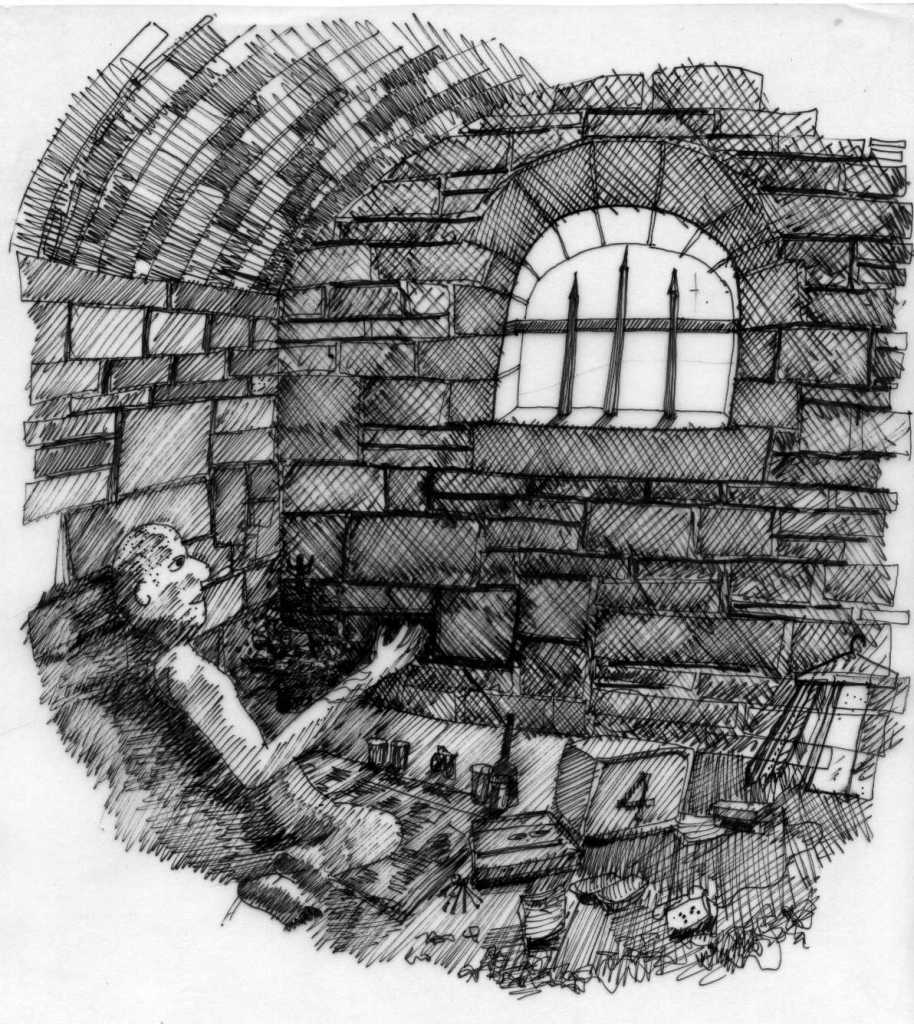
For anyone who has had a connection with a prison establishment the term “Lockdown” will carry a lot of resonance. It is an emergency procedure where inmates are literally locked back in their cells to allow some form of order to be restored. Why the government and the media and everyone else, it seems, have adopted this term in the Co-vid crisis is intriguing. It is not a lockdown. Any locks that are thrown are done from the inside of people’s homes. No one, other than those in secure institutions, are actually locked down.

But when words are used and given creative new meanings, it is inevitable that we smell a rat. We have George Orwell to thank for that. When specific instructions and guidance is given by experts, by people who know, to the rest of us, plain folks, it is inevitable that I become cynical.  I have my big brother to thank for that.

Of course, there are other terms that could have been created for the effort, so why this one? Could it be that it carries a barely concealed hint of authoritarianism? After all, while a government’s chief responsibility is to protect it’s citizens from bullies within and without, the lure to control them must be a very persistent and powerful one.  A compliant controlled population is easy to manager especially if you get them to do what you want them to do. If you can get people to stay in their houses then at a stroke it deals with a whole host of policing issues, crowds, football hooligans, protest marches, music festivals and religious gatherings.  It must be very seductive. And I must be very cynical.

But I do wonder if anyone has actually thought of the effect this kind of language might have on the population? I wonder if anyone has actually considered where this most unusual and probably unprecedented action will lead? I wonder if anyone actually knows what it means to force social beings, who thrive by the interaction with others, in a whole network of relationships, not to be social? Well we should do. We have plenty of evidence of what happens to human beings when they are forcibly placed in solitary confinement. It destroys the person. It could be the most inhumane form of punishment. And has anyone thought about how humiliating is to have work and being able to work but being prohibited from doing so because your work is considered non-essential. The fact that it is the way you provide for your family seems not to count. That the government will offer compensation for employed and self employed, who are affected, sounds good, but it only rubs salt in the wound. Being paid not to work is the final straw.  And of course, the real tragedy is that we cannot know for certain if these extreme measures will actually make any difference at all.

As for me, I am enormously privileged. I share this large house with two others and we get on well. We have a garden front and back and 100 yards from a beautiful garden (which the authorities would find difficult to seal off). I work from home and have done for many years and I know how to organise my time. I have many interests and ploys and can easily be absorbed in them. So, it is easy for me. I am sure it is also easy for those who have made the decision to force the shut-down but I shudder to think of what it will mean for possibly the vast majority, those in cramped accommodation in high rise flats with young children and those coming to the end of their lives to spend these days in solitude estranged from those they love. It sounds like a particular cruel form of punishment. It is not of course, but it sounds like it and calling it a “lock-down” reinforces that.

There does seem to be a complete disconnect from the middle-class office workers retiring with their laptops to the leafy suburbs and those who actually work in manufacturing, agriculture, construction or the energy industries- ie the ones who actually power the economy and who now are told that there work isn’t really important. And this is where the divide is so scary, because if the economy is driven on the rocks then all the services fail and the biggest gobbler of public finance, the NHS, will be the first to suffer. So to protect the NHS we may actually be dealing it a death blow. It’s all been said before, of course, and better.  

It is tragic and I hope I am wrong, but I genuinely worry that the treatment might end up killing the patient.

Crawford Mackenzie