
SUNDAY
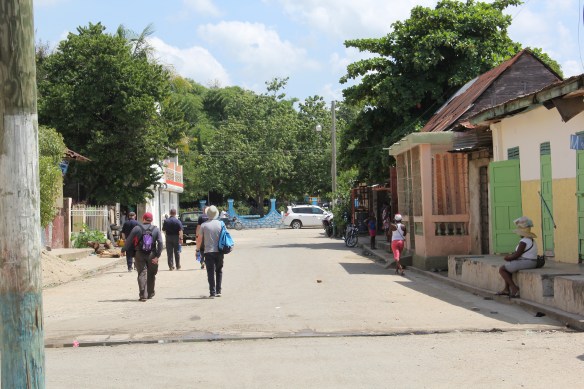
Dawn comes at six prompt intimated by a chorus of cockerels, dogs and motorcycles revving. Breakfast is in the open bar downstairs a pleasant courtyard with the covering of leaves and a gentle wind flowing through. Eggs scrambled with tomatoes and chili, delicious bananas, stiff bread and good coffee. This is the time when we chat share and bond as a team, read the bible and pray together and …..wait. (Sometimes we wait for hours, on Friday it was for seven) We wait for our escort, Pastor Rolex Poisson. He feels responsible for us and anxious that he does not lose his Scottish friends. This morning he is prompt and we climb into his 4×4 equipped with air con and a video screen that helps him reverse but at other times plays Christian music in Kompa style.
We turn right into the Main Street that runs from the border. Usually this a two way river of cars, motorcycles, wheel barrows, bicycles and people on foot intersecting like ants cutting and swerving but somehow never hitting each other. At the side of the road there are shops and stall selling biscuits, liquor, concrete blocks, metal gates, bags of rice, beans and cement. Today it is much quieter and the motorcyclists seem to be transporting well-dressed people to church clutching bibles. It is astonishing how people turn out in their smart trousers, dresses, shirts, ties and immaculate shining highly polished shoes. The contrast between the church goers and their surroundings is remarkable-especially when you see the almost non-existent washing facilities people have at home and the ever present dust which turns to mud after every thunderstorm.
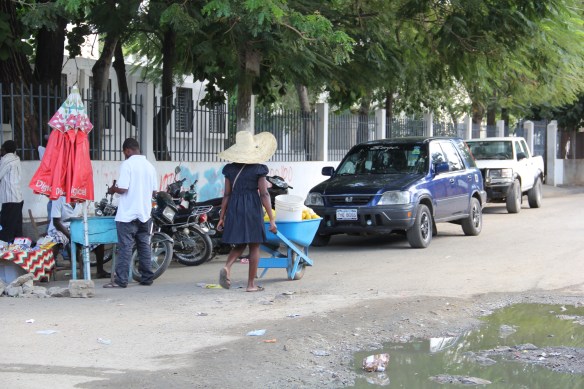 When we arrive at the church there is a service in progress. The building is full and a couple hold a bar against the door to discourage anyone from entering at this point. We mingle with the people outside. Again this area is normally a hive of activity with stalls of all kinds and people coming and going. Today it is quieter, but at one stall a young man dressed in a blue football shirt and red cap is busy making pasta rolling it out and laying it on the table to dry in the sun. He is assisted by another young man in a bright orange top. The colours are sharp in the strong sun against the white walls of the courthouse, the rich green of the overhanging trees and a cloudless sky.
The church is full when we enter. 400 or so people on wooden benches. Some have brought their own seats, children on the front and people crowded to the side. There is a raised platform with a concrete balustrade where the elders the choir and band sit and we are ushered to a seat there. The worship is led by a strong woman swaying to the rhythms of the song. She is singing a psalm straight from the bible it does not seem to be a metric version. She leads and the band follows and there is a moment or two before the musicians can locate the key. It’s the bass player who gets it first and he hammers out the line with runs followed by the drummer and finally, after a hesitant start, the guitarist on his “Starcaster” guitar with intricate decoration in a Kompa style. The leader does what was common years ago in the west of Scotland, she “puts out the line” by singing the line of the verse and the congregation follow. There are many verses (I could not see which psalm it was). When it ends it rises to a climax with a crescendo when the whole congregation joins in singing “Hallelujah!” which repeated several times, sores and finally softens like the waves of the sea.
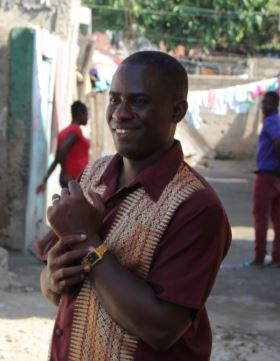
The pastor comes forward to welcome everyone, give notices, introduces his friends from across the sea, some are well known now and he seems to making an appeal for help with building of the new church (this is a rented building) The choir sing and Pastor Reme preaches. He takes The parable of the wheat and the weeds as his theme. I can only pick up a few words. I cannot follow the sermon but somehow sense that God is speaking through him by the power of the Spirit. Soon the service is over and we find ourselves outside chatting to David his god daughter, Atheline Pierre, Toussaint and Therese . David is eager to read the English bible and points to verses in the psalms, Jeremiah and Isaiah where his namesake is mentioned. There is something special in that time.
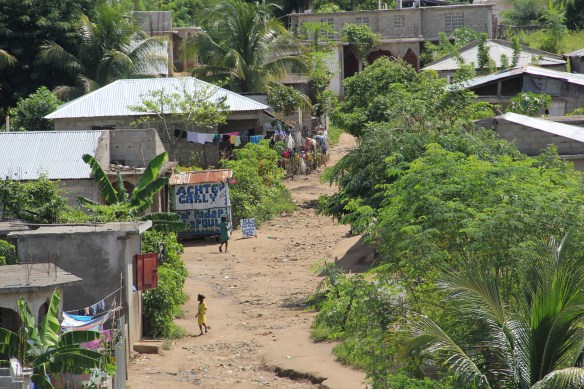 Later we visit a home. The others know the family but this is my first time. I have always found these visits hard. There is something that always shocks me and I never quite get used to seeing just what little people have and how the means of living and surviving are achieved with astonishing grace and resilience and yes, dignity. This visit is unlike any of the others. The home is as poor as any I have seen but within the cramped and dark concrete interior and the most basic items of furniture, there was an immediate sense of God’s presence. The father is lying on a mattress on the floor his head propped by a cushion yet dressed in a dignified manner his hands shaking involuntarily. He is severely paralyzed perhaps with Parkinson’s or motor neuron disease. We are not told, but his eyes shine with something I can only describe as a deep joy and contentment. It is a look I will never forget as he lies there his face creasing into a smile, surrounded by his family, his five children and his caring wife. We have brought some food: a bag of rice, pinto beans, pasta, stock cubes, a tin of sardines and some cooking oil. The family is touched and grateful. We pray for them, thanking God, asking for his blessing and then leave. Back into the car and the winding bumping ride through the maze of lanes, block houses, goats, rubbish waste ground and naked children, we know that we were the ones who have received the blessing.
REFLECTION
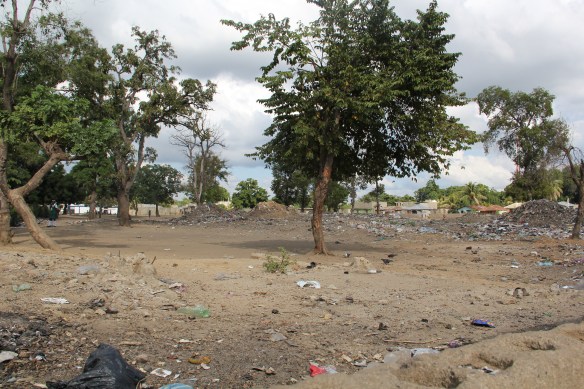 It has been said that the Haitian people carry a deep seated sense of abandonment.
In the Voodou story, God created the world but was so disgusted with his creatures behaviour that he abandoned it to the demons, good and bad, who are now in control. Typically western commentators and travellers, in their arrogance and ignorance see this simply as a colourful and harmless expression of ancient cultural tradition. As Kim Wall and Caterina Clerici “Voodou is the soul of Haitian people.” The Guardian (2015) “ The religion was born with institutional slavery. Ripped from homelands and heritage, thousands of those who would become Haitians were shipped across the Atlantic to an island, where the indigenous population had already been wiped out, for backbreaking labour in cane plantations. They were treated as cattle. As animals to be bought and sold; worth nothing more than a cow. Often less Voodou is the response to that. Voodou says ‘no, I’m not a cow. Cows cannot dance, cows do not sing. Cows cannot become God. Not only am I a human being – I’m considerably more human than you. Watch me create divinity in this world you have given me that is so ugly and so hard. Watch me become God in front of your eyes.’ or Mark Husdon reporting on Leah Gordon in the Telegraph (2012) “Voodoo is a set of ceremonies that bring down spirits. The spirits indicate they’re present by possessing the celebrants. An animal is sacrificed to feed the spirits, and there’s a lot of dancing and drumming that goes with that. I can’t see anything intrinsically threatening in that. And it’s a lot more entertaining than any church service I’ve been to.”
It is an all too common view which betrays a gross arrogance looking down, as it were, from the high intellectual ground and seeing religions as either dangerous or just quant. In this narrative, it was the Christian missionaries who created all the problems in Haiti. They ought, apparently, to have left the people to their own beliefs and not interfered. It is the worst sort of patronizing racism with more than a hint of colonialism in the lust not for the natural resources of materials and labour but for the colour and distraction needed for a jaded over consumerist lifestyle; leaving these pitiful people to their poverty and despair because they seem colourful to us. Mercifully, the Haitian Christians see it all so differently. The Church resists voodoo in all its manifestations and denounces it unequivocally. The pastor has to deal with incidents of demon possession almost every day (we witnessed one such) and he doesn’t pussy foot about the issue. This is a real battle and great care is given to warn the people to have nothing to do with these sinister and evil practices.
 The sense of abandonment is played out too through the people’s history. Robbed of their homes, transported across the sea, condemned as slaves and when winning their freedom forced to pay for it, They were massacred by their neighbours, ruled over by corrupt leaders and suffered a series of natural disastrous culminating in the cataclysmic earthquake of 2010. The world rallied to help in so many ways and, in just so many ways, left a situation much worse that when they had come. This is most graphically illustrated by the appalling cholera epidemic that followed the earthquake and devastated the islands population. Cholera was unknown on the island before and brought by UN soldiers who contaminated the water supply in an act of gross negligence, which they then tried to cover up. This story is told through Jonathan Katz’ vivid first-hand account of the disaster “The Big Truck That Went By: How the World Came to Save Haiti and Left Behind a Disaster”
The most recent scandal involving Oxfam was just another example of the continuing cycle of despair adding to the overwhelming sense of hopeless abandonment. Maybe I imagined it, but thought I could detect that sense of resignation in the faces of the people.
It is against this bleak backcloth that what Mission International is doing here is so encouraging and so relevant. The first contact was made with the church in Ounaminthe in 2009 and a team went out from Scotland in the following year. Every year, and sometimes twice a year, teams have come to visit bringing gifts, words of encouragement, greetings and the promise to pray. This steady and unassuming commitment is beginning to break through the understandable cloud of suspicion, with the knowledge that the God who we serve has not abandoned his people and neither has his church.
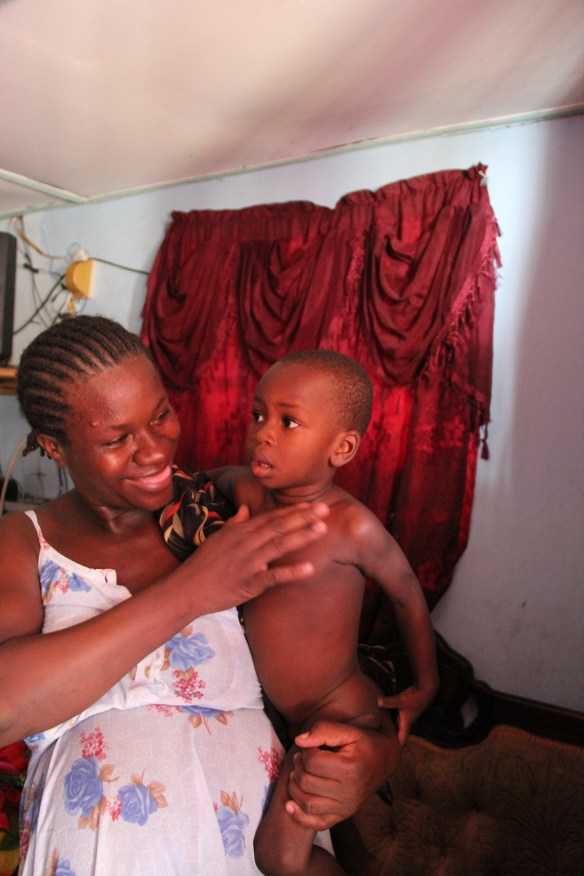 Maybe it was fancy, but I thought I saw that in the smiles.
Crawford Mackenzie
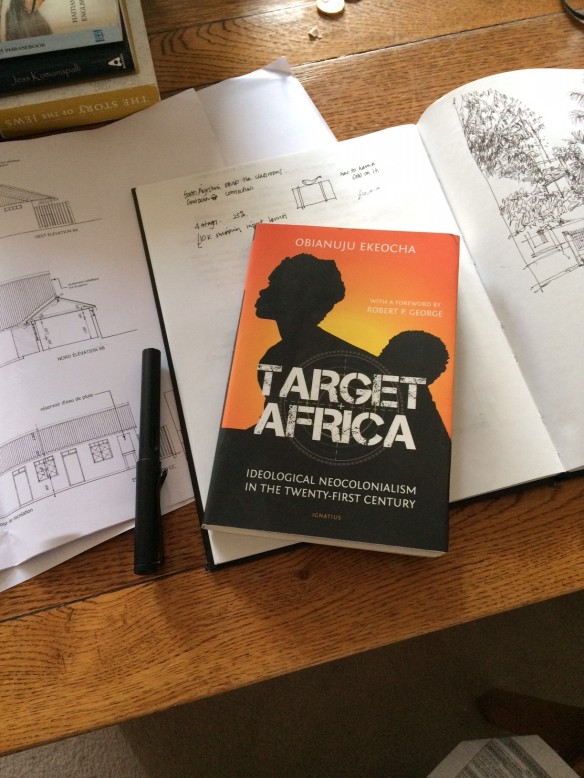 TARGET AFRICA ideological neo-colonialism in the twenty first century Obianuju Ekeocha
 Restless Spirit