I have failed. I have failed the country. I have failed you. I didn’t have the courage to stand up to the bullies who pressed down on me with their bogus science and one-track minds. I just didn’t have the strength of character to withstand the pile on from my fake advisers, the advisors who I appointed. The onslaught was too great and I was too weak to resist. To my shame I was more concerned with my own reputation, how history would judge me and I was terrorised by the prospect of being forever known as the covid murderer, responsible for deaths of tens of thousands. The emotional pressure was just too much
It was all against my gut, of course. Coercion, lockdowns and the whole sorry debacle was totally against everything I stood for. Other nations come in with the heavy hand but that was not who I believed we were. I said as much and more but I never had the courage or conviction to stick to it. And so the whole dreadful disaster unfolded and continues to unfold: children were socially stunted, teenagers locked in rooms with a solitary diet of screen time, marriages were celebrated behind closed doors, deaths were mourned in pitiless parlours, the dying deprived of human comfort in their final dreadful hours, diagnoses were missed, churches, cinemas, pubs, concert, halls, libraries, cafes, restaurants and anywhere where people meet, closed their doors, businesses were ruined, services cut, people were paid to do nothing, playgrounds were locked, walkers hustled indoors, faces were covered, masked, muffled and drowned in a sea of anti-social distancing, levels, tiers and the rule of six.
And now, as it turned out, as we now know it was all for nothing. None of it worked. All of my team say ‘We should have done it all much quicker’ but I say it should never have been done at all. It was wrong, disastrously wrong, and if there is something we can learn (and that is surely what this enquiry is all about), we should never ever contemplate the same ever again.
How I regret not taking on board the other voices. Those of sane and sound mind of knowledge and experience, leaders in their critical scientific fields. Their wise and simple advice to focus protection on the vulnerable, would have led us to a much safer and better place, without the horrors we now face. How I wish I had listened to those who warned us of the disastrous route we were embarking on. Those who we shut out, shut down, ridiculed and worse. They were right all along and we were wrong.
And how I regret my enthusiasm for the wonder vaccine. How I trumpeted the great British success with Astra Zeneca leading the world in producing it and rolling it out so quickly; only for it to be quietly withdrawn with ominous links to rare blood disorders. I hailed the vaccine overall as a game changer and boasted of its safety and effectiveness when we knew from the start that neither were ever true. My team will say it saved millions of lives but I am not so sure. It can never now be proved, yet still there is growing anxiety over serious side effects leading some to premature deaths.
And, Mi Lady… I could go on…there is so much more I can say but can I finish with just one thing…
I am sorry, and I offer no excuses, no apology. I claim no mitigating circumstances. The decision was all mine, I take full responsibility and … if it helps… I will answer your questions”
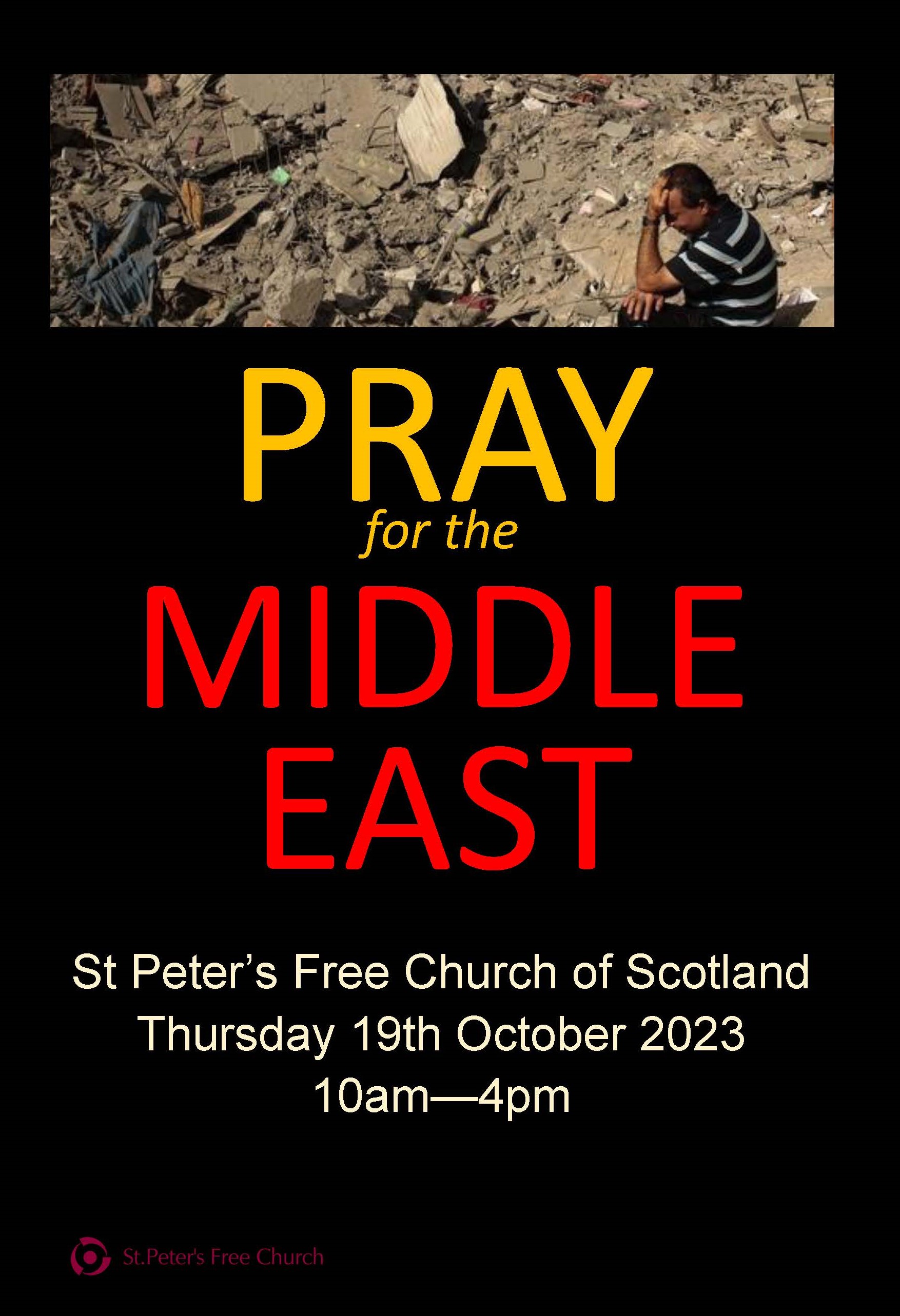
Today, one of the wildest of the year, with Babet flexing her muscles, is a Day for Prayer for the Middle East. The doors of our church building are open from 10am-4pm to allow people to call in and spend some time in prayer, calling on God to have mercy and intervene in the horror that has been visited on humanity in the Middle East. It is hard to know what to pray for and the call from Christians, right there on the ground in Israel and Gaza, is that they too would know what to pray for. Here, the words of the Psalmist are apposite, “ When the foundations are being destroyed, what can the righteous do?”
Trying to unravel the truth from this the most complex of religious geo-political ideological issues is almost impossible. I have been listening to a number of voices: Melanie Phillips, Bari Wies, Owen Jones, Ben Shapiro, Noam Chomsky and others. I have read again parts of Robert Fisk’s “The great war for civilisation”, Simon Schama’s “The story of the Jews” and Jeremy Bowen’s “Six days”. I know I have only scraped the surface and I will never get to the bottom. Fisk describes it aptly “The narrative of events – both through Arab and Israeli eyes and through the often-biased reporting and commentaries of journalists and historians since 1948 – now forms libraries of information and disinformation through which the reader may wander with incredulity and exhaustion”. But it isn’t enough just to give up and go to bed, or as some would say, “Don’t worry Jesus will return soon”. Somehow it demands some form of judgement and a making up of a mind.
In my mind, the conflict between Israel and Hamas is asymmetrical, not just in terms of military power, but in terms of morality. Both sides live and fight by different rules. The warfare is also total. One side will never be satisfied until the other is destroyed and wiped off the face of the earth. In that bleak reality there can be no compromise or peace deal no matter how hard the movers and shakers in the world try and the only possible solution, horrible as it may seem is for one side to have the complete victory. For the sake of Western Civilisation, as we have known it, the victor, in my view, has to be Israel. The alternative is an irrevocable slide into a chasm of barbarism. But that is just me.
So, we spent a good part of the time today, with the newspaper spread out in front of us, reading from Scripture: the Psalms, Isaiah and the gospels and seeking what we should be praying for.
We prayed for those who have been given the authority and the power to influence and intervene: for Netanyahu Biden and Sunak, for Abdel Fattah el-Sisi, King Abdullah, Najib Mikati, King Salman, Basshar al-Assad and Ali Khamenei. We were remembering how God used pagan rulers in the past for his purposes. We prayed for those who could find no comfort after the savage and brutal hacking down of their loved ones and those in captivity, for the families living in terror of each new explosion in the night, for those piteously oppressed, for those deprived of food water and medical treatment. We prayed against evil in all its forms. We prayed for a miracle and for miracles in the darkest of situations and we prayed for the Gospel the only true answer for all humanity, to be heard and believed.
By the afternoon, storm Babet was asserting her power with increasing anger and so we retreated and cut short the day earlier than planned, while leaving it all in the safe hands of God, whose voice controlled the winds and the waves and who “makes wars cease to the ends of the earth. who breaks the bow and shatters the spear; who burns the shields with fire.
This week saw the sad death of a local church congregation. It was our spiritual home, our family and some of our closest friends, for almost two decades. So much of our lives were intertwined with the fellowship of people who worshipped God in that place. Though we have been separated for some time, the bonds we had were still solid and when the inevitable news came through, it filled us with an intense and deep sense of loss and sadness.
Our connection began when I was called, with neither qualifications nor training, in the early 90’s to serve as a parish worker, an urban ministry associate, with a local church in a peripheral housing scheme in Dundee. With a beautifully vague job description, I was set loose to grapple with how the gospel of Jesus Christ related to the pretty much neglected people in the housing schemes on the edge of our cities.
It was an issue that concerned me greatly and dated from my late teens when I heard a sermon which changed my life. It was on Paul’s letter to the Christians at Phillipi where he speaks to their attitude and challenges them to follow Christ Jesus:
“Who, though he was in the form of God,
Did not count equality with God a thing to be grasped,
But emptied himself,
Taking the form of a servant
Being born in the likeness of men.
And being found in human form
He humbled himself
And became obedient unto death,
Even death on a cross.”
I often see things in pictures and it was the picture of a hand that could have held on but let go, that was planted in my brain. So when we got the letter and spread it out on the table in the coffee shop, one drab Glasgow afternoon, we just knew that we had to come to Dundee and to Mains of Fintry Parish Church.
Fintry was one of the earlier post war housing schemes built in Scotland. It was constructed on a bean field to the north of Dundee and in common with housing developments at that time, it had little in the way of public amenities for the ten thousand souls who were housed there. There was a primary school, a pub, a handful of shops and a church. An early aerial photograph depicts a pretty bleak landscape of serried rows of houses, not unlike a concentration camp yet many of the original resident expressed their delight and gratitude coming there, with fresh air, kitchens, bathrooms and modern living.
In the sixties Fintry was also known nationally and had a notorious reputation for poverty, crime and violence. Most of which was centred around the northern edge of the scheme. Two of the streets were renamed specifically to avoid the stigma associated with them, but this strangely had the opposite effect. Even much later, in our time, we had difficulty in obtaining a loan for a car, as our address, within the parish, was problematic to the would-be provider.
It was to this unlikely setting, in the mid 70s, that Peter Humphris was called to be the minster of the congregation whose building stood at the heart of the parish. With his cultured middle England voice and fine manners, Peter might have seemed a strange choice for this setting, but with his wife Kathleen, they stuck to the task and within a short space of time had gathered a good number of new Christians, some who had been brought to faith under the influence of the charismatic evangelist James Gill. Despite being on the periphery of the city, students were drawn to the preaching, prayer and life of the church, many who went on to serve in other parts of the world. Fintry was one of the first churches in Dundee to welcome Chinese students and internationals from many nations and cultural backgrounds principally through the labours of Malcolm and Ruth Farquhar. Fintry was also the place where the idea of summer beach mission was brought to an urban setting with the running of annual holiday clubs. These sometimes involved upwards of 200 children queuing up at the gate each day for a week’s activities of games crafts music song and stories. These were meticulously planned, with teams gathered from many places and days of training, well in advance. There was an explosion of creativity in writing material, art, music and drama with issues such as child protection addressed long before these became mainstream. There were many other creative inventions, inspirations and ideas too for the telling of the Gospel, some of which were adopted by other congregations and this continued though the ministry of Colin Brough and a focus on the church and the community. It was a purple period, a marrow experience
Things were about to change, however. And it happened far away in the hallowed halls of the Church of Scotland General Assembly in 2009. The decision taken then began a process which distanced the Church from the teaching and authority of Scripture. It was a slow process but a predictable one. It was death by dialogue. In one particular assembly it was the blatant manipulation of process with a fair spattering of deceit. I had always thought that within the denomination there were two wings: the conservative evangelical and the liberal. What I learned as I climbed the wide stone stairs leading to the Moderators room, with the Principal Clerk who commented on the faces he recognised on the portraits that hung on these rising walls, there was a third wing. They were the establishment. They could be liberal or conservative, as it suited, they could tolerate either. But what they would not tolerate was to lose power over their church. I remember that moment very clearly and, for me, it signalled the end.
But from Fintry, it seemed far away and all but irrelevant. “We haven’t changed,” people would say. “What happens in Edinburgh has nothing to do with us”.“We will continue as we are and preach the Gospel” . But it was an illusion. There was a mistaken belief that we were a congregational church when the reality was that we were Presbyterian and under the authority of Presbytery. While Presbytery would never prohibit or silence the preaching of the gospel they would and could see to the dismantling of churches, linking, merging and uniting in a downward spiral of decline, which had the same effect.
In May 2013 the line had been crossed and I knew that I could no longer, in all conscience, remain within the denomination that had rejected or, at best, deliberately fudged the clear teaching of Scripture.
Leaving Fintry was one of the hardest decisions we had to make and it was a deep wrench. It would have been easier had we fallen out, become disgruntled or unhappy with the direction of the ministry, but it was none of these. And it was a token of the bond we shared that no-one expressed any criticism of our decision and we were met with nothing but understanding and respect for the stand we were taking. But we took it alone. No-one seemed to share our conviction that this was the beginning of the end for the national church. Even among many friends, who we regarded as fellow travellers, there was a suggestion that we had acted in haste, and the proper thing would be to stay and reform the denomination from within. Sadly, this was never going to happen and while some churches have flourished and grown in this time, following a congregationalist model, overall the story has been a devastating one of accelerating decline with the closure of so many places of worship, dwindling numbers and the haemorrhaging of people and resources.
This week the parish church in Fintry is no longer, the people scattered and the remnant absorbed into an anonymous sounding “North East Parish” of 30 thousand souls. A lamp has been removed. But the Church, the Church of Jesus Christ grows and flourishes, in may places, all over the world, and the gates of hell will not prevail against it.
I don’t believe it. From the beginning, I struggled to believe it and after reading the reports and the statements and the pile-on of repugnance, I am still not convinced that she is guilty. Like her close friend I could only believe it if she turned round and admitted it. Even then, people for all sorts of strange reasons, will admit to crimes they have never committed. The truth is, I don’t know, only God knows and I could be very wrong, as so often I am, but there is something deeply unsettling and unconvincing about the way the trial has run its course and the public reaction that disturbs me. My gut says “Maybe it’s not right”.
Again, I have not heard all the evidence or sat through the proceedings and so my judgement is at best flimsy, nor am I lawyer, still I have what could be considered reasonable doubts. Was there any direct evidence? How much was circumstantial? Are text messages and scribbled notes genuine evidence of guilt? Was there any real proof of motive? Were post-mortems conclusive? And behind it all was there an unholy rush, to find and identify someone, a scape goat to divert attention from other failings?
The big question remains. Is it possible for a jury to get it wrong? The answer is an unequivocal “Yes”. Jury’s do sometimes get it wrong; they don’t always get it right. There have been miscarriages in the past and likely to be in the future. Sometimes individuals have been wrongly denied justice and incarcerated for decades while others have died without hearing that their verdict was quashed.
I don’t believe it, but I recognise that my judgment could simply be based on a flawed feeling. Was it the fact that the images of the attractive caring nurse, with the baby pulled on my emotional weakness and made me not want to believe it? It certainly played a part. I recognise that. My experience as a prison volunteer may also colour my judgement. At the same time, I do not doubt that any one of us are capable of the most heinous of crimes. It is only by God’s mercy that we are restrained and spared that.
But I am still not sure. The judgment, however, has been given, so we have to accept that and, if it doesn’t sound like a crass contradiction, I do hope the judgement was safe and that they got it right, because the horror of the alternative would be as great as the one experienced by the grieving parents.
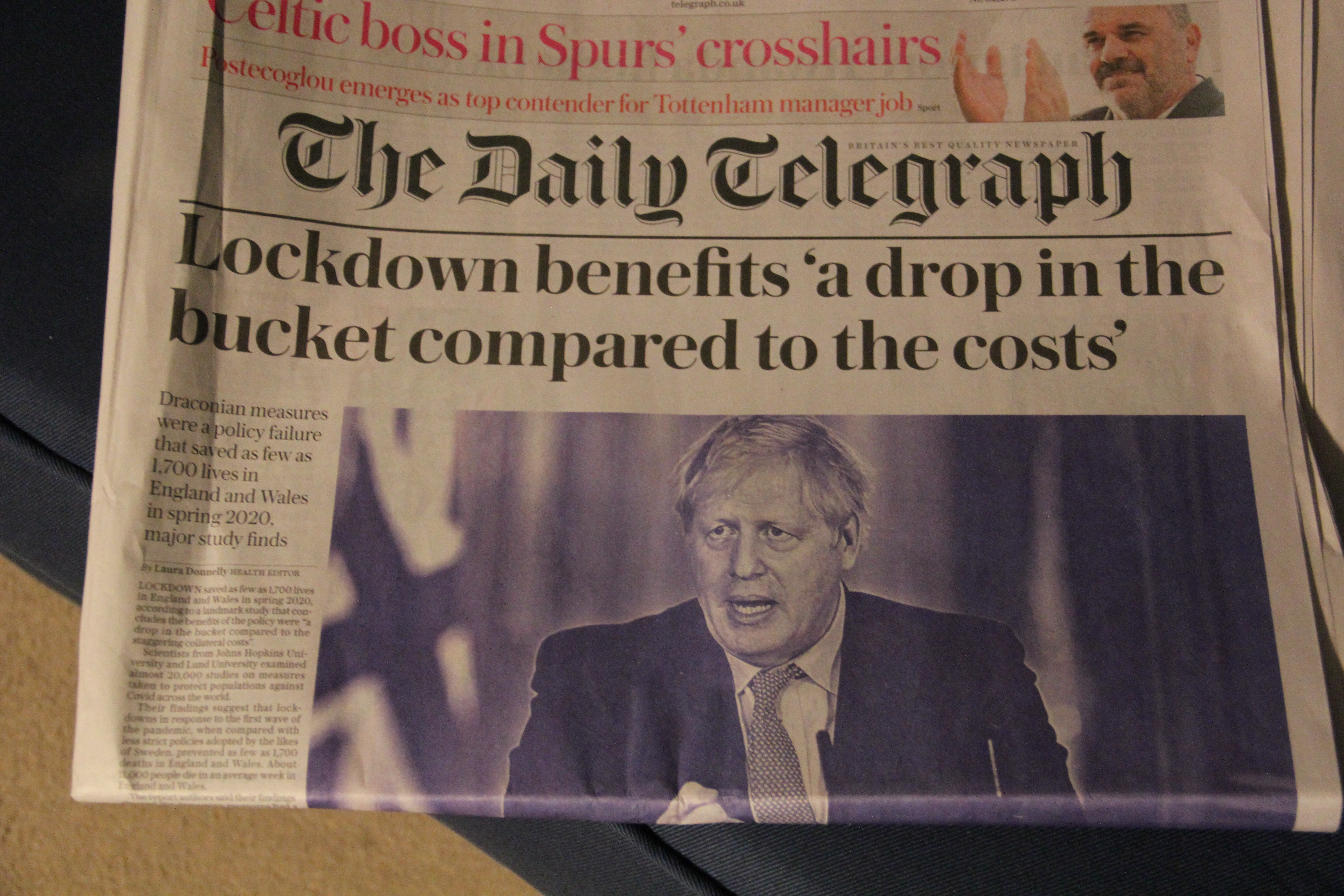
Three years late in coming, we have the mains stream media finally reporting what we already knew, what many sane people experts have claimed from the beginning and common sense has told us, that the cure would be worse than the disease. Not all the media however has fallowed that line. The more left leaning press have been more circumspect, recognising that as lockdown cheerleaders they are just as culpable as anyone and we will wait to see what the BBC et al deal with this uncomfortable truth. Whatever way, it is three years late and the damage has already been done. All we can do is learn from this terrible episode but chances are we won’t. Even when we know our history we still seem unable to learn from it. I expect similar headlines to follow down the line, to do with the effectiveness of masks, and with the vaccine’s dubious record, but that is assuming we are not already overtaken by a nuclear war.
Because the real threat to our world at the moment is our proximity to nuclear war. Everything points to us sleepwalking into the most horrific event that we vowed would never be repeated and hardly anyone in authority seems really that bothered. It is clear that the Russian president could muster enough justification for a “tactical” nuclear strike from his own constituency to warrant it and it won’t be because he is a mad man. “Tactical” in that context, of course, means it’s nothing too serious and we can carry on and won’t be much effected. It is not just possible it is highly probable. Poo-pooing it and dismissing that prospect as fanciful is crass carelessness. If Russia is backed into a wall facing total humiliation that is when she is most likely to bring out the one card she has left. There will of course be red lines crossed but we all know about red lines. Geo-politics is a nightmare to understand or predict but whatever way you look at it, the situation now is desperately precarious. The scariest part is the apparently unwillingness to take the thing seriously. Even when we know the history, we seem to drift effortlessly into repeating it.
One of the most disturbing things about all of this is the way the media talk about the war and discuss the various battles and sieges as if all this was a normal everyday part of life. It is the way that evil is tamed and horror sanitised. After the initial shock of the news it morphs pretty quickly into just one of these things, a seven day wonder drained of its dreadfulness when the reporter gets to the scene and then we know everything is under control.
Inevitably a cloud of inertia descends. We can’t do anything about it so just let’s get on with our life. It is a perfectly understandable response from anyone, but when it is the response of the church it is tragic. Yes, in our public prayers we intercede for Ukraine, for peace and justice, for resolution to the conflict but there is a just a hint that we have not really grasped the gravity of the situation. On the other hand, there are Christians who I know who take the view that this like all the other horrible events in the world is just another sign that we live in the end times. Rather than despair we should rejoice. Jesus will come soon. He will usher in his kingdom with a new heaven and a new earth. He will bring peace and justice that will last for eternity, described in all the negatives because our minds could not grasp the positives) there will be no pain, no suffering, no darkness, no night, no wild sea, no locks on the gates, no curses, no lies, no homelessness, no crying, no dying. I believe that with all my heart but it is both complacent and conceited to think we know when “soon” is. If we have to do anything now, it is surely to cry out to God in prayer. I am convinced that God has intervened in history to hold back evil in its worst manifestations and he may do again. I have seen it in my own lifetime and I know that it was the prayers of the people that caused God to intervene for his own purpose and because the time had not yet come.
I may be quite wrong here, of course, and my fears be misplaced. Ukraine may recover enough territory and both sides become so wearied in fighting with enough blood being shed that a peace treaty can be agreed upon and no buttons pressed. I could be wrong. I hope I am wrong. But either way I intend to pray for God’s intervention. If you are a praying person, I hope you do too.
And they’re breaking down the distance between right and wrong”
Bob Dylan
It is always wise as well as kind and sympathetic not to see things simply in black and white but feel for the nuances the contradictions and the things that don’t neatly fall into categories. It is the art of showing genuine care and sympathy and understanding and humanity. It is the gift of seeing beyond our own background upbringing and experience and recognising that others come from a different place and think differently about things. Some of the worst evils and heinous crimes have been committed in the name of perceived divisions between groups which feed on a blinkered view of how things actually are. In our haste, however, to rid ourselves of “binary thinking” we can end up throwing the baby out with the bathwater. When “non-binary” rather than a sympathetic attitude, becomes an all-encompassing ideology, bent on demolishing all borders and boundaries, it, in the process ends up eating itself.
For the reality is that our world, the earth and the cosmos and how we navigate existence is grounded and ordered in the binary. The creation narrative in Genesis makes this clear. The world God created was varied, all related, but, at the same time binary: light and dark, day and night, land and sky, sea and dry land, fish and birds, humans and animals, male and female and within these further binaries of each in their kind. While all were part of the whole, connected and from the same substance, there was clear borders and distinctions and boundaries between them. Science and medicine as well as many other disciplines depend on that binary principle to make progress as well as the whole business of relationships, diplomacy and living. The entire digital world is based on the binary too. It is this and not that. It is something and not nothing, life not death, sleep not awake, inside not outside, positive not negative, reality not fantasy, private not public, child not adult, past not present, good not evil, me not you.
I remember a well-known theologian speaking on the radio say that as far as belief in God was concerned, he was non-binary. He didn’t fully explain what that meant but I took it that he found he could believe in God and at the same time not believe. It seemed an astonishing conundrum and I couldn’t get my little mind round it. If faith could be turned on and off surely it wasn’t faith.
But it is not just that the binary is a reality, one that is hard to deny, but the binary helps us make sense of the world and helps us circumnavigate all the complexities of life. It is practical. It works.
Frank Furedi explained this lucidly in “Why we need borders”. In many ways it is a misleading title. While he does speak about the importance of borders between nations, and focuses on that in the first section of the book dealing with sovereignty democracy and citizenship and countering the progress towards a borderless world, he broadens his theme to embrace the dismantling of the boundaries between the public and the private, the personal and the political and between the child and the adult. He explains in a very readable way why the maintaining of these given boundaries is so important and the careless dismantling of them so disastrous. It is his exploration of this phenomena which is particularly revealing.
On the fudging of the private/public spheres he centres on the ideology of “openness”. When transparency is called for in public life that can only be a good thing but when it leaches into the private, real problems arise.
“Openness undermines discretion to the point that it encourages a voyeuristic disregard for intimacy. The industrialisation of pornography illustrates that the age-old boundary between what one should or should not see has lost much of its cultural significance”…“The capacity for moral autonomy requires a genuinely private space and the quest for complete transparency is itself anti-tolerant.”…“The very idea of tolerance had as its premise, the conviction that individual conscience and private belief should not be subject to the laws directed at the regulation of public behaviour and views.”
Social media has blown open the private to the public. So many figures are trapped when their “unacceptable views” half thinking aloud, as between friends, becomes open to public dissection. Understandably many people now believe that the safest way to navigate this minefield is to say nothing, write nothing, tweet nothing other than the blandest of comments.
Recently a councillor was suspended from her duties in an English local council for an on-line comment that she personally did not want to see flags promoting sexuality paraded in the street. Her argument was not that she objected to the specific sexuality being promoted but any sexuality. These belonged in the bedroom not the pubic square was her view. Her local party didn’t agree. While it is sadly true, that what happens behind closed doors can be quite evil, forcing open the door and breaking down the distinction between the private and the public won’t necessarily eradicate it.
But the binary is not only realistic and practical, it is beautiful. There is something wonderful and intriguing about it. It holds mystery and inspires curiosity, That, you are not me, makes you interesting. There is something beautiful about the otherness: the relationship between a child and an adult, between someone from a different culture, background, religion, language, between the present and our record of the past, between the openness of the public and the intimacy of the private, between the fantasy of a novel, a play a song and the reality of life.
When all these boundaries are transgressed and a non-binary dogma is followed to its inevitable conclusion, you are left with a disturbed, illogical, impractical world and one devoid of beauty and loveliness.
One of the sad facts of our time is that when it comes to calling out evil in society the church is so often strangely silent. There is a curious reticence to get involved, fearing being dragged into some political dogfight and cornered in a dead end of moral equivalence. Behind this, it has to be said, is the worry over being unpopular, disliked or even ridiculed. The pull to be well thought off and held in good standing by the world is very seductive and there is a seldom admitted dread of being called names or made guilty by association with the lunatic fringe. It’s easier to keep the head down, the mouth shut and duck the straight question with a less than convincing appeal to complications and nuance.
True, in the ecclesiastical echo chamber, things are much sharper. We are confident on where we stand and clear about what is right and wrong, but outside that safe zone we become suddenly diffident, hesitant and almost timid so as not to offend and harm the cause. So often the issues are met with a shrug of the shoulders and a “This has nothing to do with me”, when it has everything to do with me. No one wants to ruffle feathers or rock the boat and so we keep quiet. I am speaking of the church, the people of God the followers of Jesus, of course, not the clergy not the ministers and pastors with whom she is often confused.
In our local church we have one of the finest preachers I have ever known. His devotion and solid commitment to his calling to preach the Gospel is astonishing, so that he won’t get diverted or side tracked into any side alley and jealously protects the time he needs to prepare. There is a doggedness to get to the bones of the matter which is remarkable and through which we are greatly blessed and indebted. His task is to make clear the Word of God and let others work out what that means in the all the different strands of society, where we find themselves. But it is up to us, the people, to make our voices heard and actions seen. The sad fact is that in the market place of ideas these voices are seldom heard and actions barely visible.
Into this vacuum others have stepped up to the mark and it is not necessarily those we would expect. Time and time again it is the outliers, those who have come from atheistic, non-religious, backgrounds, onetime Marxists, radicals and feminists who speak up, who stand against the tide, put their heads above the parapet and shout for the truth. Because in the end, the truth is the truth and no amount of lies, fabrications deceptions and deceit will ever be able to silence or deny what is true. So many would never claim to be believers, yet they will often use spiritual language in a unashamed forthright way. Kelly Jay keen says she is not a religious person but describes the state sponsored mutilation of young girl’s bodies as “demonic”[1]. Eva Vlaardingerbroek the political firebrand and scourge of the Dutch government is defiant in bringing God into almost all her conversations “We need something greater than globalism, something greater than transhumanism we need God”[2]. Laurence Fox one time actor, politician and broadcaster calls the transgender crusade “satanic”[3]. Neil Oliver and James Delingpole come to the same conclusion[4]. Tucker Carlson describes Transgenderism as a theological not a political phenomenon, which when fully exposed is evil and he calls, astonishingly, for people to take time out each day to pray for the future.[5] Mary Harrington says much the same of Progressivism and Transhumanism, calling them cyborg theologies with their own priest class.[6]
Then there is Louise Perry on the sexual revolution[7], which was a disaster for women and for men and for children- especially children. Her chapter headings alone, which might sound, at one time as sensible and wise advice, would, today, read like a catalogue of prudish stuffy fiats from out-of-touch parents – titles like “Sex must be taken seriously”, ”Men and women are different”, “Some desires are bad”, “Consent is not enough”, “Violence is not love”, ”Marriage is good” and “Listen to your mother”.
And then there is Abigail Shrier[1] with her horrific revelations on where the transgender capture has led. She exposes the sinister latent ideology masquerading as love and respect. “Where a measure taken to fix a problem goes so far in excess of remedy, it becomes clear that a simple remedy was not primarily what the fixer wanted” and she gives this devastating critiqueon the institutions “Which were built up to keep young people from making irreparable mistakes have failed them. The universities, the schools, the doctors, the therapists, and even the churches have been won over by a dogged ideology that claims to speak for a more important class of victim.”
I was brought up sharp, when I read that last quote and I immediately thought of the sailors caught in that terrifying biblical storm when they discover that God was behind it and the guilty man Jonah, was one of their passengers on board with them. “Who are you and what have you done?” they scream. If it takes those who claim to have no faith to inculpate the church, then we know we are in trouble.
Like the sailors, what this motley crew seem to be screaming for is not a religious war, or a return to some ideal of the past that never was, but a simple acknowledgment of what it is that we are watching. “Look” they all seem to be saying, “it is super obvious this is not a political debate, an argument over ideas, where reason and rational can bring us to some resolution, this is not left v right, this is a battle with spiritual forces with the powers of darkness whose aim and sole aim is destruction.”
In a spiritual battle we need spiritual weapons. This is why it is so revealing that it takes a sacked TV chat show host to call for prayer “Maybe we should all take ten minutes a day to pray about the future… I am serious…take time out of your busy schedule to say a pray for the future…and I hope you do”
[1] Mary Harrington “Feminists against progress” 2023 Forum [1] Louise Perry, “The case against the sexual revolution, a new guide to sex in the 21st century” 2022 Polity
[1] Abigail Shrier, “Irreversible damage, teenager girls and the transgender craze” 2021 Swift press
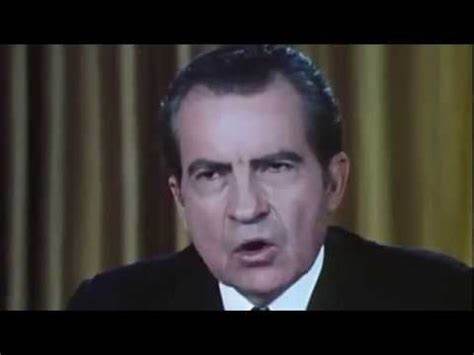
The lockdown files, like the Nixon tapes before it, have revealed, in embarrassing and shocking detail, the appalling behaviour, language, trickery and abuse that people lost in their own hubris, intoxicated with power, infected with the worst sort of moral superiority and dangerous over confidence have felt free to spout, not realising that they will be condemned by their own words. It was Nixon who had the idea of recording all the conversation for his memoirs to display his own glory in much the same way that our former health secretary did. But pride comes before a fall.
Although there is nothing new that has been revealed in the leaked messages, the fact that government policy was carried out, in the middle of a crisis, on a platform like Whatsapp still shocks. Parliament and even the cabinet were side-lined by the Quad, and it shows in graphic detail how degenerate our politicians have become, how they have held the public in total contempt and brought their high office into disrepute. I really wanted to believe that these weighty issues, which would have a devasting effect on just about everyone, would have been conducted with dignity, calling on wisdom and integrity, justice and compassion, in the decorum and kudos of meetings around a table, an agenda, discussions, proposals, decisions arrived at and notes taken. I did really want to believe that. But it was an illusion. The five were acting like selfish grubby bores in an undignified scramble for power and protection of reputations. I guess that this is what we have now come to accept and expect from our elected representative. We get the politicians we deserve, they say. It wasn’t just that we were taken for fools, we were fools. It is yet another nail in our national coffin.
But setting aside the duplicity, the folly and the cruelty, the debacle raises another issue and shows how unsuited and inappropriate the digital media (whatsapp, zoom, facetime, teams etc) is for the making of collective decisions at almost any level. True, there are some benefits in using such platforms. When the issue is relatively simple or technical or logistical and when the individuals are some distance apart. That makes sense and can be a great help. But the value is clearly limited and having seen it work we now know how open it can be to all kinds of abuse and bad behaviour.
One of our friends has an important job within the health service and for the past 2+ years she has been working from home. She made an interesting observation. She found that the flat images she was constantly dealing with in mundane rooms with prints and bric-a-brac, fake bookshelves and the odd plant, pointed up her colleagues’ eccentricities, speech defects and annoying mannerisms which she was not aware of before. In a short time, they seemed to become caricatures of themselves. Rather than the person she was communicating with, she found she was communicating with an image of the person. And images are just that, they are not the real thing. All the intricate body language, the nuances, the reflection and the expansive view that the eye takes it, and the camera does not, are lost and the result can be bad communication, bad discussions and very often bad decisions.
Theres a darker side too. Like pornography, the substitution of the real person with an image can create a disconnect. It can open up a chasm between, gratification and responsibility, between lust and love, between the fear of being caught and knowing you can get away with it, between right and wrong. In the team room, the roving eye can find plenty of interest in the knowledge that no one can see what it is leering at. The sense of propriety and modesty and politeness which so often restrains vulgar impulses, in real life, can be lost in the digital one. With every giant leap in technology, we can be so enthralled by the new and amazing possibilities for good, that we lose sight of the tremendous potential for evil. We forget that out of the heart comes evil thoughts—murder, adultery, sexual immorality, theft, false testimony, and slander. Casting off the restrictions and barriers, letting it all hang out, can lead to a dark place. Like the miracle drugs that have such astonishing powers to assist in healing, they can be extremely dangerous. We should be careful to recognise the danger of interactions on these platforms and treat them with care and respect. That’s one lesson we can learn.
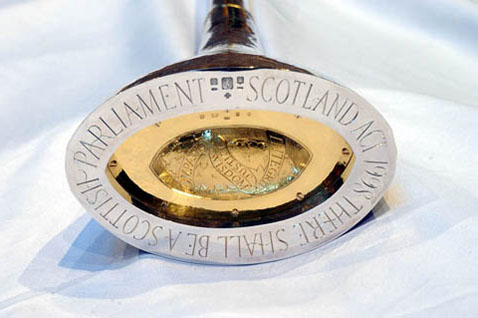
Just a few years back, A young woman, a visitor to our church found a seat beside us and we struck up a conversation. Over coffee afterwards, we learned that she worked in politics and was just passing through the city on her way to Edinburgh. We invited her to stay for lunch, we had other guests that day and she spent most of the afternoon with us before catching her train south. She was intelligent interesting and personable and we had a lovely time chatting with the folks who were there. It only slipped out later that she was a relatively newly elected member of the Scottish Parliament.
Since then, we have watched her from time to time speak on the floor of the Parliament and in the media and were always impressed with her clarity, integrity and genuine concern for the people she represented, who I know loved her in return. In many ways it was a breath of fresh air. The person in the public eye seemed to be the person we had shared that time with. This is not as common as you might think. Too often the person in the media, (essentially an image) hardly relates to the person you have a conversation with. There is a dichotomy between the two. That is not necessarily deliberate on the part of the celebrity and possibly more to do with the manipulation of the media to support a given message.
Time will tell if she becomes our new First Minster. At this point it seems very unlikely. But who knows. Maybe the vile and brutal attacks against her in the past weeks and her gracious and unflustered response might just turn minds. The reality is that the SNP need the Greens to govern, and they seem to hate her. Her own party are split over it too.
On the other side the continuity character is more likely to get the required majority, but the outcome is no-way certain and his own position is shot through with inconsistencies. The Scottish Muslim Leaders have made it clear that they would not endorse any of the candidates. When one of the hopefuls is a practising Muslim, this is, at first, curious and it raises the strange conundrum of how a practising Muslim could support policies that fly in the face of the Muslim Faith. The Scottish Association of Mosques made their beliefs pretty clear: “We believe in modesty and sexual relations within the boundaries of marriage. We believe that gender is binary and irrevocably linked to sex. That life is our greatest gift and to be protected. These are our beliefs and we hold fast to them.” His riposte, that his Muslim faith does not affect his political judgement, seems equally strange as there is no division between the religious and civil authorities in Islam. Submission applies in all sections of life not just the private. The western world owe a lot to the Christian understanding of the different realms of Church and state. The Islamic world on the other hand sees no such distinction.
So, I suspect that the third candidate could well squeeze between the two and win the race. The majority of SNP members could well vote for her because they have difficulty in stomaching the alternatives.
But what do I know? While I voted SNP in the past for the very simple reason that, at that time, they were they only party to show any form of competence, something that has since deserted them, I would not now. I am neither an SNP member nor a supporter of independence for Scotland, so I have no direct interest in the outcome. My preference would be for another party, one who started to take seriously the perilous state of just about every aspect of our national life, education, health, justice, family, economy, transport, public services, drugs, and the deep divisions in society. An administration which has been founding wanting in all of these areas, as well as yielding to the disastrous covid narrative now unravelling, is one I would find hard to support.
Still, Integrity and honesty, compassion and wisdom shines through and I have nothing but admiration and respect when I see it. In the end, that may yet be the telling point. It is, I think what people are crying out for. Who knows but maybe she has come to the kingdom for such a time as this.
That she and her party were a disaster for Scotland, there can be little doubt. The catastrophic list of abysmal failures in just about every aspect of our national life are testament to an administration that was impotent in the face of the deep problems they had to face. It is invidious to repeat, because we know what they are, but it seems that the failure was catastrophic in everything they touched and these failures are only amplified when we scramble around to identify what might be the achievements.
Perhaps the biggest failure, in common with so many administrations, was their inability to see the limitations of their office. A lack of appreciation of the first responsibilities of government, which is to protect the citizens from bullies outside and in. There was a naïve aspiration to reach beyond these responsibilities and pursue impossible dreams without the qualifications or the authority to do so. So that, rather than focus on things they could do, they got lost in pursuing things that they never could. It is not in the gift of any governments to solve the deep problems that afflict our society. The problem is thinking that they can.
Many people including some of her fiercest critics have paid tribute to her management of the Covid crisis where she showed a level of leadership when others, notably the Westminster government, were dithering. It is hard to deny, but there is an underlying assumption that that there was in fact a real crisis and a real pandemic. Leadership, in itself, is of no advantage if the narrative is suspect and this one certainly was.
I believe it was a disaster for Scotland, but then, I am not convinced anyone could have done better, perhaps worse. Equally I am not necessarily convinced that the new incumbent, whoever that might be, will be able to turn things round in any significant or meaningful way. So, for those who are, metaphorically, ‘dancing on graves’ be careful what you wish for.
I met her once, chatting with folk over tea following a funeral. She was pleasant charming and, in many ways, an ordinary likeable person. But that’s the world we live in. The person in the media and in the public eye turns out not to be the person in real life. She will be 53 this year. She has been ‘Nicola Sturgeon the politician’ all her life and wants to spend a bit of time on ‘Nicola Sturgeon the human being’. I hope she can do that and, despite my sense of foreboding, wish her heir every success in governing with Wisdom, Integrity, Justice and Compassion.





 Restless Spirit