THEY THINK IT’S ALL OVER

You would think that now, four years after the day the world went mad and governments flipped like circus dolphins in near perfect unison, it would be a time to lay things finally to rest. Now that those responsible have had their day in court, been held to account, the truth now revealed and lessons learned, you would think that a line could be drawn, the whole sorry tale could be laid to rest and we can move on. It turns out not to be so.

It is not over, because even after four years there is still no definitive account on where the nasty virus came from and we are unlikely ever to get that. There seems no will or interest in finding out and anyway, does it really matter? Well, yes, it does. If this was deliberately created in a lab as part of a biological weapon programme and leaked by accident or on purpose, it would be good to know.  

It’s not over, because there has been so little recognition of the terrible harms that have been needlessly caused to the very fabric of our society.

Lockdowns were a holiday for those in secure jobs, a party for those making the decisions, a gift to those with latent ambitions to boss others around, a respite for those who like to be told what to do, and a middle-class indulgence with gardens and welcome time to spend with their kids . But for the rest, for most, the experience and the long-term effect on our society on our economy on our health, on respect for authority, on value for education, on our humanity, was a disaster and, critically, one needlessly and recklessly imposed upon us.

Masks were a fiasco. The virus was transmitted by aerosols not droplets. The scientists knew this from the start, which was why they told us, on camera, that the pieces of cloth were worthless. That was before they flipped because of political pressure. Not only were they worthless in halting transmission, they were dangerous. The warnings which should have been printed in the package of every mask would include a list of likely side effects; dermatitis, headaches, perpetuating fear, stunting infants’ cognitive and emotional development; excluding the hard-of-hearing, evoking fatigue, reducing lung efficiency, tormenting the autistic, increasing falls in the elderly, re-traumatising the historically traumatised, the inhalation of micro fibres, concentration impairment, reducing the quality of healthcare, discouraging patients from attending hospital, impeding school learning, the aggravation of existing anxiety problems, encouraging harassment of the mask exempt, enabling criminals to escape conviction, and polluting our towns and waterways.  I am still waiting for someone to put their hand up.

The vaccine might have saved lives but there is no actually proof that they did. With mass vaccination there could be never be a controlled test, so we will never know. We do know, however, that it was never fully effective and there were genuine doubts about its safety. Enough doubts for alarm bells to ring and the roll-out halted. But it wasn’t. Curiously, unlike what happened with other vaccines, no alarm bells were heard and nothing, it seemed, was to get in the way of the programme.  So many untruths were told: that it would stop you getting the disease, that it would stop you transmitting it, even though the manufacturers knew and have admitted that these were false from the start. No answers were given to the very reasonable question “ Why were the pharmaceutical giants given a free pass with no liability?”.  Anecdotally it is clear they had little, if any, effect. All the people I know who get covid have had the vaccine multiple times. People I know (a few) who refused the vaccine didn’t get covid. For myself, I took two doses of the Astra Zeneca vaccine before it was quietly withdrawn. I wasn’t aware of any bad side effects, but not long after I was serious ill and spend over two weeks in hospital with an unexplained large abscess in the liver.  The consultant couldn’t say why the bacteria lodged itself there, but the likely hood that the vaccine had tampered with my natural immunity made that a credible explanation.

It is not over, because there has been no proper accountability. The behemoth covid enquiry trundles on, studiously ignoring the very questions it should be asking and the key players with some exceptions are still there, many moving sideways in the revolving door of our corrupt institutions. And they are corrupt. When the institutions of government shuffle failed politicians and executives into other salaried positions carrying their pensions with them, then you know serious corruption is involved. So, an Inquiry wont’ cut it. Perhaps a “Truth and Justice” commission might be the thing, but I fear that a line can only be drawn once the matter comes to court.

Emily Oster wrote an astonishing piece in “The Atlantic” in October 2022 calling for “a pandemic amnesty”. The reason she gave for moving on was that governments and those making the decisions were well-intentioned and their pronouncement rested on benign ignorance. You know the sort of thing, “We were doing our best.. we might have done things better but .. it was all for the common good.” Oster’s generous forgiving attitude to those culpable is understandable and even commendable but it doesn’t serve the interests of justice.  

It is not over, because we still can’t talk about it. Many a social gathering has been ruined when someone carelessly mentions the dreaded C word, or when you innocently profess that you never believed in it, and everyone goes silent.  It is that awful moment among friends or family or just folks you know when they discover they have a traitor in the midst and the surprise is palpable.

It is not over until there is truth and justice and honesty and transparency and it’s not over until we can talk about it.
Indignity in Death

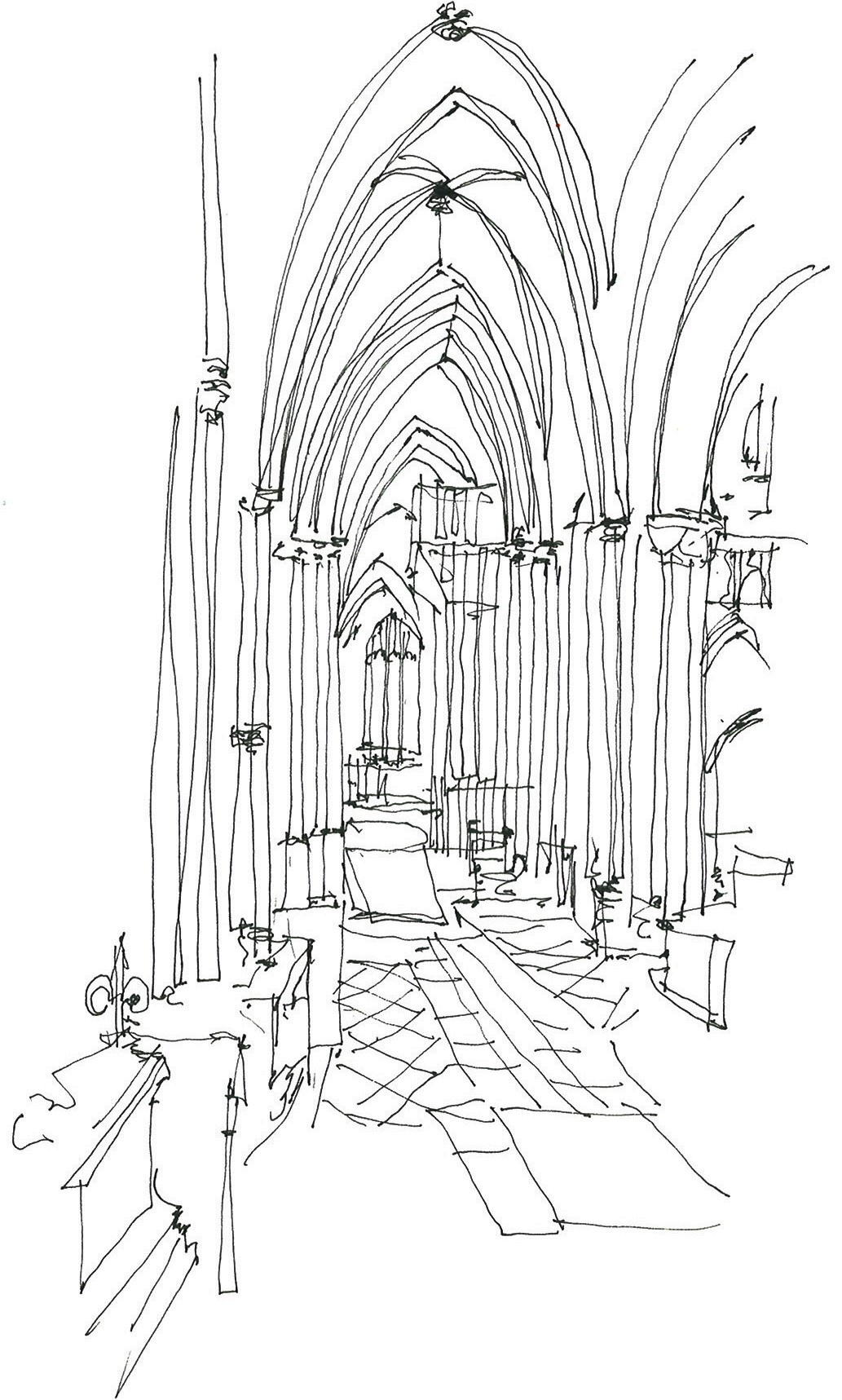
I didn’t need to see the picture. I saw it in my mind the solitary figure, decked in black, sitting in the ancient chapel, masked and distanced and silenced as she watched the physical remains of her husband of seven decades, being lowered into a hole in the ground beneath the stone floor. Somehow it was a picture like no other, which epitomises the dreadful end of an era.

My concerns were not for her. Even in this enforced humiliation she retained her dignity. I have no doubt that her spirit would rise above all that. Nor were my concerns for the thousands of others who have had to face the same indignity in the loss of those they loved, over the past year, including some who are close friends. My concerns were for the ones who devised the plan and wilfully manipulated a compliant population in adopting, almost without question, the foolishness of the charade.

I would not like to have been Boris Johnstone or his advisors or the other leaders falling in his train, watching on their screens, following the spectacle, aware of their role in forcing the sovereign, who had seen out thirteen prime ministers, to endure this pitiful spectacle. I wonder if the cruelty of it even crossed their minds or if they ever felt any shame. I suspect not, but it was a shameful thing that they had done.

The triple lock, enforced mask wearing, distancing and the banning of singing at services of all kinds strangles the very life from such occasions and in the face of death makes it especially bitter. It could only be the coldness and cruellest of hearts not to see what this means for a grieving relative. That moment in time, that would never be recovered or retrieved: when they most needed their close family to be close, when they needed that comforting arm around them, when they needed to see that reassuring sympathetic and familiar face, when they so needed to be reminded of the truth that death is not the end and be able to sing, with the congregation, the songs of faith.  That moment senselessly and cruelly taken from them.

The government should have gone the whole hog, banned all funerals, instructed local authorities to dispose of the dead as they saw fit and put out a nice thing on zoom.

Maybe they don’t feel any shame, but I do.

Bare Existence

Some folk who have seen and read my posts over recent times have complained, probably justifiably, that I am stuck on the one issue, becoming angry, repeating myself and maybe becoming a bit boring. After reading the open letter to our leaders in the UK yesterday, I realise I need say no more. The letter says it more clearly that I could. This is the text. The highlights are mine

To: The Prime Minister Boris Johnson, First Minister Mark Drakeford, First Minister Nicola Sturgeon, First Minister Arlene Foster and Deputy First Minister Michelle O’Neill

Dear Prime, First and Deputy First Ministers,

As church leaders from across the four nations of the UK, we have been deeply concerned about the impact of the Coronavirus pandemic across society. We have carefully followed government guidance to restrict its spread. But increasingly our concern relates to the damaging effects of anti-Covid restrictions on many of the most important aspects of life.

Our God-given task as Christian ministers and leaders is to point people to Jesus Christ, who said he came to bring ‘life in all its fullness’. Therefore we are troubled by policies which prioritise bare existence at the expense of those things that give quality, meaning and purpose to life. Increasingly severe restrictions are having a powerful dehumanising effect on people’s lives, resulting in a growing wave of loneliness, anxiety and damaged mental health. This particularly affects the disadvantaged and vulnerable in our society, even as it erodes precious freedoms for all. In our churches, many have been working tirelessly to provide help to those most affected.

We entirely support proportionate measures to protect those most vulnerable to SARS-CoV-2. But we question whether the UK Government and the devolved administrations have it in their power either to eliminate this virus or to suppress it for an indefinite period while we await a vaccine. And we cannot support attempts to achieve these which, in our view, cause more damage to people, families and society – physically and spiritually – than the virus itself.

The public worship of the Christian church is particularly essential for our nation’s wellbeing. As we live in the shadow of a virus we are unable to control, people urgently need the opportunity to hear and experience the good news and hope of Jesus Christ, who holds our lives in his hands. The supportive relationships that churches nurture between people are vital, and simply cannot be dispensed with again without significant harm. And most of all, we know that regular gathering to worship God is essential for human life to be lived to the full.

We have been and will remain, very careful to apply rigorous hygiene, social distancing and appropriate risk assessment in our churches. As a result, church worship presents a hugely lesser risk of transmission than pubs, restaurants, gyms, offices and schools; and it is more important than them all. We therefore wish to state categorically that we must not be asked to suspend Christian worship again. For us to do so would cause serious damage to our congregations, our service of the nation, and our duty as Christian ministers.

We therefore call upon the Westminster and devolved governments to find ways of protecting those who truly are vulnerable to Covid-19 without unnecessary and authoritarian restrictions on loving families, essential personal relationships, and the worship of the Christian Church.

Yours faithfully,

Rev A Paul Levy, Minister, Ealing International Presbyterian Church, London
Rev David M Gobbett, Lead Minister, Highfields Church Cardiff, Wales
Rev Dr William JU Philip, Minister, The Tron Church, Glasgow, Scotland
Rev David Johnston, Minister Emeritus – Presbyterian Church in Ireland 
Rev Dr Matthew PW Roberts, Minister, Trinity Church York, England

Masked

When I was quite small my mother told me, in the melodramatic way she would often speak about such things, to make sure the bedroom window was open when you slept, otherwise, she said, you might die in the night. I didn’t want to die in the night so, ever since, I’ve made sure the window was open even just a little. Now our bedroom window is only closed when horizontal snow is blowing in. For a long time the window was broken,anyway, so we couldn’t shut it. My mother’s advice at the time was a wee bit over the top as we lived, for most of our young lives, in old manse buildings where the draughts at times would resemble Atlantic storms. If we happened to die in the night it would not be due to lack of oxygen.

In school I remember the rather potted science lesson that we needed oxygen to breath and we expelled the burned-up oxygen, the carbon dioxide. Through the beauty of nature the plants did the opposite which made for a good balance. Inevitably it is more complicated than that but the principle is still intact. Anyhow, I knew, soon enough, that there would be plenty oxygen even in a small bedroom to see me through the night, but the need for fresh air was vital and the lack of it very unsettling.  I know I shouldn’t be, but I am always surprised when I get over the door and the fresh air hits me and my mood and temperament and the feeling in my gut can change so quickly and I am thinking  “So that was what was wrong.” I noticed this especially amongst children who can be cooked up in at home, bad tempered and unbearably irritable but immediately out in the fresh air all of that changes and they can become different poeple.

So I knew, when the call came to stay home and save lives, that it was quite wrong, that it was thoroughly bad health advice and a horrible imposition to force on an otherwise healthy population. To quarantine the healthy must be one of the most foolish things for any government to do. But they did it. No doubt, they will admit to this and other mistakes, in time, as they are already doing. They will fall back on the useful crutch of saying they were following the best scientific advice at the time, or as Matt Hancock bizarrely claimed, the guidance was “really strongly interpreted”, but by then the damage will be done.

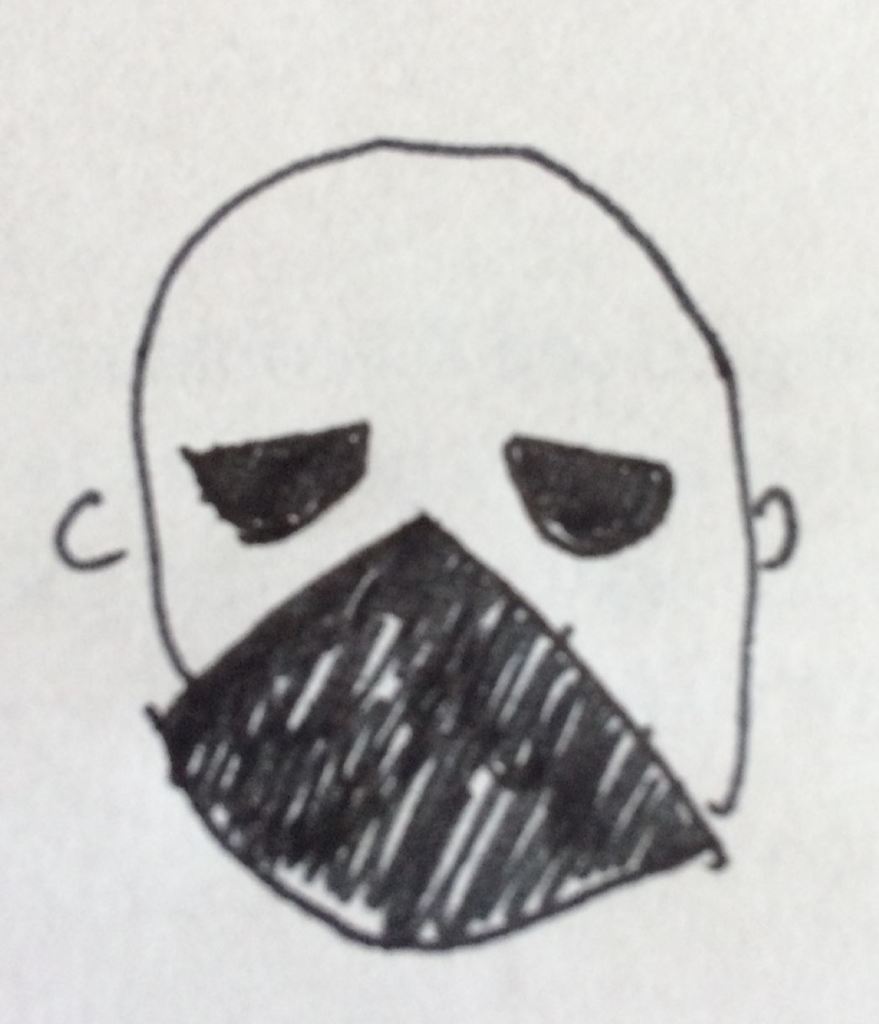
Now we are faced with the next phase of governmental insanity with the compulsory wearing of face masks in shops and public transport. Now we are mandated to breath in our own carbon dioxide, just what my mother warned me about. It is true that fresh air will be pulled through the mask but it is inevitable that a  good deal of the air we breath in a mask will be recycled carbon dioxide. It is effectively breathing poison, liable to make you light-headed or dizzy and even sick.   We know that standard medical masks can barely filter out coronavirus yet to use a mask made from an old shirt or sock, or a scarf or a buff, or whatever seems to be ok. It doesn’t make any sense.  The effectiveness of these coverings has never been tested nor could it be. There is so many variables and so many ways in which a mask could be used or misused – touching it, taking it off to drink or use the phone, not sterilising it properly before reuse, and a thousand other things that we see people do all the time. It is totally absurd, but we have to go along with it.

Tomorrow, I leave early for a nine-hour return train journey. I am not looking forward to it. I used to love long train journeys but this looks to be singularly unpleasant. I can feel the claustrophobia already. Now, I am not a rebel and always try my best to obey the law and not step over the line, But, if I do lapse and someone picks me up, I reserve the right to roll my eyes. That is one part of my face they will still be able to see.

Crawford Mackenzie

The Feeling of Doom

Before we were grounded, I used to meet up with a couple of other guys every Monday morning early, to spend an hour praying together. We could have continued that digitally but it was not something I wanted to do and for me it came to a natural end. But, while it lasted, it was special and the perfect start to the working week. Before we prayed, we would chat about things that were on our mind, things across the world, events in the news, local situations as well as our own personal concerns and worries. It takes time to build up a level of trust but when that trust is won it is astonishing how easy it is to share often quite intimate things. Sometime last year, when asked what was on my mind, I spoke about a deep unease I had, a sense of foreboding and premonition that something big was coming that would shake us to the core, that would undermine all the things we relied on, the things we felt secure about and we were just not prepared for it. When it came to Coronavirus, one of the guys reminded me of that morning and said “Remember what you said? …Well this is it”.  The trouble is I am not convinced that “This is it” nor do I think that when the virus has past, that the crisis will be over. It has probably just begun and I find I “can’t shake this feeling of doom”.The line is from Mary Chapin Carpenter’s “Age of miracles”

“We can fly through space with the greatest of ease
  We can land in the dust of the moon
  We can transform our lives with the tap of a key
  Still we can’t shake this feeling of doom”

It is not of course, about me. In many ways this period suits me to the ground. I like staying at home and have no particular desire strange places to see. I like my own space and my own time to plan out my day. I like pluttering about doing small jobs, tidying up, cleaning, the odd sketch, working away on tunes on the guitar, learning Arabic, trying to make something creative with the left over vegetables in the cooler tray, sitting on the bench reading till the sun slips over the roofs and writing the odd letter. I can hardly complain. My depravations: not being able to work, to see my family, to play football, to go for a swim, to join in worship or share with my church family, except in two-dimensional, pixelated boxes, are nothing. Compared to what others have to suffer it doesn’t register on the scale.

No, it is not about me. And it is not about the worry over my children, my grandchildren or my family and those I Iove and care for. It is not worry over what they may have to face in a future unlike the one I have known. They will have the resources to survive and prosper, of that I am sure. They will know better than me. I have entrusted them into God’s care and know they are secure in his hands. I have complete peace about it.

No, it is the sense that you can see a terrible disaster unfolding before your eyes and you watch helpless and unable to do anything about it. And that terrible disaster is not the dreaded virus itself but what will come from the fear and suspicion that has been sown and the panicked suspension of the very lubrication that makes our society function. When an engine has ceased up for lack of oil it is no easy matter to get it to turn again, as our leaders are finding out. Once you sow fears in the population they grow and become extraordinarily difficult to root out. Once you tell people to stay at home to save lives it’s hard to turn round and tell them to get back to work, this time to save them from starving.

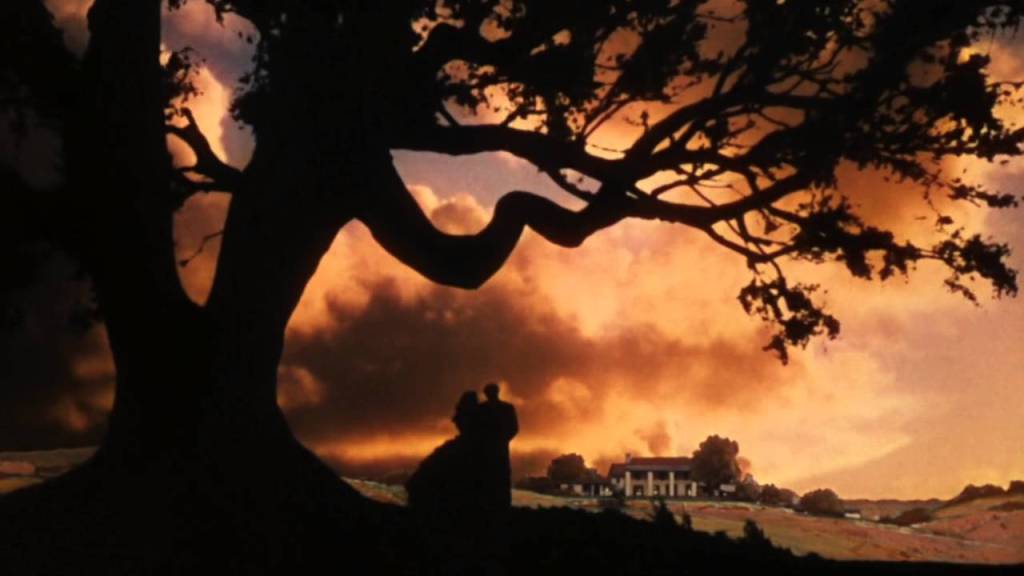
Now, I know that this extraordinary measure is only meant to be a temporary one, but temporary has a nasty habit of lasting a long time. It has already been extended twice beyond the original timescale and this gives me the jitters. It is likely to be extended again. Now it is over the anxiety of a second peak, but it could be for a third or a fourth. My confidence in those running the show, which was already pretty shaky, has taken a severe battering, especially when we discover that some clearly didn’t even believe in the anti-social policy, they were promoting, themselves. I think we are in danger of killing something it might be impossible to resuscitate. In Joni Mitchell’s words, “We won’t know what we’ve lost till it’s gone”. Without realising it, it could be gone with the wind.

That is what brings me the feeling of doom, that I cannot shake. But it is a feeling and it is not what I know. What I know is hope. A hope not in politicians, nor national institutions, nor in the church, nor in people nor in humanity itself, but in God.   And that’s what keeps me sane.