HISTORICAL GUILT

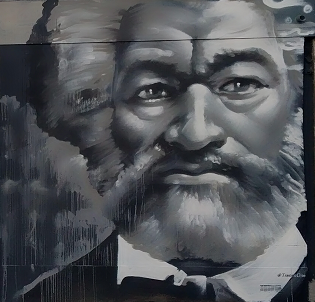
The denomination to which our local church belongs recently found it necessary to carry out an audit and examine what links the church may have had with the Trans-Atlantic Slave Trade.  As a relatively newcomer in the denomination, I was unaware of the controversy, that dated back to the early days of the church, which was founded in 1843. What at first was puzzling was that Slavery had already been outlawed in the antis-slavery act ten years earlier (though this only covered part of the British Empire) and it seemed strange that the church could be complicit in slavery when it was still unborn.  The reason for the controversy, however, was explained, by a visit which a delegation from the new church made to the American South in 1846. This group which included Thomas Chalmers were seeking the support of churches in America and you can understand why a secessionist movement would get a great deal of sympathy in the South. The delegation returned with a not insignificant gift of £3,000, but many within and out-with the church considered this money to be “tainted” as it likely came from slaveholders and a campaign to “Send the Money Back” was initiated. Fredrick Douglas, the abolitionist, was a strong and vocal advocate for the campaign, and lent his support while in Scotland, which included an attempt, with others, to carve the slogan on the cliffs of Salisbury Crags. His portrait now graces a wall in Gilmore Place, close to where he once lived. But the “blood money” was never returned. How the church resolved this at the time, I am not sure, but I suspect that a degree of pragmatism was involved. Even if an error was acknowledged, returning the money would not have helped the cause of those still enslaved in any practical way.

But why, more than 150 years after the event, the issue has now had to be revisited?  It seems strange in the extreme. Afterall, the history of these events has been well known to the church and this assessment could have been done at any time. Why now?  And why is that while the history of this hideous trade has been taught in school and accepted for what it is a heinous sin in our nation’s history, one on which there was national admission of guilt, repentance, the passing of anti-slavery laws and the costly efforts to have the trade banished world-wide, why now is there to be a another reckoning? 

Is it simply to do with the way these things come in waves in the public consciousness?  I remember in the 60’s the campaign for nuclear disarmament was a very hot issue, but strangely over the following decades, despite increased proliferation, the issue slipped into the background and only resurged again in the more recent decades. I remember one of my colleagues in our Architectural practice back in the early 70’s arriving at the office one day sporting a CND badge. We thought that rather quant at the time.

Could it be the very subtle infiltration of a way of thinking that owes more to Marx and Lenin than our Judeo-Christian heritage? A way of thinking that views the act of de-humanising another human, made in the image of God, not so much as a sin but simply part of the worldwide class struggle? The never-ending battle between the oppressed and the oppressor, the powerless and the powerful, the victim and the victimiser.  Guilt is not so much personal but historical and in Marxism there is no forgiveness. Czeslaw Milosz, in his classic work “The Captive Mind” which must stand alongside works by Orwell, Solzhenitsyn and Havel in exposing the depravity of totalitarian culture, explains this succinctly in a chapter entitled “Man- the enemy”. Here the real enemy of the Marxist-Leninist project turns out to be humanity itself.   

“The contradiction between Christianity and Stalinist philosophy cannot be overcome. Christianity is based on a concept of individual merit and guilt; The New Faith on historical merit and guilt. The Christian who rejects individual guilt denies the work of Jesus and the god he calls upon transforms himself into History”

The enemy then is the reactionary.

“The sin of the reactionary is argued very cleverly: every perception is orientated, i.e. at the very moment of perceiving, we introduce our ideas into the material of our observations; only he sees reality truly who evaluates it in terms of the interests of the class that is the lever of the future, i.e. the proletariat. The writings of Lenin and Stalin teach us what the interests of the proletariat are. Whoever sees reality other than the proletariat, sees it falsely; in other words, his picture of reality is deformed by the pressure of the interest of classes that are backward and so destined to disappear. Whoever sees the world falsely necessarily acts badly; whoever acts badly is a bad man; therefore, the reactionary is a bad man, and one should not feel sorry for him.”

So you can feel indifferent to the sufferings of those whose only crime is the blocking of “historical progress” and Milosz concludes :

“This line of reasoning has at least one flaw – it ignores reality”      

But I suspect there is also another reason. It is much easier and less troublesome to focus on vague historical communal guilt and show virtue over our passion for the sins, than it is to confront the brutal reality that slavery exists today. Added to that is the disturbing thought that we could in some way be complicit in and benefit from it.

My contention is that instead of wasting our efforts, handwringing and agonising over the crimes of the pasts, we should be grappling with the brutal reality of slavery today. Instead of exhuming skeletons, historic crimes, which have been acknowledged and confessed, which have been forgiven and forgotten by God, we should apply ourselves to the very real live suffering of others. I am thinking of trafficking of children, the sweat-shop factories and the mining of toxic minerals. Minerals, which are necessary for the production of our mobile phones, electric cars, and all sorts of devices, including the one that this is written on.

Crawford Mackenzie
UNDER THE INFLUENCE

I remember being drunk once. I am not proud. It was the last evening of a field trip with fellow students in my fourth year in Architecture and we were drinking in a barge moored on the Ouse in the centre of York.  It was a riotous evening and for the first time I was right in the centre of it and shared a wonderful new-found bond with my compatriots. There was a piano on the barge and when the landlord was trying to usher us out at closing time, (there was “closing time” in those days), three of us got onto it and started to play. One of the guys was actually an accomplished Jazz player, but together it seemed we produced the most amazing thrilling. When the only guy with a car drove us home, he was also drunk, we were doing some crazy things at speed around parks and up-side streets. I remember the terrible feeling that things were now quite out of control. Finally, when we got to our accommodation, I climbed the rickety stairs to the room in the attic, which I shared with three others, and threw up in the sink.  The next day, on the journey home, I felt terribly ill.

I remembered that event, recently, when thinking about what Paul said in his letter to the Christians in Ephesus “Don’t get drunk with wine but be filled with the Spirit.” We often refer to people who have had too much to drink as “being under the influence” we don’t need to say of what, we know. Paul seems to be saying don’t put yourself under the influence of strong drink, which can change your mood and your manners, sometime quite spectacularly. It can take over control of your mind and your body and your tongue, but put yourself under the influence of the Holy Spirit, let him control you.

It is not insignificant that potent alcoholic drinks, whisky brandy vodka etc are classified a “Spirits”. And you can see why. It begs the very difficult question “whose control are you under?”. Most people would answer “Me, of course, I am in control of myself” I decide, I chose to go and do and say and think. I chose to drink or not to drink. My life my choice. but if we are brutally honest with ourselves, do we really believe that? Do we really believe that we have full control of ourselves? Have we never regretted what we said or did or thought? Have we reacted in the way we wanted to:  when thrown a curved ball, when someone cuts us up on the road, when we suffer unjustified criticism, abuse, and slander or when our kind acts are returned to us with ingratitude?

When Paul describes the fruit of the Spirit, later in his letter, he puts in self-control as the final facet of the fruit of the Spirit.  And it follows that it is only under the influence of the Holy Spirit that we can have true self control.

I want to be under the influence of God’s Holy Spirit today.

LOVE AND HATE

By the rivers of Babylon Saul Raskin

In our local church family, we, in common with many other churches, have several small pastoral groups that meet each week in individual homes, where we read and study the Bible together and pray for each other, for the church and for the world.  It is a very special time, with a wide range of ages experiences, backgrounds and stages in life, but with a common love for the lord Jesus and a bonding that transcends all human barriers.

We have just begun a short series of studies in the Book of Psalms in the Old Testament, not individual psalms but particular themes that run through this collection which deals with almost every human emotion: joy, loneliness, honesty, remorse, sadness, fear, anger.  In this we have been helped by James Montgomery Boyce, David Taylor, John Day, Gordon Wenham, Erich Zenger ,Derek Kidner and C S Lewis.

Inevitably, we will have to consider the Psalms that include cursing, of which there are many. Something like one-in-five have calls for vengeance or cursing in some form or other, with Psalms 58, 109 and 137 being amongst the most terrible. Throughout the centuries these have been a problem to Christians and it is not difficult to see why. They are also often quoted by those who argue against the divine inspiration and authority of scripture as reasons why we cannot believe in the bible. “How can we take the bible seriously” they will say, “as it is full of so many contradictions”. A good friend of mine, only the other day, said just that and gave this as the reason why he had stopped reading it. The authority of the bible was subject to a higher authority, in his case, that of his own rational mind. So, It is really only a problem for the Christian who believes in the authority, authenticity and inerrancy of scripture. For those who don’t, it should be of little interest or concern.

But here I have a disturbing thought. Could it be that the reason why Christians find these words, expressing outright hatred and white-hot rage, problematic, is that the problem is with us? Could it be that there is something about this God we are missing and just not getting? Could it be that we have not really grasped the absolute horror of evil, the heinousness of sin and where it inexorably leads? Maybe we haven’t stood by the remains of the furnace in Auschwitz and heard the guide tell us to be careful because we are standing among the dust of hundreds of murdered lives. Maybe we have never seen the heaps of bodies burning in Chin state in Myanmar. Maybe we have never been with the pastor visiting a village in the DRC, just a few months ago, and coming across the bodies of men women and children lying where they were shot with a single infant still alive in the arms of its dead mother. Maybe we have never recognised the corruption, deceit, selfishness and greed that knocks at the door of our own hearts. Maybe we still think the battleline between good and evil lies not in us, but somewhere out there. 

Christians, however, have coped with this “problem” in different ways.

One was simply to ignore the offending passages.  But that is hard to do, if you believe that “All Scripture is God-breathed and is useful for teaching, rebuking, correcting and training in righteousness”. So that doesn’t work.

Another is to see these expressions as wrong and should be condemned. Scripture includes many things that are wrong. David’s sin with Bathsheba being one. But that doesn’t really work either. because while David’s sin was condemned and he himself confessed it, the Bible, at no point, condemns the writers of these psalms for what they said or for the desire for vengeance which they expressed.

A third, which many have settled on, is the idea that these expressions belong to the Old Testament while in the New, Jesus and Paul have shown us a better way- how we should love our enemies, how we should bless and not curse. The Psalm writers under this explanation had a limited understanding of things and really didn’t know any better. But this falls too because love for your enemies was not a new idea or a new command. It is embedded in the Old Testament law and Jesus quoted the proverb which explicitly say we should feed our enemy when he is hungry and give him something to drink when he is thirsty. On the other side, Paul pronounced a curse on Elymas the magician and Jesus himself pronounced a curse on Israel.  So, we have love for the enemy in the Old and curses in the New.

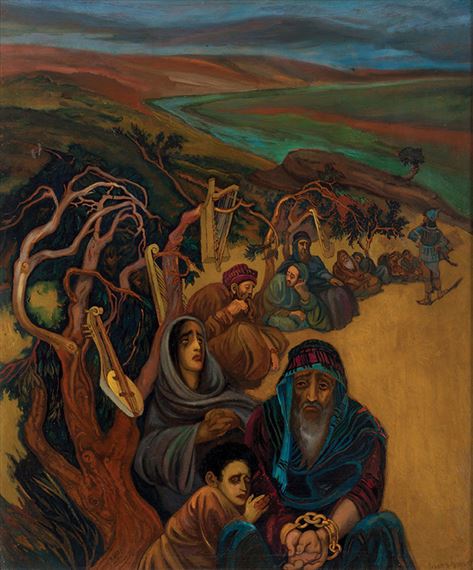
What we found most helpful and illuminating when reading these psalms was to see what the writers were not saying. The writers of the three psalms listed above, who included David and the captured slaves in Babylon, were not describing their commitment to enact revenge on those who brutally persecuted them. They were not saying that they would exact vengeance and repay the preparators for what was done to them. The captives in Babylon, who had escaped the fate of the horrific siege of Jerusalem, the details of which are hard to read or stomach, were not expressing their own vengeance. Their appeal was simply to God for justice. And that is what it is about – Justice. The justice described in the Mosaic law – the principal of equal and just retribution.

Today, when we hear the cry of families of victims of vicious crimes, it is always an appeal for justice, justice for the ones they loved. That’s what they fight for. That’s what they demand from the courts and that is what they never give up on, because it is Justice that is at stake. This is exactly what the writers of the cursing psalms are doing, they are crying out for an equal and just retribution.  But for them the appeal is not to a human court, but to the highest court, to the Judge of all the earth.  And it is this act of taking it, in all its rawness, to God and leaving it with him, which at once, lances that boil, dissolves the rage, neutralises the anger and eliminates the personal desire for revenge. The outburst of outrage is more than just cathartic. It achieves something.

So, we have found, having taken these challenging passages, which sound pretty terrible to our ears, taken them head on, unflinchingly, we have found that they do not, in fact, contradict the law of love but they complement it and we see how the curses and the blessings, the love and the hatred stand together without contradiction.

A LAMP HAS GONE OUT

This week saw the sad death of a local church congregation. It was our spiritual home, our family and some of our closest friends, for almost two decades. So much of our lives were intertwined with the fellowship of people who worshipped God in that place. Though we have been separated for some time, the bonds we had were still solid and when the inevitable news came through, it filled us with an intense and deep sense of loss and sadness.

Our connection began when I was called, with neither qualifications nor training, in the early 90’s to serve as a parish worker, an urban ministry associate, with a local church in a peripheral housing scheme in Dundee. With a beautifully vague job description, I was set loose to grapple with how the gospel of Jesus Christ related to the pretty much neglected people in the housing schemes on the edge of our cities.

It was an issue that concerned me greatly and dated from my late teens when I heard a sermon which changed my life. It was on Paul’s letter to the Christians at Phillipi where he speaks to their attitude and challenges them to follow Christ Jesus:

Who, though he was in the form of God,

Did not count equality with God a thing to be grasped, 

But emptied himself,

Taking the form of a servant

Being born in the likeness of men.

And being found in human form

He humbled himself

And became obedient unto death,

Even death on a cross.” 

I often see things in pictures and it was the picture of a hand that could have held on but let go, that was planted in my brain. So when we got the letter and spread it out on the table in the coffee shop, one drab Glasgow afternoon, we just knew that we had to come to Dundee and to Mains of Fintry Parish Church.

Fintry was one of the earlier post war housing schemes built in Scotland. It was constructed on a bean field to the north of Dundee and in common with housing developments at that time, it had little in the way of public amenities for the ten thousand souls who were housed there. There was a primary school, a pub, a handful of shops and a church. An early aerial photograph depicts a pretty bleak landscape of serried rows of houses, not unlike a concentration camp yet many of the original resident expressed their delight and gratitude coming there, with fresh air, kitchens, bathrooms and modern living.

In the sixties Fintry was also known nationally and had a notorious reputation for poverty, crime and violence. Most of which was centred around the northern edge of the scheme. Two of the streets were renamed specifically to avoid the stigma associated with them, but this strangely had the opposite effect. Even much later, in our time, we had difficulty in obtaining a loan for a car, as our address, within the parish, was problematic to the would-be provider.

It was to this unlikely setting, in the mid 70s, that Peter Humphris was called to be the minster of the congregation whose building stood at the heart of the parish. With his cultured middle England voice and fine manners, Peter might have seemed a strange choice for this setting, but with his wife Kathleen, they stuck to the task and within a short space of time had gathered a good number of new Christians, some who had been brought to faith under the influence of the charismatic evangelist James Gill.  Despite being on the periphery of the city, students were drawn to the preaching, prayer and life of the church, many who went on to serve in other parts of the world. Fintry was one of the first churches in Dundee to welcome Chinese students and internationals from many nations and cultural backgrounds principally through the labours of Malcolm and Ruth Farquhar. Fintry was also the place where the idea of summer beach mission was brought to an urban setting with the running of annual holiday clubs. These sometimes involved upwards of 200 children queuing up at the gate each day for a week’s activities of games crafts music song and stories. These were meticulously planned, with teams gathered from many places and days of training, well in advance. There was an explosion of creativity in writing material, art, music and drama with issues such as child protection addressed long before these became mainstream. There were many other creative inventions, inspirations and ideas too for the telling of the Gospel, some of which were adopted by other congregations and this continued though the ministry of Colin Brough and a focus on the church and the community. It was a purple period, a marrow experience

Things were about to change, however. And it happened far away in the hallowed halls of the Church of Scotland General Assembly in 2009. The decision taken then began a process which distanced the Church from the teaching and authority of Scripture. It was a slow process but a predictable one. It was death by dialogue. In one particular assembly it was the blatant manipulation of process with a fair spattering of deceit.  I had always thought that within the denomination there were two wings: the conservative evangelical and the liberal. What I learned as I climbed the wide stone stairs leading to the Moderators room, with the Principal Clerk who commented on the faces he recognised on the portraits that hung on these rising walls, there was a third wing. They were the establishment. They could be liberal or conservative, as it suited, they could tolerate either. But what they would not tolerate was to lose power over their church. I remember that moment very clearly and, for me, it signalled the end.

But from Fintry, it seemed far away and all but irrelevant. “We haven’t changed,” people would say. “What happens in Edinburgh has nothing to do with us”. “We will continue as we are and preach the Gospel” . But it was an illusion. There was a mistaken belief that we were a congregational church when the reality was that we were Presbyterian and under the authority of Presbytery. While Presbytery would never prohibit or silence the preaching of the gospel they would and could see to the dismantling of churches, linking, merging and uniting in a downward spiral of decline, which had the same effect.

In May 2013 the line had been crossed and I knew that I could no longer, in all conscience, remain within the denomination that had rejected or, at best, deliberately fudged the clear teaching of Scripture.

Leaving Fintry was one of the hardest decisions we had to make and it was a deep wrench. It would have been easier had we fallen out, become disgruntled or unhappy with the direction of the ministry, but it was none of these. And it was a token of the bond we shared that no-one expressed any criticism of our decision and we were met with nothing but understanding and respect for the stand we were taking. But we took it alone.  No-one seemed to share our conviction that this was the beginning of the end for the national church. Even among many friends, who we regarded as fellow travellers, there was a suggestion that we had acted in haste, and the proper thing would be to stay and reform the denomination from within.  Sadly, this was never going to happen and while some churches have flourished and grown in this time, following a congregationalist model,  overall the story has been a devastating one of accelerating decline with the closure of so many places of worship, dwindling numbers and the haemorrhaging of people and resources.

This week the parish church in Fintry is no longer, the people scattered and the remnant absorbed into an anonymous sounding “North East Parish” of 30 thousand souls. A lamp has been removed.  But the Church, the Church of Jesus Christ grows and flourishes, in may places, all over the world, and the gates of hell will not prevail against it.

A Purposeful Habit 4

Reading the Bible.

IMG_1542

It is hard to speak about private daily devotions, because they are, just that, private. In some ways it is an intimate thing. It is better to be doing it than talking about it. Sometimes sharing on the subject can be singularly unhelpful. When hearing about the person who gets up at 5am and reads through the whole of Jeremiah, one of the Gospels and Psalm 119, before spending two hours in prayer, for lists of people in their prayer book, you are tempted to say “Oh come on, get a life”. They are not usually people who have been up half the night dealing with a vomiting child, struggling to get a teenager out of bed, living with a flatmate who left the kitchen in a tip, coping with a husband on the drink, caring for a demanding elderly relative or someone who has to work night shifts.  These testimonies are given with an encouraging intention but the effect is demoralisation. You might just want to give up. So we are treading on thin ice, walking over glass here. It’s just a shame that we find it so hard to talk or enquire about. In all my Christian life no one has asked me “How are you finding your daily reading of the Bible, Crawford?”  I wish they had. There again, I guess I might have told them just to mind their own business.

I have been a Christian a follower of Jesus for as long as I remember. So it’s maybe quite strange and even shocking, (it’s shocking to me) that it is only in the past year or so, that I have finally learned something about the practice of daily bible readings. Something I should have known years ago. It was not that I was never taught, more that I was never listening.

With the strong influence of Scripture Union, Churches and other organisations, I have tried to follow schemes compiled to help us find a way through the bible. Often these would be supplied with helpful notes and encouragements to think through the passage as well as to see how this impacts our life with pointers for prayer. But I always found the imposition of this kind of discipline from outside hard to deal with, which probably says more about my stubbornness than anything else. The critical point came when I would embark on a scheme with very good intentions and then fail and fail again and it led to a spiral of discouragement and resignation.  That way of doing things clearly works for so many people, maybe be most Christians. I don’t know. But they didn’t work for me.

It was when a wise pastor told me, while in my teens, that the Christian life was an integrated life and not a disconnected deconstructed series of activities with boxes to tick, that the light dawned. A “quiet time” could be useful, but not if it became just another thing to do. Something to gain points and help make you feel better about yourself. That, like much of what this pastor said was liberating and I felt a tremendous freedom and a new delight in reading God’s word. Yet in this freedom there still needed to be some discipline, some order, some plan, some direction. It was easy to find yourself in the books of the bible that you liked, parts that suited your temperament. For me it was the Psalms, Proverbs, Ecclesiastes, Mark’s Gospel and Paul’s “happier” letters to the Thessalonians and Philippi. I didn’t go naturally to Romans or Ephesians, avoided Hebrews and pretty well ignored large swathes of the Old Testament. It was also easy to pick out nice helpful bits here and there, often quite out of context.

So over the years my bible reading has at best been sporadic, reading to prepare for something: preaching, leading a group, giving a talk, a children’s’ holiday club, working on material for a song, or anything that took my fancy.   Please don’t get me wrong. You do learn so much when you are trying to teach others. Sometime you only fully grasp a truth when you are trying to communicate with others. But the practice of daily bible reading, unconnected with any preparation or activity, for me, was a very hit and miss affair and there was no pattern to it.

So what has changed and what made the difference?

IMG_4113

Well a number of things. Coming to the church we now belong to, was one of them.  It was not the reason for coming, (that is another story) and in a way there was nothing especially different about it, but it was under the ministry of David Robertson that I found a new focus on the Bible as God’s word. It was not that the Bible was not central in the churches where we had previously belonged.  It was.  But here, for me, it took on a new dimension. It was moving up a gear. It was being pulled nearer to where I should have been. It was having my ears syringed. It seemed that the whole of the church’s life was soaked in the whole of God’s word. It was never an add-on.

Another was reading a book by Sinclair Ferguson “From the mouth of God”, which I can’t commend highly enough to anyone who wants to read the bible. It is straightforward, easy to understand, follow and demonstrates with great clarity why we can trust the Bible, how we read it and how we can apply it to every aspect of life.

Another was a comment by Dominic Smart in a monthly letter to his congregation in Aberdeen. It was that reading the bible should be first before anything else. Hearing what God has to say should be before listening to anyone else.

Another was something Billy Graham said in a video, following a campaign some years ago, when he described his daily practice of reading a psalm each day to re-orientate himself with God, and reading the Proverbs to relate to the world we live in.

Another was something from a book, I didn’t read, but which was quoted to me, on meditation and the serious contemplation of Scripture.

So this is what I try and do:

IMG_3326

I try, each day, to make God’s word the first thing that enters my mind: before reading what other people say about it, before listening to, or reading the news, before hearing the musings of clever people or the prattling of a radio commentator, before social media, before listening to music, because music itself speaks to you. Before all these I want to hear God’s voice.

So I read through books of the Bible, generally a chapter a day, with the intent of covering and continuing to cover the whole: a gospel, one of Paul’s letters, one of the prophets, a book of history or wisdom or from the Pentateuch. Then I read a Psalm, working consequently through the ancient songbook and finally I read a chapter from the book of Proverbs which is helpfully divided into 31 so you know where you are in the month. The practical wisdom alone in the later speaks right into the day whether it is work or any other activity.

Then I get outside for a walk: for the the fresh air, to meditate, to let the words, the thoughts, the pictures, the poetry, the wisdom soak into my being and to wonder at the reality of God’s presence and  bask in his love.

That is what I try to do but even as I write this, it sounds almost formulaic, prescriptive and the very thing I was railing against earlier in this piece. But I know that the experience, the reality and the blessings that pour from this purposeful habit, however that habit is integrated in a life, cannot be measured.

Crawford Mackenzie


A Purposeful Habit 3

Telling the Good News

leaving 2

It was a bright Saturday morning in September. With a fresh breeze and a clear sky we were sailing across the Clyde from  Ardrossan to Brodick, coming late to join a team on a mission to bring the Good News to the hordes of young folk from Glasgow crowding into the Island for one last fling before the winter . It was “Operation Arran”. We were not the only ones who missed the connections the night before and we gathered on the top deck to get reconnected. Among us was Captain Stephen Anderson. He was an evangelist, a former farmer and soldier whose parents had high hopes, at one time, that he would become  the Raj of India, before independence changed all that. He had turned his back on his former life and worked full time, to use the gift that God had given him, to tell the Good News of Jesus to the high and mighty, the ordinary folk and odd balls, the smart guys and rough diamonds and anyone and everyone he met, wherever he went.

Our paths had crossed before on two occasions. One was at Port Seaton holiday camp on the forth estuary. I clearly remembered arriving at the site and being dropped off by my future in-laws who, on seeing the down at heel huts and the noisy crowds made a quick exit. I was to sing for a children’s event outside the tiny wooden chapel at the centre of the camp. An evening service had been interrupted the previous week when a motorcyclist drove throughout the main door up the aisle and out through the south door. It was hot and sweaty and the crowds of children loud and sticky and over enthusiastic would hug you and leave you with the strong desire to start scratching. When I came to sing, I was crowded in and could hardly hear my own voice far less the guitar but when I began something strange happened. The crowd of children and young folk and hangers on were suddenly hushed and seemed to be hanging on every word and when I finished my set Stephen spoke to this rapt audience about Jesus and in his characteristic winsome way.

The second was in the BBC studios in Queen Street Edinburgh, to record a series for “thought for the day” on what was then called the Home Service. The equipment seemed ancient and the microphone looked like it came from the ark. There were lots of tests and misfires before the recordings were put down. I had simply to sing a line of a song as an intro and then stop. There was no cutting and pasting.  While we were sitting in the studio with the producer and technician next door, trying to sort things out,  Stephen suggested we pray. So right there in the dark panelled draughty room with the floor covered in coiled cables and  strange pieces of equipment and quite unaware than anyone was listening,  we bowed our heads and  prayed that God would use this time to bring the message to many across  Scotland . When the team came through to get us started, they were clearly moved.  The prayer had come right through to the monitor.

So there we were, up on deck with crowds of others in the warm sun gliding across the Clyde when Stephen said ” Do you have your guitar with you? Get it out and let’s sing” I was shocked and didn’t like the idea but he was persuasive and we did. Others pulled their instruments from there cases and we gathered in a circle and sang through many of the songs that had become part of our life. Now everyone was listening and Stephen used that moment to speak directly to the crowds of fellow travellers, sitting on the benches and hanging over the deck and gazing out to sea , to tell them who were we were, why we were going to Arran and in the simplest and natural way  why Jesus. On the Sunday afternoon at three when the pub up the hill, discouraged its customers, we were sitting around in the local church hall. Many revellers were diverted into the hall and joined in with the singing, taking over the venue. It became very raucous and we felt we had just about lost control. One of the girls sang “Amazing Grace” recently made into a hit by Judy Collins and the crowd became strangely silent. When she finished, a hush descended and once again Stephen seized the opportunity and speak directly to the crowd.

I learned so much from the man and this was all brought back to mind recently, when I was asked to convene the evangelism committee in our local church. I knew I was not an evangelist. That gift had not been given to me. I do know those for whom the gift has been given and it is a wonderful thing to see, but I knew that was not me.  But reading Paul’s letters, I discovered that Timothy didn’t seem to be an evangelist either yet Paul still encouraged him to “do the work of an evangelist”. So it is for everyone who is a follower of Jesus. We may not have the gift but if we love him, it must be part of our DNA to tell the Good News, for that is what evangelism is.  Leslie Newbigin put it succinctly when he was talking about the difficulties in communicating the gospel to the people of his inner city parish in Birmingham

“How can this strange story of God made man, of a crucified saviour, of resurrection and new creation become credible for those whose entire mental training has conditioned them to believe that the real world is the world that can be satisfactorily explained and managed without the hypothesis of God? I know of only one clue to the answering of that question, only one real hermeneutic of the Gospel: congregations who believe it.

Does that sound too simplistic? I don’t believe it is.  Evangelism is not some kind of technique we use to persuade people to change their minds and think like us.  Evangelism is the telling of good news, but what changes people’s minds and converts their wills is always a mysterious work of the sovereign Holy Spirit and we are not permitted to know more than a little of his secret working.  But – and this is the point – the Holy Spirit, is present in the believing congregation gathered for praise and the offering up of spiritual sacrifice, scattered throughout the community to bear the love of God into every secular happening and meeting.”

 So we could ask ourselves why is that, as followers of Jesus, we seem to be so poor at this task? Why do we seem so reluctant to tell this Good News? Why do we drag our feet and need to be coerced and organised into doing it? The answer, which we would probably not really want to think about and could be quite disturbing, is that maybe we are not ourselves sure if we believe it.

In the past week, I met up with people on two occasions who bounded up to me, their faces full of joy and excitement, with a generous hug and desperate to tell me-  “I’ve got Good News!” One was over a new job the other that her mother’s visa had at last come through and she was able to come and visit.   And I thought “Yes – that’s it”

Crawford Mackenzie

leaving

Bearing Shame

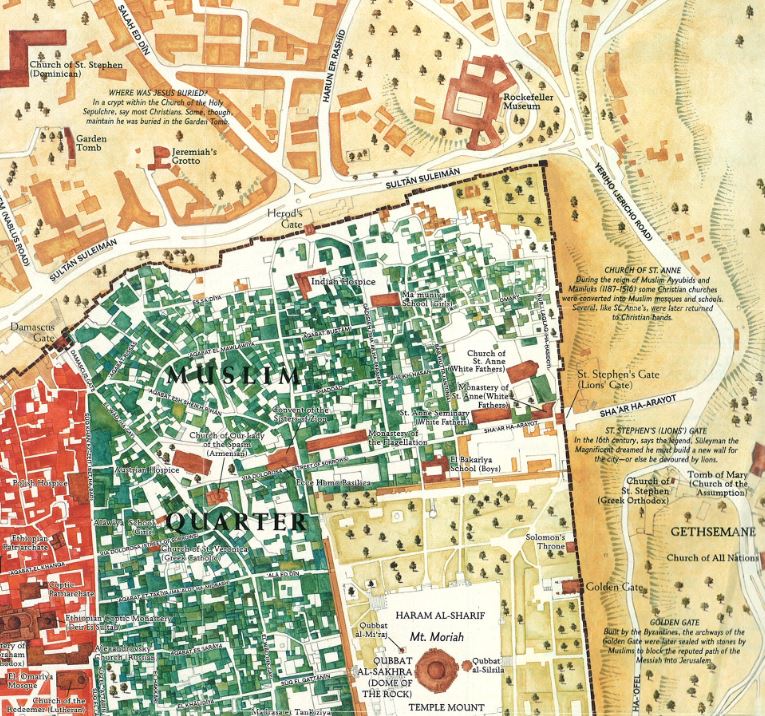
Jerusalem

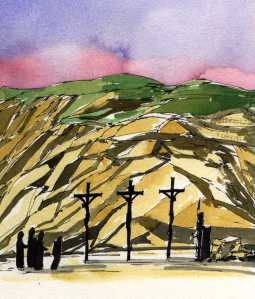
At the back of the hotel, where we were staying, just outside the walls of the old city and close to the Damascus gate there was a marshalling yard where buses were turning, reversed and revving with cars and taxis horns from early in the morning.  You couldn’t sleep after that.  At the edge of the yard was an outcrop of limestone rock pitted and hollowed with small caves and vegetation. If you looked closely it would not be too difficult to imagine the shape of a face or a skull in the fissured rock. I fancied it was here.  I somehow imagined it as a place like this, not up a hill, but on a principal artery leading out of Jerusalem to Damascus, a very public place for a very public spectacle, deliberately chosen by the Roman occupiers to make examples of those who would defy their authority, to terrorise any would be rebels and subdue these troublesome Jews.  The chosen execution of nailing the criminal through the hands and the feet to a wooden post was itself designed to inflict the greatest pain and prolonged suffering. But the greatest terror was the shame of it, the curse of it. The words written on the cross in three languages were “The King of the Jews”  but the word written across this whole defining scene, as if in six foot letters or in indelible ink was “SHAME”.

 They say that shame is an emotion that has been banished and eradicated from our contemporary life. I don’t believe it. I have seen it deeply ingrained on the faces of the men who I used to visit in prison. The awful sense of having been so bad that the punishment was incarceration, with their freedom removed and the forced separation from the friends, family and their normal lives. I found it a very powerful and strange experience on these visits and very hard to deal with. The worst point was when you said your farewells and left, they to their cells and we to our freedom. I have also known shame in my own heart: the emotion that goes beyond an awareness of guilt provoked by an active conscience that could not be silenced. It goes beyond the sense of failure and foolishness to the shock and realisation that you could be such a person who would think these thoughts say these words and do these deeds.  It is one, if not, the most powerful emotion in the human spirit, which has the ability to permanently cripple and ultimately destroy any sense of self-worth or value. It is present in the memory of punishments being meted out, the beltings, the penalties, the exclusions, the reprimands, the forfeit of freedom and, in the ultimate case, the forfeit of one’s life.

 There is something here that is so difficult to comprehend. It is hard to begin to feel yourself into the situation.  It is hard to make sense of it and it proffers a very disturbing and unsettling problem. The prospect that you could be found guilty of a crime so heinous that it could justify the forfeiting of your life, stirs at something so deep and so worrying, way beyond any fear or distress and I think it touches the rawness of shame.   You would have to be a clinical rebel if you could shut your heart to its sting.

 So on this day, this Good Friday and on every day, I want to remember the one who took my shame who bore it willingly so that I can stand guilt and shame free before the Holy God now and when I see him face to face.

calvary

As Philip Bliss has it:

Bearing shame and scoffing rude,

In my place condemned He stood…

Hallelujah,   What a saviour!

Crawford Mackenzie

The Purposeful Habit 1

how to

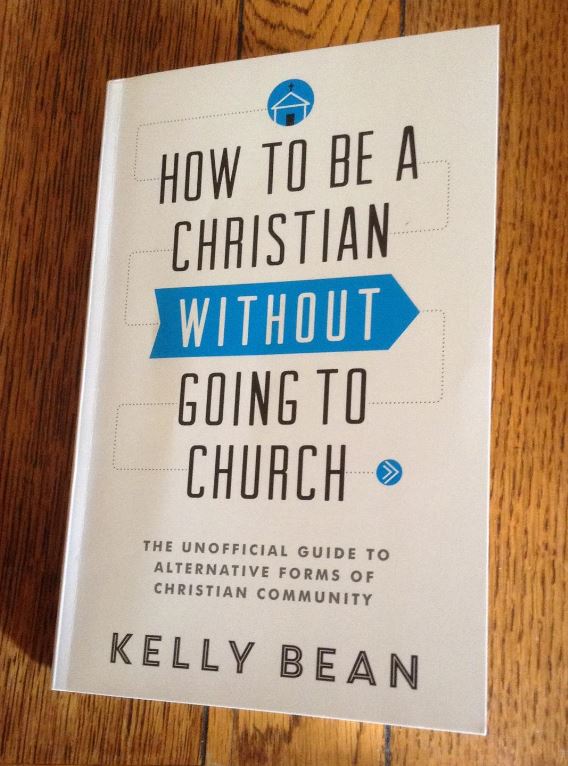
“How to be a Christian without going to church”  Kelly Bean       A Book Review

I am not in the habit of writing book reviews. I am such a slow reader and others do that so much better, but after creating a little stir with a rather flippant post using a play on the title of a book I had just read, I felt I had to explain myself. It was a light hearted jibe but one with a serious point.

It is “How to be a Christian without going to church”  by Kelly Bean, published by Baker Books.  The title catches the eye as it is clearly intended to do and the book addresses the issue of what the writer calls “No-Goers”, of which she is one. These are people who no longer go to church. They are not people who have been believers, have become disillusioned with the church , “lost their faith” and say that they no longer believe,  they are people who leave, yet maintain and continue to practice their orthodox Christian faith.  From the research, which the writer quotes, this has become, in recent years, an unstoppable flood.

There are a series of stories and testimonies from people who have left, to give put some flesh on the background and explain the reasons for leaving: “for their own sanity”, “the structure was killing my faith”,I felt undervalued”,  “I faced rejection and judgement”,  “The system was broken”, “It didn’t match my style” and many other painful stories. It seemed an endless list of damaged and frustrated people who appear to be stifled but flourish when they finally take the step to leave “After 17 years of not going to church my faith is stronger than ever”.  It is a sad and depressing catalogue of failure, but one than anyone who is involved in the church in the west today will easily recognise.

Kelly Bean makes it clear at the outset that she is not against the church. She wants it to be there, to continue and to grow. She would never discourage anyone from joining or sticking with it, she just feels, with a growing number of likeminded people, that it is not for her or for them. She is not, however, advocating being a solitary Christian in fact quite the opposite and here is where her argument seems a little confused and contradictory. She talks about the big shift from “Going to Church to “Being Church”. The first suggesting simply the activity of regularly going to a place, a building , to do whatever. It is understandable why this should be derided because we are called “to be” a holy nation, a people of God, a light to the world.  But if we are to share with any believing community, it involves some movement –we have to go there unless we are always living together. So “Going to Church” is just as relevant and expression. Towards the end of the book she describes intentional communities “ Something is taking shape and spreading as Christians far and wide come together (my emphasis) in a variety of small communities committed to a life lived in simplicity, humility and for others”  so clearly she sees the new movement of non-goers actually going somewhere and it looks like to another church.

I think she is also a little muddled. On the one hand she makes it clear that the church is, as we have always been taught, not a building, a structure, a denomination, an organisation, but the people of God, wherever they come together in twos or threes or in hundreds.  As a “Non-goer” she doesn’t want to be part of this church but, I believe, despite her protestations to the contrary, she is actually trying to set up another church. In her guide to “alternative forms of Christian community” there is alternative worship, alternative bible study, alternative money, alternative baptism and dedication of children, alternative missionary work and even alternative Sunday school and youth groups. In her turning away from all the structures of the church she has defined another church which looks remarkably like the one she has rejected. And what she fails to see is that this simply repeats so much of what has happened throughout the Church’s history.

All the problems she described in “Why are people leaving” are failings in the structures, the organisations, the leadership, and the people but not with its essential reason for being, or with its King and head. The church, I believe, needs reformation not rejection.

I was also struck by two things, which I have to say coloured my whole feeling about the book:

The first is that there is little or no mention of whose church it is. The church is seen as of the people, by the people, for the people, for the community and for the world, when all the time it is God’s. It belongs to him.  It is the church of Jesus Christ.  It is not ours. So we can’t decide what it should be, what it should be like or who should be in it. That is entirely God’s business not ours. Maybe this was taken as read but the fact that it was never stated makes me wonder if the thought was ever in the writers mind.

The second is that, while the Bible is mentioned in a few occasion and quoted very occasionally, there is no hint that these new alternative ways of being community are based or grounded at all on Scripture. Maybe that is also taken as read, but, again, I don’t think so. This omission is serious. At a stroke it knocks away the foundation, disconnects from the basis of the true faith and opens the way for any kind of whimsical and transient philosophy or personality cult to take over and lead to anywhere. The “Non Goers” movement doesn’t seem to be rooted in the Bible but centred on “shared values” and focused on “core beliefs” like those outlined in one quote:

  • God is good. I will practise trusting God with my life
  • God is love. I will practice taking care of myself and loving others
  • God is with me. I will practice peace and not being afraid
  • God wants to talk with me. I will practice listening to Him and talking with Him
  • God always forgives. I will practice forgiving myself and others
  • I feel blessed with this Good News. I will practice being thankful and celebrating moments
  • God has a story of love. He tells it through us. I will practice partnering with Him to bring it to others

At first sight it is maybe hard to find fault with this. But where does it come from? What is it based on? Where is the underlying authority for such statements? How are they defined? When you actually look at the list, there is nothing specifically Christian about it. There is nothing of Christ in it.  I am curious why his name is not mentioned. Is it because, in this creed, Jesus is unnecessary and redundant?  The “Good news” seems to be that “God always forgives”. He will forgive anyway. “It’s his job” as someone has said. If this is an example of where the “Non-goers” movement leads then it is not just alarming it is potentially very dangerous.

If you have read this far you, may not agree, but you will understand why I am concerned.

This is only my take. Go and read it yourself and see what you think and if you disagree let me know.

Crawford Mackenzie

The wedding


the band

I can’t pretend that I am a fan of weddings. I just can’t get excited about the details, the outfits, the flowers, the hair, the cake, the photographs, the music, the waiting around, the hours mingling with glass in hand, trying hard to make conversations, the partying before and after and the mountains of work in preparation and the outrageous cost that goes into just one day. But… and here is the strange thing, there is nothing that moves me so much, that chokes me up and causes tears to dribble down my face as that moment when you see the bride, radiant and beautiful, the friend, the niece, the sister, the daughter approaching with such confidence and poise, the one you have known for years or for just a little while, perhaps you have watched her grow from childhood and you see her now as you have never done before. Immediately all the mean thoughts are banished. She is worth every bit of it, all the work and all the expense. Nothing is to be spared for this, her day.  And then you catch the look on the bridegroom’s face and see the sheer delight in his eyes and the sense of unbounded joy that fills the whole place… and I am converted.

It is something that is very hard to explain or to understand but yesterday as we were basking in the wonder of Jesus’ first recorded miracle, the turning of water into wine at Cana -the subject of the sermon at our evening service, we were beginning to.

Crawford Mackenzie

the band

IN THE PRESENCE

Paul's conversion 2

On Thursday our little group of internationals from China, Nigeria, Cyprus, Malaysia , Ireland, Latvia, Romania, Iran and Scotland shared a meal and sat round the fire to read and think about what Jesus said. We were studying the Sermon on the Mount in Matthew 5-7. We had come to the part where Jesus speaks about prayer and where he teaches the “how to” in the model for all prayer, which begins with these astonishing words “Our father in heaven…”  Before that he gives two negatives – two “how not to”s: hypocritical praise seeking prayers and mechanical repeating prayers. There was so much to think about but the first one stung. It clearly pointed out that you can’t be praising God and seeking praise for yourself at the same time. It was one or the other.

This was particularly on my mind as I prepared to lead the pastoral prayer at our church on Sunday morning.  I wanted it to be good, which was a worthy thought and I wanted people to think it was good, which wasn’t. I struggled with these two conflicting attitudes for some time and I thought I had it licked. But standing at the back of the church while the congregation were gathering, filling up with so many people, I began to panic and was almost overwhelmed with the dreadful thought of failure. The anxiety continued to grip me through the early part of the service and then something happened. We were singing our confession, a version of psalm 51 to the tune Ottawa, unaccompanied, with the tangible sense that we were in the presence of the almighty God- all powerful and all loving. It was as if the whole place was filled with a dazzling all-consuming light that penetrated every corner and crevice. Then it came to me with astonishing clarity “You are coming into the presence of the Holy God and you are worried about what these people think?!”  “You are coming before the creator of the whole universe, the judge of all the earth, the King of kings, the Lord of lords and your are bothered about this lot ?!

When I reached the podium, the Holy Spirt took over and gave me the words so that I could give voice to the prayers of the people, to our Father in heaven, in Jesus name. It is something I hope I will never forget.

Crawford Mackenzie