
Sometimes it is the throw-away comments that get to you.
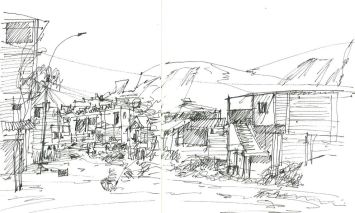
We were back in Lima after a full day travelling through some of the most spectacular scenery I have ever seen (described in an earlier post) through the Sierra, the mountains and valleys and rivers and through the desert on the edge of the mighty Pacific Ocean. Now we were back in this city of eight million inhabitants, the air was thick with diesel fumes, burning rubbish and dust: the fine grey dusty sandy that is everywhere, in your clothes and your hair, in your bed and sometime in the toothpaste. It is hard to escape and brushing and washing and wiping is a continual and perpetual chore. The streets are full of crazy traffic massive lorries and busses, combis and cars and mototaxis all fighting for one piece of the road that will carry them to the next, through massive potholes and rubbish piled high at the side, sometimes cleared away for a park with benches, a swing and sad bedraggled bushes and plants covered in dust. Sometimes, as in the vicinity of the fish market, the smell is overpowering . It was dusk. In the mixture of the grey air: the approaching darkness and the mass of humanity, busy trying to get what they needed to live, against the backdrop of hideous concrete half completed boxes, piled high, it seemed on top of one another and fighting for any available space on the side of the steep hills, with no relief save for a brightly painted wall or a modern office building, I was beginning to choke with weariness. I thought I had got used to the squalor of the city but now coming back a different way, it hit me like a concrete block in the stomach. There was something almost gross about it. That people should have to live like this in such ugliness was distressing. I wanted it to be better. I wanted it to beautiful.
The next day my friend showed me the piece of land his father-in-law had given him to build a house for himself and his new wife. It was a yard at the back, surrounded on all sides with 2m high brick walls and on two sides with a three storey buildings. There was no view or outlook, save for a square of sky. We spoke about the design. Inevitable it would have concrete walls, floor and a tin roof. The kitchen would be formed with a concrete worktop sink and space for a cooker. I was suggesting that the construction could be improved dramatically with a ceiling and insulation, which would offer some protection against the fierce heat in summer and the cold in winter. It would make a lot of sense. It would not be difficult to do and it would improve the comfort of the house enormously. He listened silently to my advice and then he turned with a smile said. “Sí sí es verdad, yo entiendo , pero no es importante,… hay personas acá en la iglesia que no tienen nada” (yes I know, it would be good, but it is not really important…there are people here in the church who have nothing)
“It wasn’t really important”. He had grasped what the Hebrews in Haggai’s day had not, when God said ‘Is it a time for you yourselves to be living in your panelled houses, while my house remains a ruin?’ For my friend, God’s house was his people and that had to be the first priority. It was demonstrated a few days earlier when he with two others visited a lady with cancer at an advanced stage. She was going for her first dose of chemotherapy the next day and the friends called at her home sat around her bedside and prayed for her. A week later she had died. It was the children, the young folk, the old people the sick and the wounded that he was compelled to care for and getting a comfortable home for his new bride was somewhere far down the list. There was the true beauty.
It was a throw away comment, but it stuck to me like cement and I couldn’t brush it off. It rattled and shook me to the core. Even now back in my own home, surrounded by my own creaturely comforts and familiar things it shakes me still. I know could not be what I was not. I could not turn my back and despise the many wonderful things that God has blessed me with. I could not disown what I had been given and disavow the quest for beauty and fine things. I could not be an ascetic. Yet these simple throw away words continue to haunt me and when I think about all the good things, it makes me ask the question: “ are they then really that important?”
Crawford Mackenzie
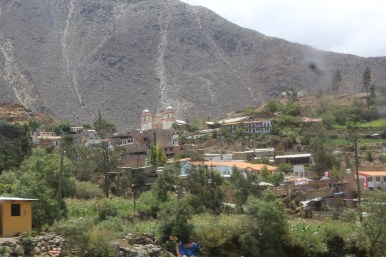
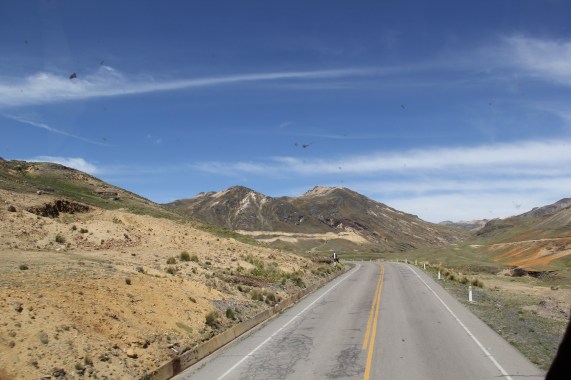
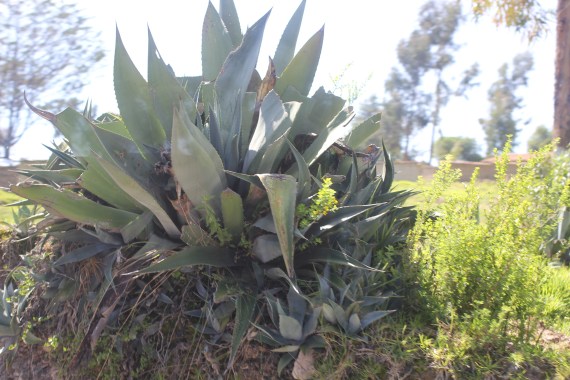
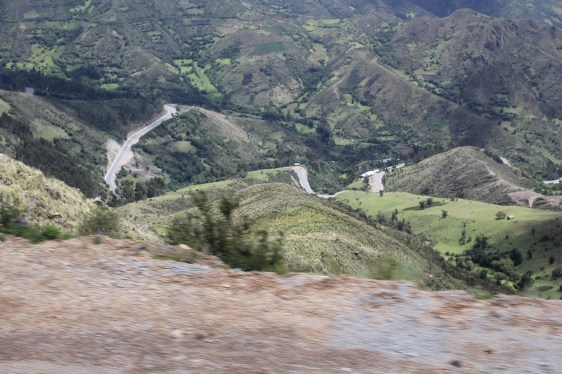
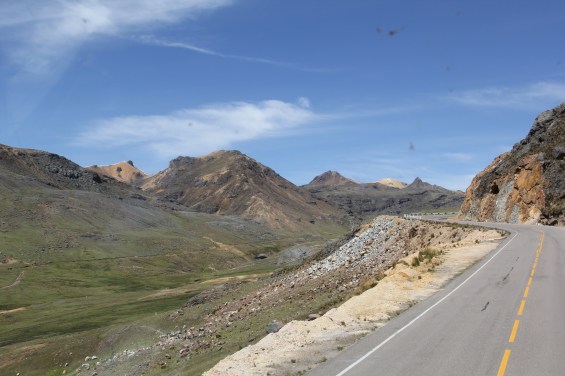 We opted for the daytime bus back to Lima with seats on the top deck right at the front which gave us a wonderful 180 deg view. At times we were seeing a bit too much when it seemed as if our driver was playing with our lives. Taking blind corners on the wrong side of the road at speed was his particular style. We left the scramble of Ayacucho and were soon in the wild grandeur of the Andes: rocky crags like saw teeth in the sky and light sandy coloured hills dotted with green. The proud eucalyptus, sometimes in clusters at other times standing sentinel in the hillside and cactus of many varieties in stupendous shapes rising stubbornly from the dry earth. In one particular variety, a cluster of sharp spikey leave-like forms with a strange tree like growth coming up from the centre, as if from a Doctor Zeus book. The fruit bearing cactus “Tuna” or “prickly pear” delicious and refreshing to taste, was also in abundance. Sometimes a small field with terraces would be carved out of the ridiculous steep mountainside, growing potatoes and alfalfa. We were zigzagging up and zigzagging down to small villages and towns and always in the rugged landscape a single or a group of figures in bright deep colours and black hats carrying enormous loads making their way here and there, sometimes with a donkey in toe, a group of grazing alpacas, goats, cows or a wandering dog. Finally, after six hours of this exhausting landscape and at the point when it was beginning to lose its allure, we settled down to the bank of a river with large swathes or fertile land: vineyards and orchards, olives and dates in an almost industrial scale. The river took us on to Pisco to the coasta (the great plain by the sea). With a welcome break from the aircon-less coach, and a stop for food and refreshment we found ourselves in a different world. All around was desert, smooth hills of clear sand where you would expect to see the odd camel caravan, all the way to the sea and the mighty Pacific Ocean. Now we were in dual carriageway and our driver had had his fun for the day and we continue the further three and half hours through this strange landscape to Lima. It has been such an awe inspiring journey; you wonder why you would ever choose to travel by night.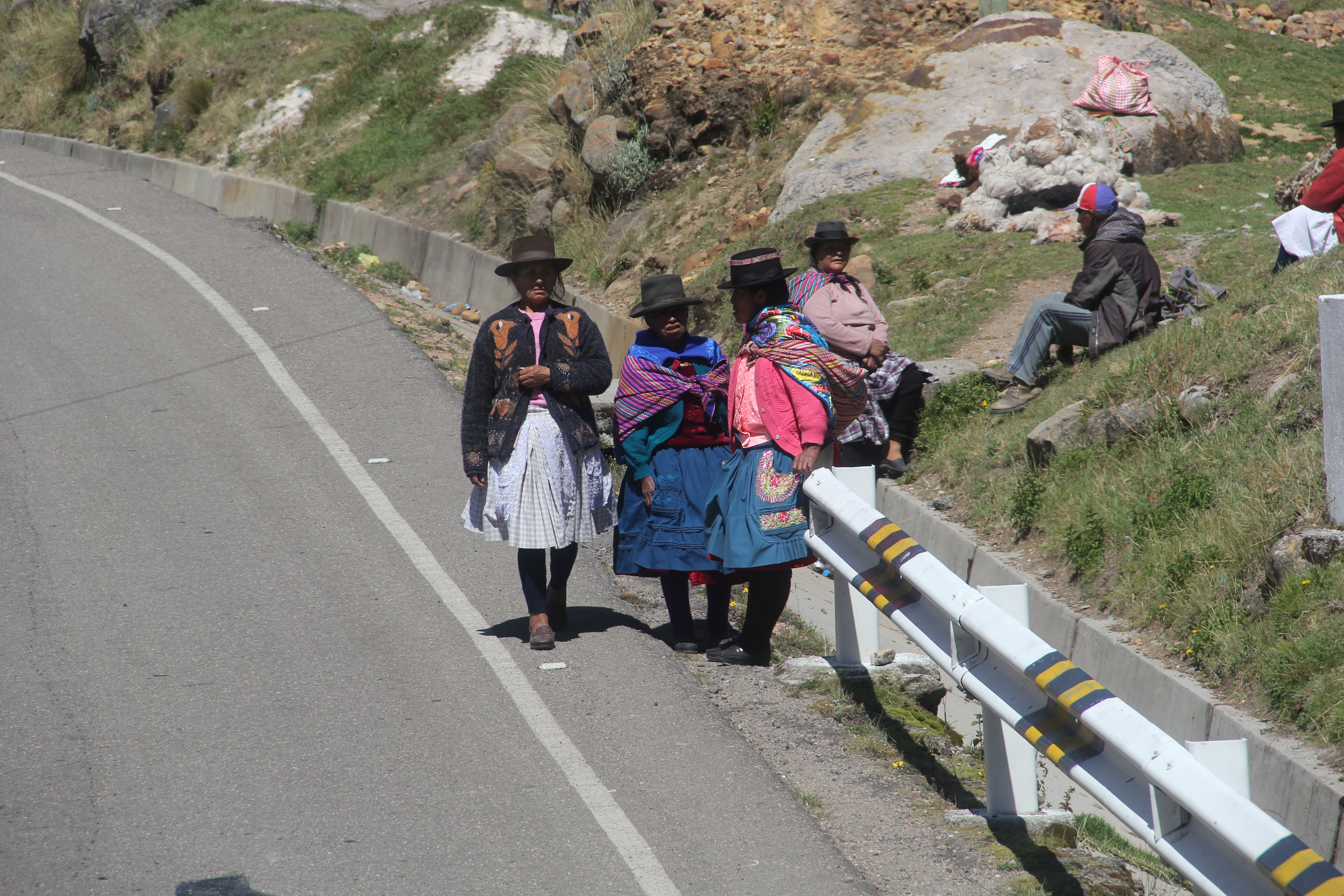
 Restless Spirit