
“How to be a Christian without going to church” Kelly Bean A Book Review
I am not in the habit of writing book reviews. I am such a slow reader and others do that so much better, but after creating a little stir with a rather flippant post using a play on the title of a book I had just read, I felt I had to explain myself. It was a light hearted jibe but one with a serious point.
It is “How to be a Christian without going to church” by Kelly Bean, published by Baker Books. The title catches the eye as it is clearly intended to do and the book addresses the issue of what the writer calls “No-Goers”, of which she is one. These are people who no longer go to church. They are not people who have been believers, have become disillusioned with the church , “lost their faith” and say that they no longer believe, they are people who leave, yet maintain and continue to practice their orthodox Christian faith. From the research, which the writer quotes, this has become, in recent years, an unstoppable flood.
There are a series of stories and testimonies from people who have left, to give put some flesh on the background and explain the reasons for leaving: “for their own sanity”, “the structure was killing my faith”, “I felt undervalued”, “I faced rejection and judgement”, “The system was broken”, “It didn’t match my style” and many other painful stories. It seemed an endless list of damaged and frustrated people who appear to be stifled but flourish when they finally take the step to leave “After 17 years of not going to church my faith is stronger than ever”. It is a sad and depressing catalogue of failure, but one than anyone who is involved in the church in the west today will easily recognise.
Kelly Bean makes it clear at the outset that she is not against the church. She wants it to be there, to continue and to grow. She would never discourage anyone from joining or sticking with it, she just feels, with a growing number of likeminded people, that it is not for her or for them. She is not, however, advocating being a solitary Christian in fact quite the opposite and here is where her argument seems a little confused and contradictory. She talks about the big shift from “Going to Church to “Being Church”. The first suggesting simply the activity of regularly going to a place, a building , to do whatever. It is understandable why this should be derided because we are called “to be” a holy nation, a people of God, a light to the world. But if we are to share with any believing community, it involves some movement –we have to go there unless we are always living together. So “Going to Church” is just as relevant and expression. Towards the end of the book she describes intentional communities “ Something is taking shape and spreading as Christians far and wide come together (my emphasis) in a variety of small communities committed to a life lived in simplicity, humility and for others” so clearly she sees the new movement of non-goers actually going somewhere and it looks like to another church.
I think she is also a little muddled. On the one hand she makes it clear that the church is, as we have always been taught, not a building, a structure, a denomination, an organisation, but the people of God, wherever they come together in twos or threes or in hundreds. As a “Non-goer” she doesn’t want to be part of this church but, I believe, despite her protestations to the contrary, she is actually trying to set up another church. In her guide to “alternative forms of Christian community” there is alternative worship, alternative bible study, alternative money, alternative baptism and dedication of children, alternative missionary work and even alternative Sunday school and youth groups. In her turning away from all the structures of the church she has defined another church which looks remarkably like the one she has rejected. And what she fails to see is that this simply repeats so much of what has happened throughout the Church’s history.
All the problems she described in “Why are people leaving” are failings in the structures, the organisations, the leadership, and the people but not with its essential reason for being, or with its King and head. The church, I believe, needs reformation not rejection.
I was also struck by two things, which I have to say coloured my whole feeling about the book:
The first is that there is little or no mention of whose church it is. The church is seen as of the people, by the people, for the people, for the community and for the world, when all the time it is God’s. It belongs to him. It is the church of Jesus Christ. It is not ours. So we can’t decide what it should be, what it should be like or who should be in it. That is entirely God’s business not ours. Maybe this was taken as read but the fact that it was never stated makes me wonder if the thought was ever in the writers mind.
The second is that, while the Bible is mentioned in a few occasion and quoted very occasionally, there is no hint that these new alternative ways of being community are based or grounded at all on Scripture. Maybe that is also taken as read, but, again, I don’t think so. This omission is serious. At a stroke it knocks away the foundation, disconnects from the basis of the true faith and opens the way for any kind of whimsical and transient philosophy or personality cult to take over and lead to anywhere. The “Non Goers” movement doesn’t seem to be rooted in the Bible but centred on “shared values” and focused on “core beliefs” like those outlined in one quote:
- God is good. I will practise trusting God with my life
- God is love. I will practice taking care of myself and loving others
- God is with me. I will practice peace and not being afraid
- God wants to talk with me. I will practice listening to Him and talking with Him
- God always forgives. I will practice forgiving myself and others
- I feel blessed with this Good News. I will practice being thankful and celebrating moments
- God has a story of love. He tells it through us. I will practice partnering with Him to bring it to others
At first sight it is maybe hard to find fault with this. But where does it come from? What is it based on? Where is the underlying authority for such statements? How are they defined? When you actually look at the list, there is nothing specifically Christian about it. There is nothing of Christ in it. I am curious why his name is not mentioned. Is it because, in this creed, Jesus is unnecessary and redundant? The “Good news” seems to be that “God always forgives”. He will forgive anyway. “It’s his job” as someone has said. If this is an example of where the “Non-goers” movement leads then it is not just alarming it is potentially very dangerous.
If you have read this far you, may not agree, but you will understand why I am concerned.
This is only my take. Go and read it yourself and see what you think and if you disagree let me know.
Crawford Mackenzie

 The Four Disciplines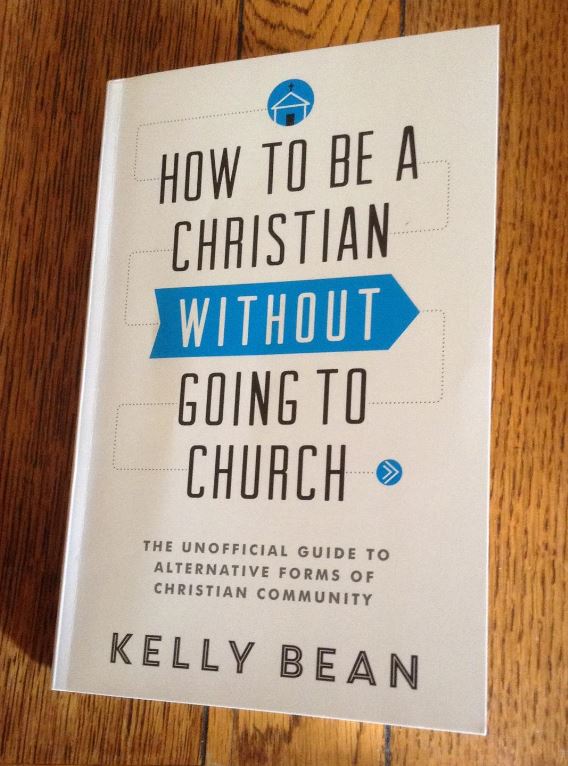

 Restless Spirit