Independence: a Slovak’s view

20130928100625_00001

The white paper might be a help to us when it comes to making the big decision, but it is always good to hear from others outside, especially if they have had some real experience of what independence has meant for them.

I met Jan at a garden party following the wedding service of a special friend in Žilina a northern city in Slovakia.  His English was impeccable but he was keen to improve and he wanted to do that by learning some Scottish idioms in dialect. As usual my mind went blank and all I could come up with was “yerawrit big min” from Glasgow, “Fit Like?Foo ur ye aye daein’?”  from Aberdeen and the legendary  “Twa pehs an’an’inyin’in’an’a.” from Dundee. He practised these and went around the party muttering them under his breath while everyone else gave him a wide berth.  We corresponded by email afterwards and had some interesting discussions on politics, language and nuclear power (he and his wife were both nuclear scientist). On one occasion I asked him about the independence issue. In light of the Czech  Slovak  experience, did he think it would be a good thing for us in Scotland?  His answer came back, simple and straight to the point  “Whit’s fur ye’ll no go by ye!” . So now I know.

Crawford Mackenzie

An Enduring Memory

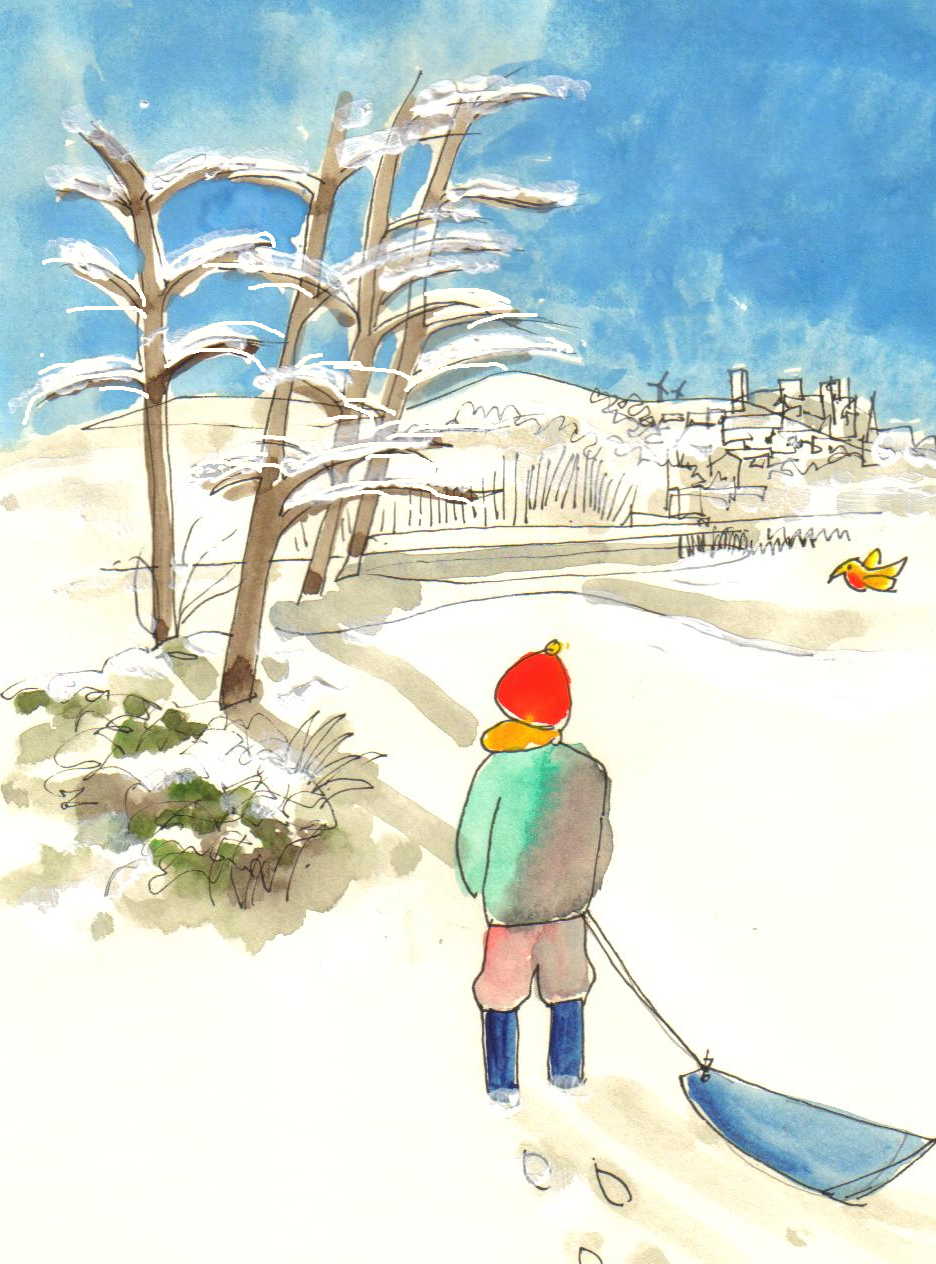
snow on the trees (2)

We arrived in Aberdeen in mid-November in the late fifties.  To children brought up on a tiny Scottish island with a tinier population, it was an experience to shake the senses. Save for a twice weekly ferry bringing already stale bread and margarine, an out of date “daily” newspaper bound into a weeks’ edition, a hit and miss wireless set and limited telephone lines, we were isolated from  the rest of the world.  Now we were in a city with thousands of people. There were cars and busses, street lights, TV’s with moving pictures, restaurants and shops of all kinds stacked with toys and sweets that made our eyes jump from their sockets.  There was the constant noise of the trains in the nearby marshalling yard and the hum of traffic and people walking and cycling, moving to and from work. Amongst it all was an enduring memory: the Christmas Eve watch night service.

It was magical experience. Being allowed up so late was exciting in itself. Our normal journey to church would be the mile and half on foot, but on this occasion we were carried in a taxi and dropped off at the church with both doors swung open pouring golden light into the dark street and casting shadows from the great piles of snow at the side of the pavement. We slipped into the high polished pews squeezed close between the men in heavy winter coats and women in furs and hats and gazed in wonder at the twinkling lights in the enormous Christmas tree. As the service began, We were led in rousing carols by the minister directing, dancing and urging us on to greater strains from the bold and joyful  “O come all ye faithful” through the ballads of the shepherds and the wise men to the sweet and lyrical Scottish and Irish carols. From time to time a figure would appear from behind the tree to read from the timeless story and a soprano would sing in unaccompanied solo “In the bleak midwinter” with the startling our “God …heaven cannot hold thee” and then as it came close to the hour, the lights were switched off, one by one, and we were left in the soft light of the Christmas tree. Without words to look at we sang from memory: “Still the night”. It was when we came to repeating the final line of the second verse “Christ the Redeemer is here” it came to me in a way that is hard to describe or explain, but I knew it was true. He was.  Christ the Redeemer was here. To a young mind overwhelmed with the magic and beauty of it all and, as yet, ignorant of the twists and turns that life would so quickly throw our way, it was a moment when I truly believed. 50 plus years later, I still do. It was true then and it is true now.

We didn’t notice the less than subtle hand that reached out from behind the tree to press the Grundic tape recorder and allow the Christmas morning to be announced with the chimes from Big Ben. But it didn’t matter. We were singing our hearts out and, with our loudest voices, rising in crescendo on “Hark the herald …Glory to the new born King”

Crawford Mackenzie

The Servant

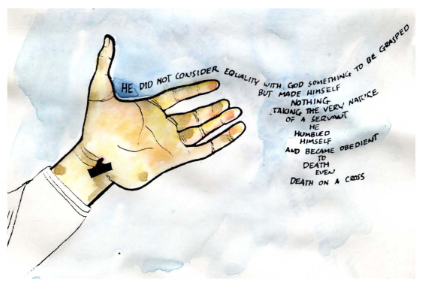
his hand

I heard a sermon once and it changed my life.  The time, location and circumstances have faded with the memory but the vision has remained clear. It was in the letter that Paul wrote to the Christians in Philippi, in the second chapter where he quotes a hymn:

Christ was truly God. But he did not try to remain equal with God. Instead he gave up everything and became a slave, when he became like one of us. Christ was humble. He obeyed God and even died on a cross. Then God gave Christ the highest place and honoured his name above all others. So at the name of Jesus everyone will bow down, those in heaven, on earth, and under the earth. And to the glory of God the Father everyone will openly agree, “Jesus Christ is Lord!”

It was a picture that was thrust into my mind and burned into my memory, of a hand that could have grasped, could have held on, but let go, willingly let go.  There were lots of questions: What kind of person would willingly let go of his right and come to this life where he would suffer be tortured and die?  For what purpose?  And what did it mean for me? The thought, uninvited, which broke into my ordered world, carried an unavoidable and unmistakable challenge. It was about attitude, about my attitude. Paul was saying: we should have the same attitude as Christ Jesus.

Many years later sitting with a group of international students, some believers and followers of Jesus, other unsure, while others Buddhists, Atheists, Hindus and various strands of religious background, we were thinking about Peter and the call from Jesus at the side of the lake to “come and follow me”. One of our international friends asked “If I decide to follow Jesus, will I have to give up everything too?” As usual I didn’t know how to answer the question, others stepped in to do that, but afterwards thinking about it, I knew. The answer had to be “Yes”. Yes it did mean giving up everything and yes it did mean not grasping what you thought was your right but letting go and giving it up.  It would look different for different people.  What it meant for others was not my business. I knew what it meant for me.

Now as almost everyone pitches in with their take on the life of Nelson Mandela, there is one thing that strikes me, more than anything else, about the man: his humility. How he seemed to continually stress that he was not a prophet or a king, but a servant. That is true greatness.

Crawford Mackenzie

The war against children

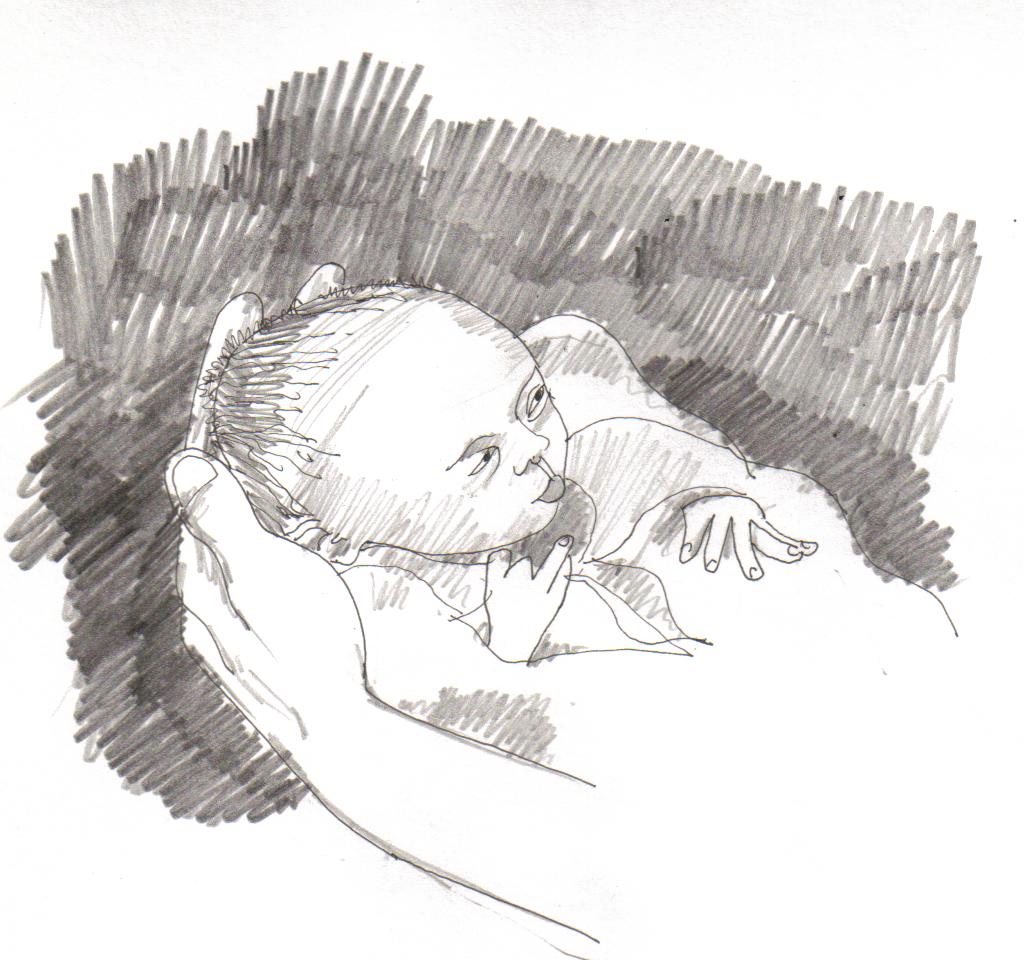
baby isaac

No matter how you try the bad news gets to you. You can anesthetise yourself for a time, then the horror of it all grabs you by the throat.  You can be cushioned for so long and then the rock bites. The mud slides, the floods and waves rage on the land. The earth’s crust moves for a couple of seconds and cities are flattened while the lucky ones escape to shiver in tents in the cold mountains.  The famine never ends and peace still does not return to the villages. The merchants ply their evil trade in poison and guns and the wars continue: wars and stories of wars.

This week it was Syria and two distressing reports. One was by the Euro Mediterranean Human Rights Network (EMHRN ) “Violence against women: Crimes of impunity”  highlighting again the despicable nature of modern warfare, where women are targeted  and rape is an instrument of war. The second was even more harrowing. It was by the Oxford Research Group “Stolen Futures: the hidden toll of child casualties in Syria”  The statistics alone are damning. During the conflict, 7,557 children were killed by explosives, 2,008 by aerial bombardment, 2,806 from small arms including sniper fire and summary executions and 112 were tortured and killed with infants among them. That means that picking out children to be tortured and executed is, like the raping of women, just another instrument of war. It is almost impossible take in or believe. We have come to accept  that children will inevitably be caught up in conflicts and suffering, but to specifically target children as this report, if true, clearly shows, represents a new level of horror a new depth of evil.  It is hard to come to terms with it.  Immediately there is white hot anger and utter contempt for those who are behind the killings. There is also deep shame and guilt at our impotency. The great powers in the world with all the resources at their disposal can do nothing other than make noises and carry off a few chemical weapons to be destroyed. Our parliament having voted against intervention, has kicked into touch any possibility of standing up to the bullies for some time to come. It is almost as if behind a veneer of liberal niceties we are with Joseph Conrad’s Kurtz “let the brutes exterminate themselves” “It’s not our problem”

But what can you do?  What can I do?

Inevitably I am back crying to God who can do something and I find the voice of the sons of Korah in Psalm 46: God is our refuge and strength, an ever-present help in trouble. Therefore we will not fear, though the earth give way and the mountains fall into the heart of the sea, though its waters roar and foam and the mountains quake with their surging…… Come and see what the Lord has done, the desolations he has brought on the earth. He makes wars cease to the ends of the earth. He breaks the bow and shatters the spear; he burns the shields with fire. He says, ‘Be still, and know that I am God; I will be exalted among the nations, I will be exalted in the earth.’


Crawford Mackenzie

A philosophy of design

The “Critdwg 410 05a  Ground floor plan as proposed” at Architecture School was a terrifying experience. You pinned your work up on the display boards allocated to you, the plans sections and elevations, working details and thinking processes with models and the odd perspective, if you were good at that.  It felt so much like pinning yourself up on the wall naked and exposed to the withering gaze and half concealed contempt of the lecturing staff who came round and systematically demolished your work: the work that you had laboured and sweated over for months and through many all-night sessions, the hard thought through plans and ideas which were mercilessly demolished and torn to shreds. It was an exercise in ritual humiliation designed to harden the feeble student and weed out the failures from the rest.  Judging by the astonishing self-confidence that exudes from students and graduates today, in almost any field, this practice has been replaced with an affirmative approach and positive strokes. I don’t recall any positive strokes. These were reserved for the smart guys. At the end of the session the head of the school would always posit the question “What is your design philosophy?” This was the final crushing blow. Your thinking had been shown to be defective, your ideas crass and your presentation infantile and now you could not actually explain what your philosophy was because you didn’t have one. How I managed to qualify in the end, I will never know.  

dwg 410 12  cross section

Now more than 40 years later, when all my contemporaries, save for a few, are retired or planning theirs, I am beginning to feel that I am getting the hang of this job – designing buildings and maybe I could  answer the question better this time if asked.

What is my philosophy of design? Well, it is about designing, creating something worthwhile, something of value, not wedded to the fashions of the day nor mimicking the patterns of the past. It is about simple things, using a simple palette of light and shade, space and moving through spaces, scale, colour and texture, making restoring adapting buildings to be safe, secure, appropriate, accessible, feasible and workable. It is producing buildings that will sit nicely in their environment, be comfortable in their use and purpose and with a body language that is clear and ambiguous. It is about producing buildings that will delight the eye and inspire the mind and be fired by a desire and a longing for beauty. Essentially that’s what I think it is it is about.  It is about beauty.

I could certainly answer the question this time round with confidence. Achieving it, of course, would be another thing.

dwg 410 08  View of interior

Crawford Mackenzie

Covenant Love

I listened to a very powerful and moving sermon last night. It was about marriage. It was not about the how to, the problems, the disintegration, the redefinition, or about the pathetic futility of trying to play around with, tamper or trample over something so precious and so beautiful. It was about a wedding that the whole of history and the cosmos is preparing for. It was about the pictures, the drama, the songs, the poetry and the demonstrations of covenant love woven through the pages of the bible, from beginning to end. It was about the one single event around which the whole purpose of existence is focussed, stretching, longing and aching for. It was about the ultimate drama which shapes our lives and is lived out even in our fragmented, disintegrated and dysfunctional relationships. It was about the final consummation of the restless longing that is indelibly printed in our hearts. It would be very hard to think of a bigger or grander theme.  It was simply breathtakingly.

It was Mike Reeves on “The Lord’s Delight” and you can hear it at http://www.stpeters-dundee.org.uk/resources-media/sermons/

Crawford Mackenzie

Book Review

I was asked to review a book recently.  It was not for publication or distribution but a friend, who I care about,  had simply asked me to read and comment on a book she had read which had made a big impact on her.  She didn’t say if the impact was negative or positive, so I was given a clean slate and approached it with an open mind.

I have to confess that I don’t read a lot and am amazed by friends who can devour several books in a day, who carry a pile with them on holidays and have their kindles loaded up with, what seems like, whole libraries. The little I read tends to be more in the non-fiction than in the fiction section and I often re-read books a number of times. I am also a slow reader. My English teacher, at school, tried to teach me to skim read but I never learned and now I don’t want to. I prefer to savour the language and the thought and to remember the phrasing and give time for the ideas to sink in. So this was a special and a tough task.

The book was not new. It was first published in 1995 and is reputed to be an international best seller, but it was one of the worst books I have ever read. The writer claims to have had a revelation or series of revelations over some years, directly from God, in which god speaks in everyday language with words of wisdom, stories and humour, contemporary references and many quoted words and verses, mainly from the Bible.  But unlike other recognisable forms of literature, with parables, myths and allegory etc, this writer clearly wants the reader to believe that it was in fact God who was speaking directly to him. This is made clear in the introduction.  “It happened to me” he says “I mean that literally” and “it was for everyone and had to be published”. He describes it as “gods latest word on things”.  Now I have known and heard of many people who claim to have heard God speaking directly to them and I have no reason to doubt that these have been true and real experiences but, in each case, God was speaking to the individual and usually over something specific like a decision or a direction or a calling. In this book, the writer maintains that God is not only speaking directly to him but charges him with telling the message, spreading the word to others and specifically to do this by writing the books, of which there are three. “You will make of this dialogue a book, and you will render my words accessible to many people. It is part of your work”  If he is to be believed and if he is accurately reporting what God was saying, then the Bible is deeply flawed from beginning to end and Jesus was either deluded, mad or simply a fraud.

It would not be difficult to catalogue the ridiculous, bizarre and contradictory claims that are made throughout the book, but here are just some of them:

1)      There is no right or wrong only love and fear

2)      God is not the creator he is merely the observer

3)      There was no such thing as the ten commandments

4)      There is no sin

5)      There was no need for sacrifice

6)      There is no heaven

7)      There is no hell

8)      There is no devil

9)      Self is all there is

10)   We are gods or in the process of becoming gods

11)   Jesus is a master on a level with Krishna and Buddha.

12)   All the gospel writers lived and wrote their accounts long after Jesus had died

13)   We only suffer because we chose to. At any moment we could stop suffering. We could be healed, we could be perfectly at peace and happy if we chose to be.

I can well understand why people would be drawn to this book especially if they have been hurt, disillusioned or damaged in some way with organised religion. It would make them feel better about themselves but so would morphine or heroin or alcohol, for a time. The book is poison.

On the cover, were a number of review quotes. From the Mail on Sunday; “An extraordinary book“ I couldn’t put it down”.

It was extraordinary; I couldn’t get it into the bin fast enough.

Crawford Mackenzie

Independance

I have always thought that independence was an honourable aspiration and something to celebrate when it was achieved. I remember, as a boy, sensing the excitement and interest when Ghana achieved independence from colonial rule in 1957, the first sub Saharan country to do so. Others followed. Zambia became independent in 1964 and while I remember little of that event, was able to visit that amazing country in 1985 and later in 2010. Despite many intractable problems there was still a real sense of celebration and pride that they had finally broken the chains of their colonial masters.  Last year I visited friends in Slovakia and when language allowed, asked how they felt about their break up with the Czech Republic.  The overwhelming view was that, while the economic difficulties were grave, still it was a good thing. “We are able to be friends again” said one.

So when it came to considering independence, I warmed to the idea.  I wanted to believe in it and I still do. There seems something good about being grown up, being able to stand on our own feet and more importantly take responsibility for our own decisions and actions and stop whinging and blaming someone else for our ills. But Scotland is not Ghana nor Zambia nor Slovakia. It isn’t Norway nor is it East Timor.  England has not colonised Scotland, we speak the same language, our families, friends, business, professions, scientists, academics, musicians and poets crisscross the border. Our histories are intertwined. Scotland’s golden period followed the union of the crowns and only in the past century have we begun to feel the poorer partner. The union seems to have been good for us.   And when it comes to emotion and passion, the things that seem to matter most are football, “bank” holidays, “For sale” signs which turns homes into commodities, using “shall” instead of “will”  and the south easterly bias of the weather reports.

What has finally disillusioned me and cooled my enthusiasm is the way the debate has been conducted over the past year. I have become less and less convinced that the leadership of the “Yes” campaign actually believe in it themselves. There has been an astonishing loss of nerve. Real conviction seems in short supply. There has been so much back tracking so many questions fluffed and unanswered. I am almost coming to believe in the perverse notion that the aim of the campaign is to be deliberately muddled and confused so that people vote against it and some semblance of pride can be retained.  They will be able to breathe a sigh of relief. “At least we tried” they will say. Like David Cameron’s very palpable sigh of relief when the commons voted against intervention in Syria

The most confusion, however, surrounds the word itself.  Politicians and pressure groups know how to reinterpret words to their own advantage so that it can mean something different from what you thought it did.  I thought I knew what marriage meant. Now I don’t. I thought being independent meant being in total charge of your own affairs. Now it seems to mean being dependant on another country, sharing a currency and a bank of last resort, being subject to a monarch of another country, submitting to a military authority based on the use of nuclear weapons and being subservient to the multinational giants who will always dictate the terms. It doesn’t look like independence. It looks like being fully dependant in all but name. It is like being an adult but still living at home with your parents on call, ready to lift and drop you, pick you up, dust you down and bail you out when you are in trouble. That is not independence so I think I will vote “No”

Crawford Mackenzie

Why do people hate Jesus?

I was coming back from the shops with my oldest grandson, down the steep cobbled lane with the early morning Saturday sun hitting our faces, past the tiny gospel hall and the Hindu temple next door, looking down towards the river with the railway bridge snaking its way round into Fife; when he stopped, retraced his steps, and said “Look”.  Pointing to the noticeboard on the wall he read “I am the way the truth and the life – Jesus“  Having recently discovered the new world that had opened up to him through the joy of reading, he read everything. “Good” I said and trundled on. “No!” he said pulling me back to the spot “Look” and pointed to a large “X” scratched across the glass. “Someone has done that – someone who doesn’t like Jesus” We walked on for a bit and then he asked “Why do people hate Jesus?”. At once two thoughts rushed into my mind;  “out of the mouths of babes and children… “ and  “Why do they always have to ask such difficult questions” and so I mumbled something like “I don’t know, but I think it is because Jesus is so good that people hate him”.  He was silent for a time and then, totally unconvinced, responded  with a “So that is it?”

As always happens, I thought about the question afterwards. I tried to come to a better answer but the more I did the more I became convinced that that was, in fact, it. People hate Jesus because he is good. Good people are often admired but seldom liked. It is as if  a good life points up how shallow, selfish and self-centred is our own and faced, with a pure one, we are so aware of our own hypocrisy, greed, lust, deceit  and pride. It is best to keep a good person at a distance. It might actually bring out hatred. At the root of most of the emotion is not so much over what Jesus said or who he was but what he did. What he did when he allowed himself to be led through the suffering and torture to his execution on a rubbish tip outside of Jerusalem 2000 or so years ago. I remember listening to a tirade from someone about the film “The passion of the Christ”. They hated it and went on and on about the violence. Somehow they could take Tarantino excesses in their stride but Mel Gibson’s portrayal of Jesus’ suffering was just too much to stomach. I am not a fan of Mel Gibson nor the film but was taken aback at the ferocity of the attack.  Violent the film certainly was, gratuitous perhaps, but the context and meaning of the film was clearly stated in the words from Isaiah, shown in the opening sequence -“by his stripes we are healed” and I think that was what caused the most offence. If the son of God should have justly suffered all of this, and if it was for me, then I must be totally messed up. My life a hopeless sham and the good that I thought I was, could be nothing more than pathetic childish pretences, what Paul calls “filthy rags”. That truth is hard to swallow and so much easier to ignore. But because it is true, then we hate every reminder of it and hate the person who, by their very presence and existence, reminds of it. That, I think, is why people hate Jesus.

Crawford Mackenzie

Practical Advice

We gathered together in the corner of the lounge, a bare handful of people in a dark and depressed November evening, mildly weary and tired, busy with lots of other things on our minds and with the unspoken question “what on earth are we doing here?”.  It was a congregational mid-week meeting for prayer, a centuries old tradition, the reputed “power house” of the church and we had come with a dogged commitment to something we believed in even although at times our enthusiasm and our sanity was seriously in question. Our pastor led us and read from Paul’s second letter to the Christians in Thessalonica. Specifically, the final catalogue of practical advice in the last chapter  Always be joyful and never stop praying. Whatever happens, keep thanking God because of Jesus Christ. This is what God wants you to do.” (CEV). It was something so beautiful and simple and intensely practical. It was one of these moments when a shaft of light suddenly breaks through into the gloom and disturbs the moribund weariness.

I went home and wrote these lines.

NEVER STOP PRAYING

“Never stop praying!”

But we leave it to the last

When there’s nothing left ..but to pray

When the crisis is already on us

When the water’s pouring in

When the cancer’s taken root

When the relationship is floundering

When the famine is already raging

When the war has begun

It’s then we stop and start to pray

When we’ve tried everything else

But

Lets pray

And be thankful

At the start of the day

Before we’ve seen it’s trouble

In health

Before we know of sickness

In ease

Before we come into discomfort

In happiness

Before we’ve tasted sorrow

In life

Before death comes knocking


Crawford Mackenzie