IN THE SILENCE

Autumn was our favourite time/Picking fruit and kicking leaves/By the long walks in the afternoons/And our games between the trees/Now the branches stiff and bare/And the hills so cold and plain/losing you was losing everything/But it must be heaven’s gain

It’s a massive hole as big as Rubislaw quarry where the granite was gouged out to build the silver city. You can peer over the edge but you can’t see the bottom. It’s as deep as the Mariana trench and I don’t know how it could ever be filled. Words and music and poetry don’t cut it and only serve to accentuate and magnify the loss. Art and architecture and doing things are simply distractions. Even the extravagant love of friends and family and neighbours won’t do it either. Another love? The idea is both preposterous and, in this moment, obscene. My imagine can’t stretch that far. Someone has said “Why don’t you get a dog?” In the biblical picture two have become one flesh. How then do you cope when half your flesh has been ripped out? A fellow travel has said perceptively “ I knew who we were, but I don’t know what I am”. Others have said “ Yes, it is a massive hole but you learn to live with it” I don’t want to learn to live with it.

It is the silence that is unbearable. I can speak. I can say the words out loud but I know she won’t reply. I can tell her all about my day but she won’t respond. She is not here. I don’t want to be the one who goes up each week to that beautiful spot on the south slope with the hedge of trees in the horizon to lay new flowers on the ground and speak to her as if she was there. That’s what they do in the movies. Its not a game I can play.

Strange how the words people say to comfort are no comfort at all. Wonderful words of scripture. I know they are good, solid and true. I know they are God’s words, they are the words of life, I believe them with all my heart, I truly do, but, and this is the thing, I don’t feel it. I don’t feel it and I have to feel it to be comforted. These are somehow harder to bear than the lies written on cards. “Those we love don’t go away, they walk beside us everyday”, heartfelt, well-meaning, loving words, but I know they are lies. She doesn’t walk beside me every day, she has gone away.

Yet there is so much I want to tell her and keep telling her:  how thrilling it was to meet up with A and see how she had grown and matured into such a lovely confident young woman, how kind it was of G+J to think and to ask and to invite me round for diner, how nice it was that F said nothing just offered a hug when we met in the street, how thoughtful of C to take time out of her very busy life to come round and talk, how special that A was up for a long walk along the front and speak about deep things. how nervous I was to be with our group and yet how easy it was in that time, how I desperately didn’t want to be the sad old man in the corner, how easily I was hurt by some of the things folk said and did or didn’t do, how possessive I felt when they spoke about you as if they knew you better than I did myself, how people promised to pray and I know they did and more so much more: the lovely walk with S through the carpet of leaves that jewel the ground along the burn with the translucent red and yellow ones still hanging in space or the way the sun rose over Fife and  cast its shimmering light across the river while the morning car lights twingled as they sped over the bridge.  How blessed I am, and how lost.

In the silence, I call out “Where are you?” But there is no reply.

And then barely audible at first but soon as clear as day I hear a voice, a still small voice. “I am here, I have been here all along, long before you ever knew me.  I loved you from the beginning and I know all about your pain and your loss but come to me, speak to me, take this new found time and space I have given you to share with me to listen to my voice and learn of me, for my yoke is easy and my burden is light and there you will find rest for your soul”

And I find John Newton’s letter he wrote to Mrs Talbot on the death of her husband in March 1774:

“…Though every stream must fail, the fountain is still full and still flowing. All the comfort you ever received in your dear friend was from the Lord, who is abundantly able to comfort you still…The lord who knows our frame does not expect or require that we should aim at a stoical indifference under his visitations. He allows that afflictions are at present not joyous, but grievous; yea, He was pleased when upon earth to weep with his mourning friends when Lazarus died. But he has graciously provided for the prevention of that anguish and bitterness of sorrow, which is upon such occasions, the portion of such as live without God in the world; and has engaged that all shall work together for good, and the yield the peaceable fruits of righteousness. May he bless you with a sweet serenity of spirit, and a cheerful hope of the glory that shall shortly be revealed.”   

PRECIOUS AND BEAUTIFUL THINGS

THE PAINFUL REALITY

It was not how I had it planned. It was not the way it was meant to be. I was to be first. When the evil mass took hold of my liver three years before and left me surrounded with doctors and nurses in full-on emergency gear, trying  to keep me alive, I was convinced that this was it. But it was not to be. With their skill, the prayers of the people and the good and gracious hand of our God, I survived. But later, later that same year, the cancer made its presence known in her body. From then it continued its sinister and relentless pincer movement throughout her delicate frame, spreading its tentacles to the most important organs, till there was nothing left that could be done.  The painful reality had to be faced, it was just a matter of time. Despite the treatment, the chemo, the radio, and immunotherapy, this thing inside her was slowly killing her and it would not let go.

HEARING BUT NOT LISTENING
I had three years to prepare for this event, but I wasn’t prepared. Even when the consultant told us it was weeks rather than months, I wanted to scream out in disbelief. Yet she knew and she tried so hard to tell me, to prepare me, to help me see, but I wasn’t listening and I didn’t see. It seemed like the cancer had been kept at bay. Life was as normal, nothing had changed and we could go on like this for years, maybe even decades. Yet she knew, she was right all along and I was wrong.

Nobody had told me about it how it would be or how I would feel. No one had explained to me what bereft actually meant. But, the thing is, they had, in words, in books, in poetry, in songs. It was all there it was just that I hadn’t listened. I couldn’t hear. I even wrote these songs myself. Ten years ago I wrote a song about bereavement through the seasons, but I never knew what it meant until now. I remember reading Bob Dylan’s comments on songs on one of his early album, which were preoccupied with death. He said he was too young to write songs like that, so they must have come from somewhere else.

THE EVENINGS
In the evenings, when we are alone and nothing else was happening, we would read the bible, with a devotional book someone had given her and we would pray together. It was a practice that was fitful at best throughout our married life but became a regular habit in the later years. It made me so happy. Each time I heard her pray, I cried. It was in the evening too, that we talked. We talked about the things we did that day and played the game “ Guess who I saw in town today?”  A song by John Sebastian of the Lovin’ Spoonful came to mind. It was written back in the sixties and called “Darlin be home soon”. The recording seemed a bit cheesy, even at the time, but the song got to me then and strangely it came back to me now, with the opening lines “Come, and talk of all the things we did today/Hear, and laugh about our funny little ways..”   It occurred to me too that this was what happened in the garden. It was in the evening of the day that God came and walked and talked with Adam and Eve. It is in the evenings that I feel most bereft.

HOW SHORT HOW SHORT

It all happened so quickly in the end. Sunday, we were sitting out having lunch in the garden. Monday brought an emergency GP appointment and a swift referral to the oncology ward. She was visibly relieved to lie down on that bed and be surrounded with the care she needed.  By the Wednesday evening, I was so exhausted and distracted, she pleaded with me to go home and rest. On the Thursday morning, I was taking notes with her instructions of things to do that day, while she was messaging people with arrangements for a meeting in the following week. It was a busy day, people were coming and going and I had now grasped that time was short. I resolved to be awake when I returned in the evening and to make sure that I packed my bible and the book. When we were alone in the stillness , when the buzz of the ward had quietened down, we could read and pray together, just as we had done before. But it was not to be. By lunchtime she was gone.

THE EMPTY HOUSE
When I opened the door of the empty house for the first time, I was hit with the banal absurdity of it all. What was this place now for? What was the point of it? It was our home, now it wasn’t. It was my “stop all the clocks” moment. There was no need for this anymore. The newly decorated room, the restored windows, the Morris paper, the walnut floor, the Louie Poulsen lighting, the hand-crafted kitchen the carefully selected colours and fabrics, they were all about a place, our home, where friends and family from far and near would be welcomed, to share a meal, a rest for the night or longer. We wanted to be like the Shunamite woman who had a room with a bed, a chair, a table and a lamp for the prophet Elisha when he passed that way. Now it’s purpose has dissolved and I don’t know what to do.

THE OBSERVATION

Too soon, much too soon I read again C S Lewis’ “A Grief Observed”. It was brutal: grief was being like a “rat caught in a trap”, the bereaved were such a problem, maybe “they should be isolated in special colonies like lepers”, God must be a “giant vivisectionist” and worse. But he works his way through all of that in the most astonishing way. He climbs through the self-indulgent grief the self-pity, the flawed images and the house of cards to finally seeing “ I need Christ not something that resembles him” I hope I can get there.

THE PRECIOUS AND BEAUTIFUL THINGS
I love the proverb in the Book of Proverbs 24:3+4 partly because of its architectural reference. It goes: “By wisdom a house is built/By understanding it is established/By knowledge the rooms are filled with precious and beautiful things”. Together we built the house, she filled it with precious and beautiful things and the precious and beautiful things were people. My task is to cherish these precious and beautiful things.

LOVE AND LEARNING

We met in a café at the west end of Union Street in Aberdeen in the late sixties. It was place often frequented by students for coffee in late evening, called The Pharaohs, decorated in Egyptian style with hieroglyphics. There were four us ending up together after a student meeting in the commercial college nearby. Two guys from the school of architecture and the girls from the college of education. My friend was a year my senior super confident and sophisticated, a great talker and natty dresser. I was in his train, just listening most of the time. One of the girls had caught my eye and I was intrigued by her taste, unusual at the time, for black coffee. My friend was not so impressed. As we left and made our way up Albyn Place, I asked who were they? What were their names? We hadn’t even asked! I don’t recall what he said, but he didn’t know and he wasn’t really bothered. It didn’t really matter to him, but it did to me and over the coming months, I not only found out her name but learned a lot about her, took every opportunity to spend time with her and as we walked past the rendezvous café on Cromwell Road one late Sunday afternoon, I found her hand.

A year and a bit later. I proposed. We had been out walking on a glorious spring day from Kilchoan to Kilkieran on the west coast of Islay. The sun was shimmering across the sea, seagulls gathering and gannets diving over a suspected shoal in the waters, lambs were bleating and a dog barking in the distance. We stopped on a little stone bridge over a burn and I asked her if she would marry me. I don’t remember her exact words but I took it as “yes” and for the next 50 plus years she was a constant in my life. I could fill the page with many justifiable superlatives and words of gratitude and admiration but that would simply be a parody of the reality of a relationship that simply could not be put into words. 

One of the unusual aspects of our bond was the she did not share any of my creative interests and passions.  Art, music, poetry and literature didn’t seem to touch or move her. That would be considered, by many, to be a severe handicap. Strangely it was our strength and perhaps was the singular thing that saved me from drowning in a pit of my own self-indulgence and self-importance. It sharpened my pencil and honed a self-critical tone to what I tried to do.  Her creativity was not with the ephemeral arts but with people and it was that interest in and interaction with other people from all sorts of backgrounds and cultures and languages and traditions which was the singular factor in drawing me out of what could have been a very insular and self-absorbed life.

We were married in the Baptist Church in Perth in 1971, by our minster William Still of Gilcomston South Church Aberdeen and he took us through our vows with his inimitable sonorous voice. The building was destroyed by fire some years later and most of the 80 guests who joined us, on that day, have since departed, but the details of that event are permanently imprinted on my mind. It was the experience of finally moving into a home of our own, however, that really got to me. We tried to rent a flat which was difficult at that time, till our solicitor suggested we might buy. It seemed completely out of the question to us, but with help from my father-in-law and a loan from a finance company we managed to gather the £850 to purchase a ground floor two roomed flat across the river Dee in Torry, just two weeks before our wedding day.  It had a toilet in the close and a single cold water tap and sink in the kitchen. We purchased a bed, a cooker, painted the floor boards kingfisher blue, laid down rugs and with generous wedding gifts, put together the semblance of a home. We were so happy. On the first Saturday back, I remember very clearly watching my young wife walk across the street and down the lane, with her crocheted top and short skirt and shopping bag going off into town. I was overcome with the indescribable feeling of warmth that she would be back soon and it would be to our home.   There was something about the drama of courtship, having spent each night apart, each evening having to say goodbye, each time going back to our separate accommodation and then, finally, to experience the completed joy of being together.

We did our best and felt it our duty to share that joy whenever we could. An older and wiser couple in the church explained to us how they believed that their home was not really theirs but a gift from God to be used for others, a haven in an otherwise hostile world.  We tried our best to emulate that principle. In the early 2000s this took on a new dimension when we were asked to host international students who came to our city’s universities. A friend in our church asked us if we wanted to be part of the hospitality scheme. The idea was that students, strangers to a foreign country could be linked up with local families.  It was a simple act and one of the main thrusts in the establishment of Friends International. Our first attempts to make contact were fraught with difficulties. This was, of course, in the age before emails, mobile phones and social media. We failed miserably at first and seemed unable to make any serious connection and wondered if we were cut out for this sort of thing.  We were on the point of giving up and telling our friend that it wasn’t going to work, when we were linked, first, with students from Greece and Turkey and the following year with two master students from Kosovo. They had come to study with a professor of forensic medicine after being directly involved in the identification of bodies following the Balcon genocides.

And so began an enormously privileged experience, over more than two decades with international students, some of whom have become life-long friends, some who invited us to their weddings, some whom we have visited in their own countries and many who we still communicate with regularly. They came from almost all parts of the world from: Nigeria, Ghana, Uganda, Cameroon, Zimbabwe, South Africa, Egypt,  and Algeria in the African continent, from Asia: China, Japan, Indonesia, Malaysia, the Philippines, South Korea, Hong Kong, Thailand, Singapore, Uzbekistan, Iran, Australia, India and Pakistan, from the Americas: Canada, the USA, Peru, Colombia, Bolivia, Chile, Brazil, and Haiti and from Europe: France, Germany, Italy, Poland, Lithuania, Latvia, the Czech Republic , Slovakia, Austria, Spain, Romania, Hungary and the Netherlands.    This usually began with the offer of a simple meal in our home. It was such an easy thing to do and yet seemed to be so appreciated by the strangers we welcomed in. When our son and his wife left to work in Hungary and latterly Romania, we began to understand why this was so. Somehow the unnerving strangeness of life in an alien city, with the sounds, the colours the smells the cultural peculiarities and sometimes the threatening air, were instantly tamed when you were received into someone’s home and into the bosom of a family.

With the expansion of the work of Friends International we were asked to host a small group bible study in our own home. This was a simple meal together followed by a discussion bible study around a passage in the bible. The idea was that this would provide an opportunity for those who wanted to know more about Christianity, “seekers” as they were called. Quite quickly, however it was Christians who wanted to join us and a place where they could invite their friends from the library and lab. All we would do would pray and read the bible together and talk about what it said, what it meant and what it meant to us. While the majority of those who came were Christians, followers of Jesus from various backgrounds, Protestants, Catholics Orthodox and Pentecostals there were always one or two and maybe more of other faiths, Buddhists, Hindus, Muslims and Atheists. There was something wonderful about sitting round in that small group with the freedom to talk, discuss faith and share deep things. For me, It was the highlight of the week. I was energised and excited about what was happening; about what God was doing. Often, we would have people from four continents share in prayer. On one occasion we listened to  the Lord’s prayer in seven different languages. At other times we had students whose countries were literally at war with each other, sit side by side. To be involved in all of this had to be one of the great privileges of my life. And all of it would not have happened had I not met up with that young student in the café in Aberdeen with her shy dark smile and her black coffee.

But there was much more that would not have happened without her. Together we encountered the miracle of new life. At once it was an intimate and deeply personal experience yet filled with cosmic significance. The moment there holding that fragile little life, wholly dependent, its tiny face creased in a smile, eyes just opening and perfect fingers with finger nails already needing cutting. Knowing that we were strangely connected yet separate and the overpowering desire to protect the little creature that eclipsed all the other responsibilities. In that moment the world changed. I have observed, over the years many parents, fathers in particular, often when we shared a common interest in art, music, politics, theology and world affairs, suddenly discover that their enthusiasm and interest seemed to be blanked out over the period where they had very young children. Perhaps it is a natural coping mechanism. The world can go it’s own way, all I care about in this moment is my little family. And when I look back, I can see quite clearly the gaps in my own interest or even awareness of big things happening. These were curiously erased from my experience during these periods which were dominated by the interruption of a new life, one that demanded our full concentration.  It takes photographs to rekindle the memories, not so much about the events, but how we felt in those days and leafing through an old biscuit tin of photographs can leave you lost in a whirlwind of deep emotion and tears.

The babies grew into toddlers and children and adults finally disappeared out the door to find their own lives. In a short space of time, we had six grandchildren and it is a constant wonder how this all came about and how it some way we had a part in it. Recognising the familial characteristic and traits is at times comforting at other times scary but always humbling. The spread of gifts is astonishing, two are already talented musicians, one a writer, one an already decorated sportsman and another an unconscious actor and comedian. And the sixth? We have yet to see.

This all came rolling back to me when I met up with a good friend recently. I like him a lot, but he sometimes tires me out when he goes into a one of his nonsensical irrational tirades. I just listen and let him ramble on until he runs out of steam and then If there is anything to say by way of response, I will say it. It was like that this day. He was in rambling rant about his love life or lack of it, speaking just a bit too loud for my liking in the crowded café. It was not only irrational it was a mess of misogynistic misery. The girls were teases, devious, playing along and only after your money. At times it was quite comical like Bob Dylan’s dream:

“I got a woman, she’s so mean/Puts my boots in the washing machine/Fills me with buckshot when I’m nude/She puts chewing gum in my food/She is funny/Calls me honey/wants my money”

Finally he said calming down “Anyway, you can’t commit to loving someone all your life. No one can do it. It’s an impossible dream.”

I had to respond. “ Well, I don’t know, but I met her when I was still a teenager, we have been married for 50 plus years. I love her more now than I ever did and I don’t want to lose her.”

Marriage is about loving and learning to love in sickness and health, in riches and poverty, till death.

Crawford Mackenzie

The Two Macmillans

In strange disorientating times when fear and social suspicions take root, when we are trapped, grounded and demobilised with no clear idea of where the end will be or what it will lead to, there are many strategies for coping.  A friend reminded me that those incarcerated in prisoner face a level of deprivation that puts our restricted life into the shade and we could learn from them. It has also been pointed out to me that these times of unusual privation often produce great creativity. This includes scientific advancement, special illumination and works of strategic significance. This should not surprise us, after all so much of what we know as the New Testament was written from prison and some of the most valued works of Christian literature too. I have just finished reading Franz Jagerstater’s “letters and writings from Prison” and it is full of astonishing light and inspirational hope.

So it is perhaps a time when artists, poets and musicians have a special role to play.

 Artists do have many roles. One is to shine a light into falsehood and hypocrisy and challenge evil where it is found. One may be to explore and see things beyond the visible and another may simply be to entertain and charm.  One of the roles I look for in in an artist is the challenge to look up. To see beyond our own self-absorbed existence to a greater reality. It is essentially a spiritual issue. Finding artists who fulfil that role in contemporary society is not always easy. I have written in the past of my experience at college degree shows and my dismay at so much of contemporary art. https://crawfordmackenzie.net/a-death-affirming-experience/, But there are two figures, which stand out for me. They are the two Macmillans. Sir James Macmillan the composer and Robert Macmillan the painter.  

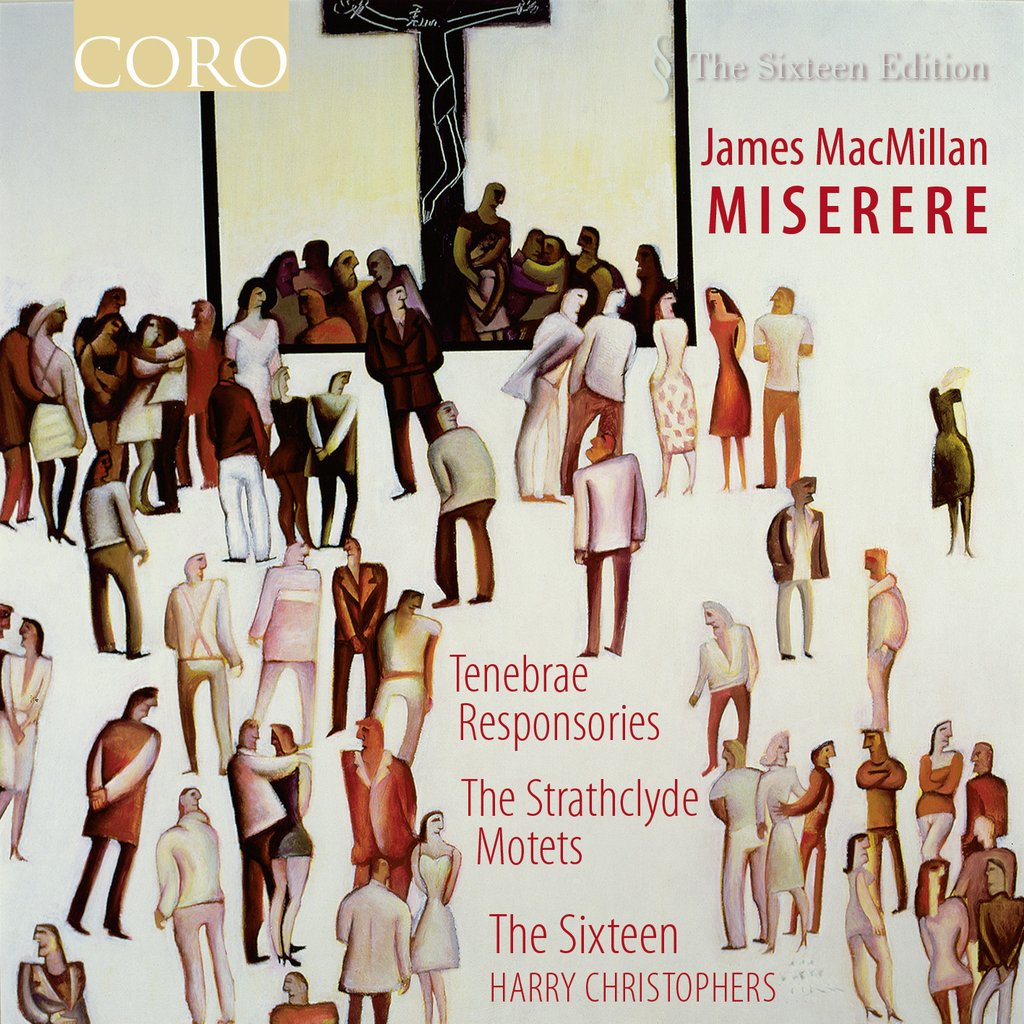
James Macmillan is well known in Scotland and throughout the world. You get a lovely personal introduction to the man in his interview with Giles Fraser on Confessions https://soundcloud.com/unherd-confessions/confessions-with-sir-james-macmillan. I have yet to truly explore his work. It will take time. He has said that listening to music requires a sacrifice and that is true. But it is one that brings great rewards. The piece that I have focused on, have listened to many times, and never tire of, is his choral work “Miserere” It takes David’s penitential Psalm 51 in Latin and draws us in  an astonishing journey through a range of choral languages from classical motifs, plain song to a very distinct Scottish feel in the final section when, as if finally reaching the summit, the piece breaks into the major key. It is when you get to that part, you realise you have tasted something great.  It is recorded by Harry Christophers and The Sixteen  (Coro: COR16096) but you can also hear it on youtube at https://www.youtube.com/watch?v=st2E_uhy5Mo,with a car-back firing in the earlier section.

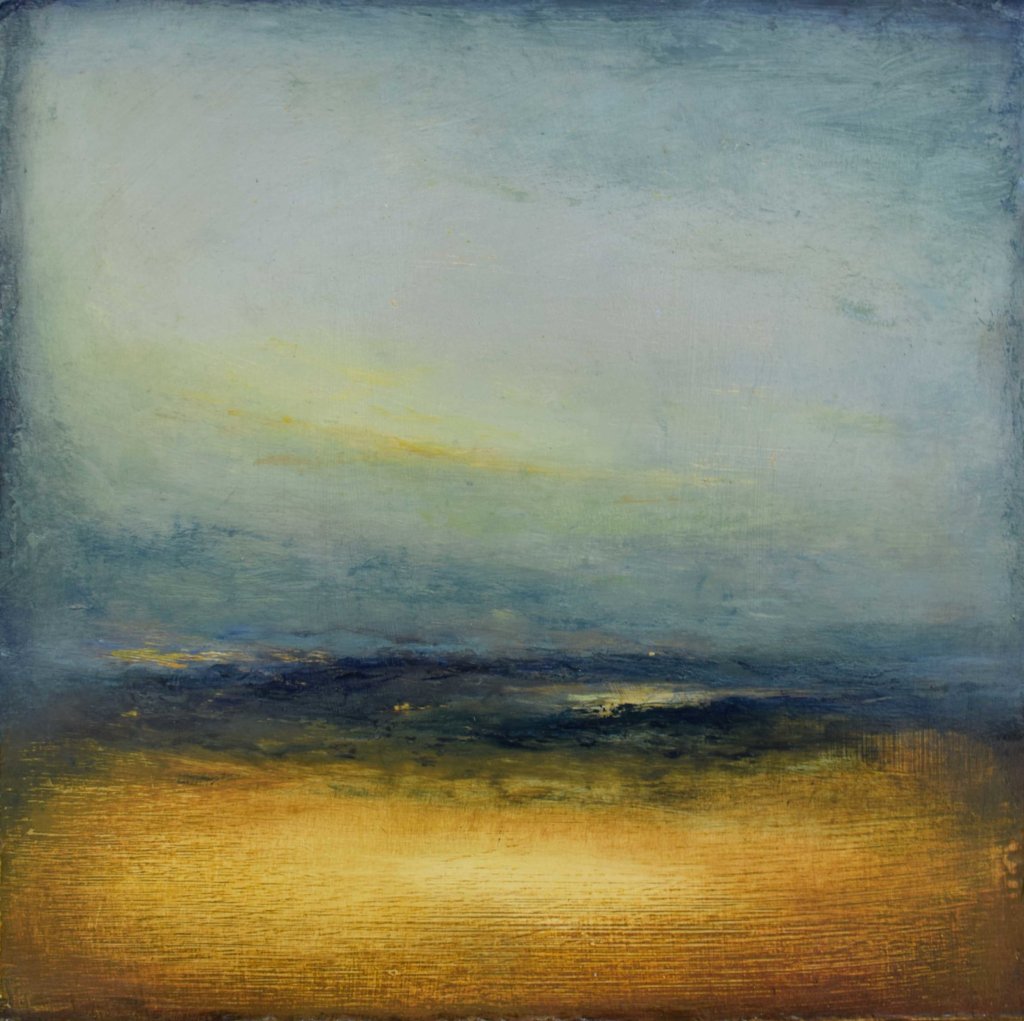
Robert Macmillan is a relatively young artist who survived the art school experience with his faith in his work intact and continues to paint in oils. His doggedness and commitment moved me when I visited him in his studio some years ago. So much of his work reminds me of Rembrandt and Turner in their continual struggling and searching after light. His figures have a wonderful mysterious quality, caught in space and time but looking somewhere else and his landscapes are exphansive and deep, nudging and drawing you in and saying “there is more than this ”.  I am privileged to have one of his works in our home. It hangs on a wall at the foot of the stairs and brings me enormous joy every time I see it.

With these two, I can just about cope with house arrest.