THE CHAPEL OF LORENZO

I was reading Kenneth Clark’s autobiography “The second Half”. Kenneth Clark, that is, the art historian, museum director and broadcaster and famous for the TV series “Civilisation”” I thoroughly enjoyed it. The copy I have was bought in a second hand shop and has been kept in a damp place which means I can’t get rid of its fusty smell which takes away something from the enjoyment, but I saw it through.

I like autobiographies. I like the literary form. You can learn so much about the person from what they write about themselves and often it is a different person, an almost unrecognisable person from the one the media portrays. I have found this so often the case. True, people will overstate their good qualities and play down the bad ones. They can also take liberties with the facts and tell tall stories but you don’t have to be very clever to read between the lines and hear when something is just not true or an event has been grossly embellished. People lie but you can usually tell a lie.

Kenneth Clark is a good writer. I found his “Civilisation” perfectly readable and inspiring. I didn’t watch the TV series but the book was a helpful reference and summary of western art and culture. He is careful to point out that it is not, of course, authoritative but simply a personal view. I wonder, if the reason he is so easy to read with the simple descriptions of people and places and of course art, spiced with humour and self-deprecation, was because much of his writing was given first in lecture form. The lecture would have to essentially catch and then hold the audience and he does that seemingly effortlessly in his writing.

It is a fascinating insight into how art and artists survived and were still able to produce, paintings, poems, essays, novels, exhibitions and concerts in a time of war, how money and resources were found to sustain these arts when the great thrust was for the war effort. In a war life has to go on. Artists can’t just stop being artists when there is fighting. They may have to fill shells or dig shelters but they remain artists seeing the world with that illuminating eye and making it possible for others to see too.

What is also interesting is that like fine writers he seems to be able to speak into the now in a prescient way and like Orwell or Solzhenitsyn give astonishing predictions of what was to come.

Well into the story when he is recounting the delights of his time in Italy, I came across a paragraph I was sure I had heard before. I remembered. It was in a sermon from some years back.  I also think it was referenced in something I read more recently and it made me wonder if the preacher and the writer had found the quote in another source and not directly from the book. I suspect many people do this.  It’s convenient but can be a tad lazy.  I have probably done the same myself, so I am not in a position to judge, but it’s a good principal to hold to – to read the whole thing it its context, before you cherry-pick a juicy comment.

Anyway, here is the paragraph in full:

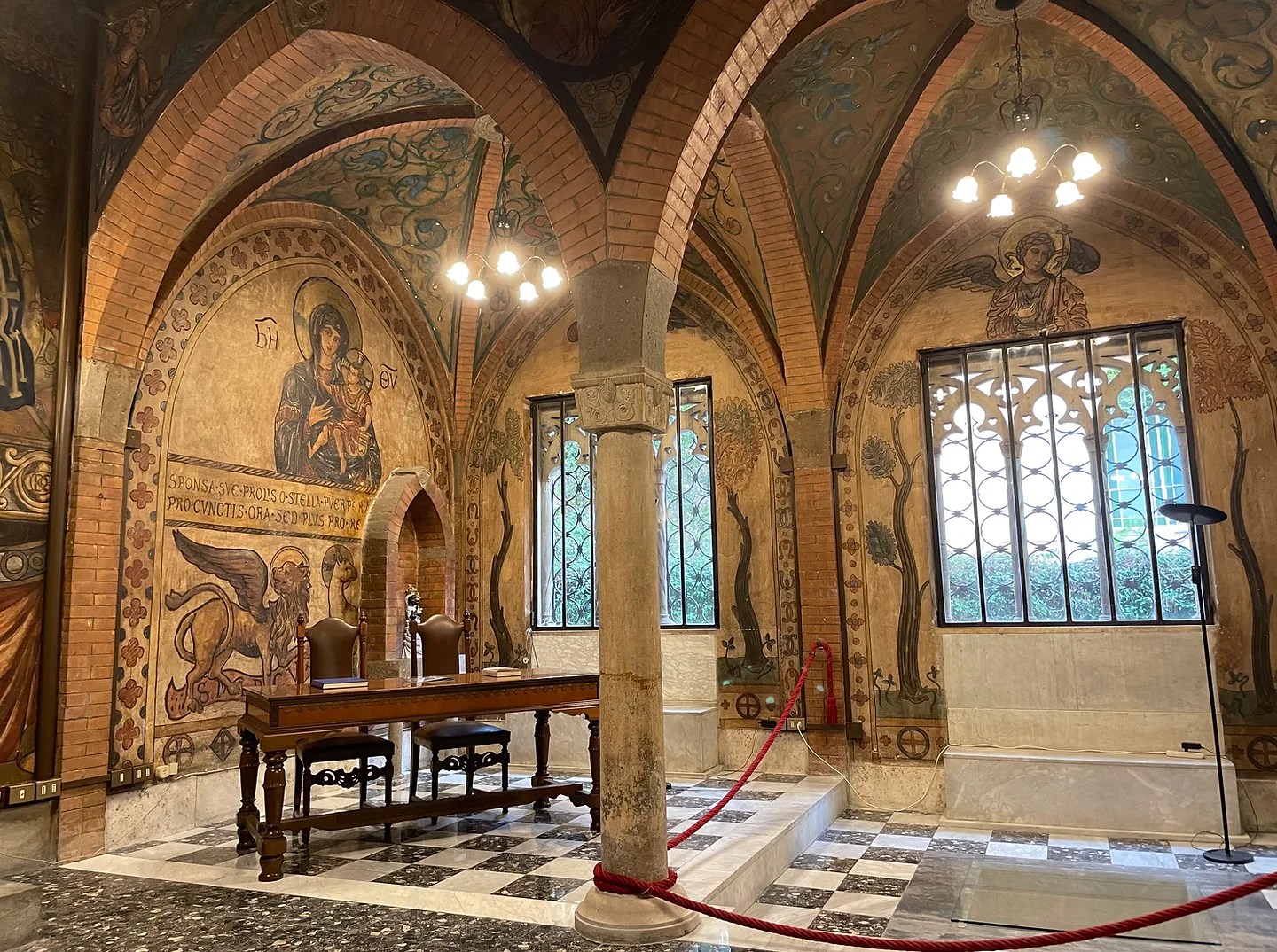
“I lived in solitude, surrounded by books on the history of religion, which have always been my favourite reading. This may help to account for a curious episode that took place on one of my stays in the villinio. I had a religious experience. It took place in the Chapel of Lorenzo, but did not seem to be connected with the harmonious beauty of the architecture. I can only say that for a few minutes my whole being was irradiated by a kind of heavenly joy, far more intense than anything I had known before. This state of mind lasted for several months, and, wonderful though it was, it posed an awkward problem in terms of action. My life was far from blameless: I would have to reform. My family would think I was going mad, and perhaps after all, it was a delusion, for I was in every way unworthy of receiving such a flood of grace. Gradually the effect wore off, and I made no effort to retain it. I think I was right; I was too deeply embedded in the world to change course. But that I had felt ‘the finger of God’ I am quite sure, and although the memory of this experience has faded, it still helps me to understand the joys of the saints.”

Having been drawn into his story to the point where I felt as if I knew him personally, I read this passage with a deep sense of sadness. Having experienced an indescribable joy which, he is convinced is the finger of God, he chooses to turn away because he fears for the call it will make on his life. The reasons themselves are illuminating as they are tragic. What would I have to change and lose?, what would my family think? And finally, it could just be an illusion. It points up that the problem we have with believing is not primarily one of the mind or of the intellect, but of the will. It is a moral one. If I believe, if I repent and throw myself on the mercy of God, there will have to be changes, If Jesus is my Lord, he will demand everything and that’s too much. The tragedy is that it comes from an inability to see and believe that God is good and grace is a gift, specifically to the unworthy.

My hope would be that his decision was not final and that in later life he had a change of heart, and accepted the flood of grace that he experienced in that chapel of Lorenzo.
The Two Macmillans

In strange disorientating times when fear and social suspicions take root, when we are trapped, grounded and demobilised with no clear idea of where the end will be or what it will lead to, there are many strategies for coping.  A friend reminded me that those incarcerated in prisoner face a level of deprivation that puts our restricted life into the shade and we could learn from them. It has also been pointed out to me that these times of unusual privation often produce great creativity. This includes scientific advancement, special illumination and works of strategic significance. This should not surprise us, after all so much of what we know as the New Testament was written from prison and some of the most valued works of Christian literature too. I have just finished reading Franz Jagerstater’s “letters and writings from Prison” and it is full of astonishing light and inspirational hope.

So it is perhaps a time when artists, poets and musicians have a special role to play.

 Artists do have many roles. One is to shine a light into falsehood and hypocrisy and challenge evil where it is found. One may be to explore and see things beyond the visible and another may simply be to entertain and charm.  One of the roles I look for in in an artist is the challenge to look up. To see beyond our own self-absorbed existence to a greater reality. It is essentially a spiritual issue. Finding artists who fulfil that role in contemporary society is not always easy. I have written in the past of my experience at college degree shows and my dismay at so much of contemporary art. https://crawfordmackenzie.net/a-death-affirming-experience/, But there are two figures, which stand out for me. They are the two Macmillans. Sir James Macmillan the composer and Robert Macmillan the painter.  

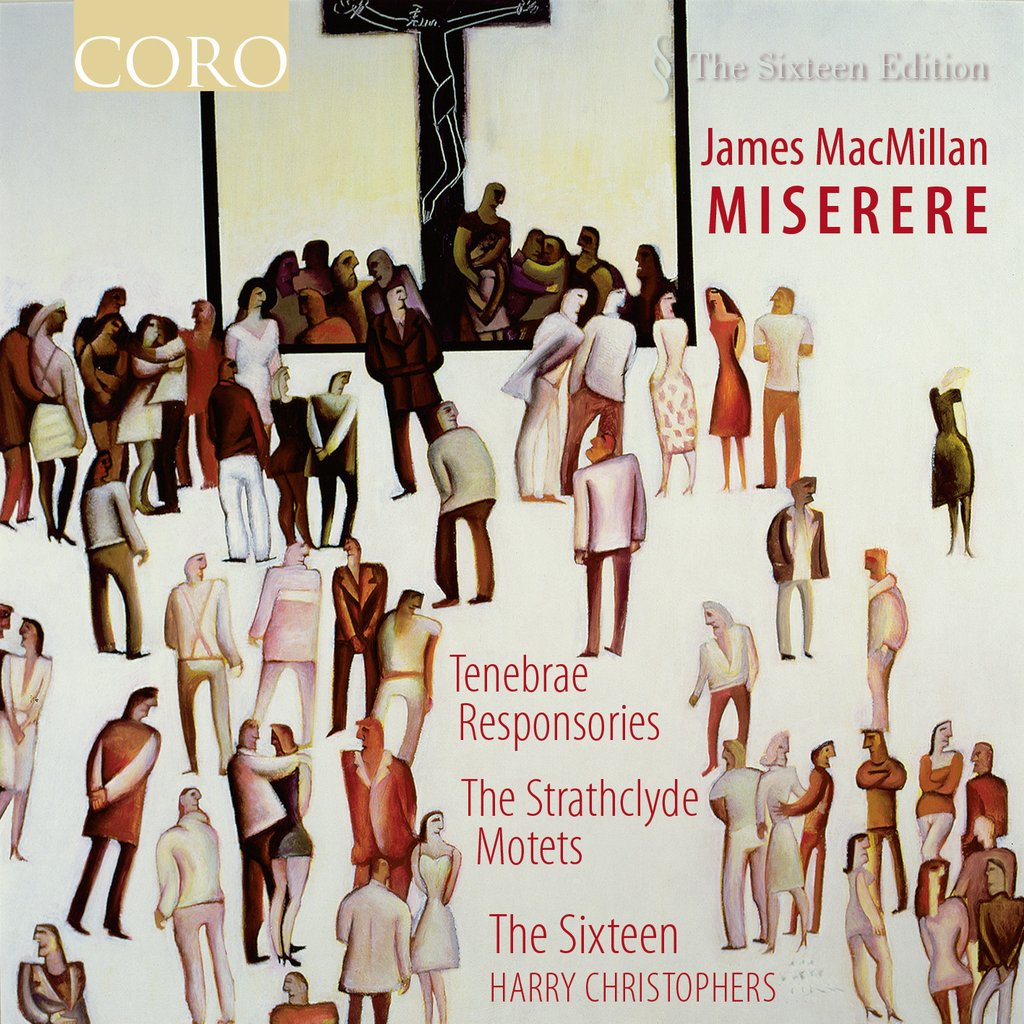
James Macmillan is well known in Scotland and throughout the world. You get a lovely personal introduction to the man in his interview with Giles Fraser on Confessions https://soundcloud.com/unherd-confessions/confessions-with-sir-james-macmillan. I have yet to truly explore his work. It will take time. He has said that listening to music requires a sacrifice and that is true. But it is one that brings great rewards. The piece that I have focused on, have listened to many times, and never tire of, is his choral work “Miserere” It takes David’s penitential Psalm 51 in Latin and draws us in  an astonishing journey through a range of choral languages from classical motifs, plain song to a very distinct Scottish feel in the final section when, as if finally reaching the summit, the piece breaks into the major key. It is when you get to that part, you realise you have tasted something great.  It is recorded by Harry Christophers and The Sixteen  (Coro: COR16096) but you can also hear it on youtube at https://www.youtube.com/watch?v=st2E_uhy5Mo,with a car-back firing in the earlier section.

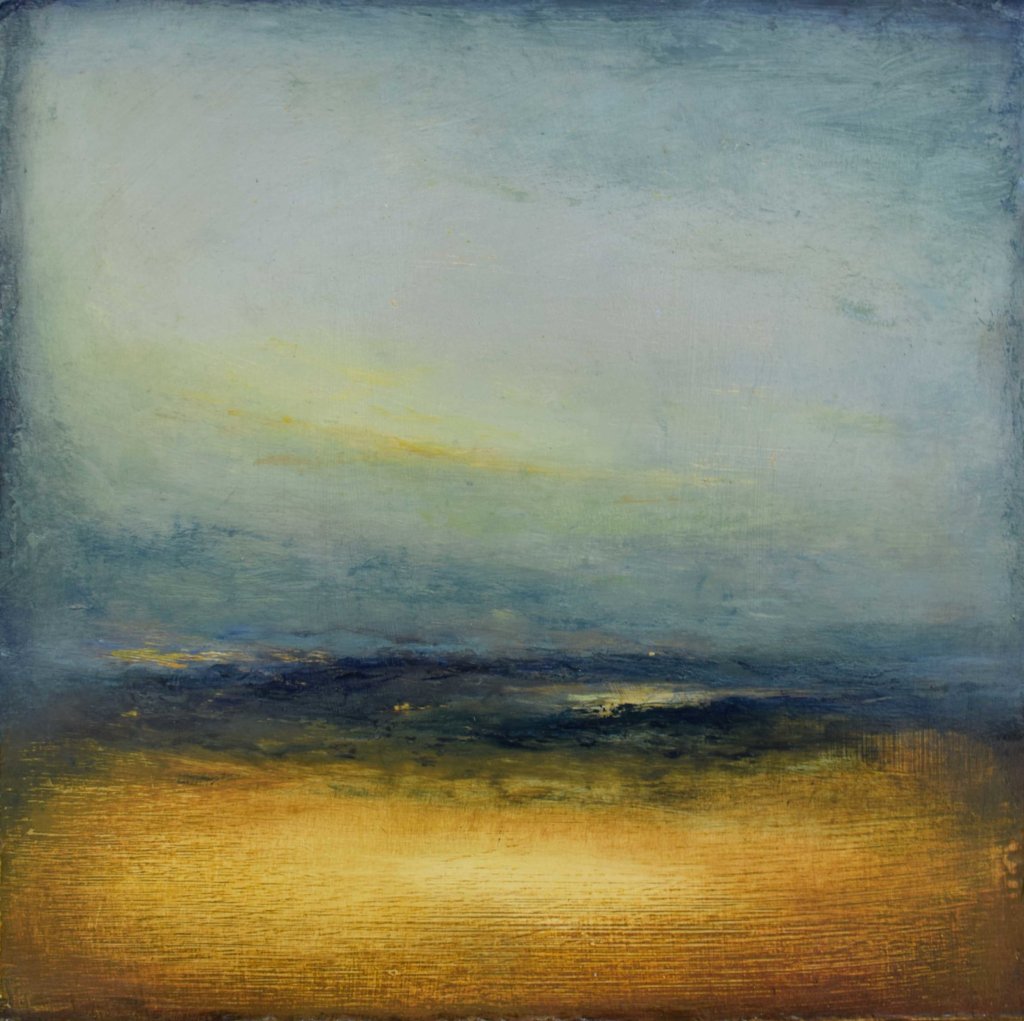
Robert Macmillan is a relatively young artist who survived the art school experience with his faith in his work intact and continues to paint in oils. His doggedness and commitment moved me when I visited him in his studio some years ago. So much of his work reminds me of Rembrandt and Turner in their continual struggling and searching after light. His figures have a wonderful mysterious quality, caught in space and time but looking somewhere else and his landscapes are exphansive and deep, nudging and drawing you in and saying “there is more than this ”.  I am privileged to have one of his works in our home. It hangs on a wall at the foot of the stairs and brings me enormous joy every time I see it.

With these two, I can just about cope with house arrest.

Managementarianism

managementarianismI don’t know when it started or where it came from but the relentless onward march of Managementarianism is slowly and subtly strangling the life from almost all of our creative endeavours.  We have been aware, for some time now, of the deadening effect of this culture on health and education, where educators and clinicians are replaced with managers and where the end result is not health or education but efficiency and exam results. But we have been almost taken by surprise in the way that it has wormed its way into almost every aspect of our lives.  The pursuit of targets, quotas, waiting times, performance, results, outcomes, good and best practice, all with the laudable aim of improving and reforming so that they become better organised and more efficient, is increasing. The imposition of targets themselves often back fire.  Whenever I make an application for Planning Approval I know that the authority are duty bound to  give a decision within a fixed period of time and their performance, in this regard, is monitored. What happens is that the administrators appear to make it their priority to delay the registration process (before the clock starts ticking) as long as possible by scratching around for anything that might need clarification, no matter how miniscule or irrelevant, so that the process, in the end, takes longer. It has all been said before, of course, many times and better.

What has taken me quite by surprise is the way that this culture has wormed its way into surprising places.  My own profession, which at its best is concerned with one of the highest forms of art, is governed by a body that is only interested in a measured standard of practice. It takes annual fees from architects which are then used to pursue the same architects on the basis of complaints from “consumers” however spurious. Inevitably results and convictions are what is important, so the body focuses on the small and sole practioners rather than the big boys who are better able to defend themselves. The results of successful prosecutions are then gleefully posted in press releases in order to put the wind up the lone architect. All of this has a deadening and negative effect on the real work of designing buildings. When you are called up to face a tribunal only one is an architect. The chief executive is not an architect and we wonder how this has all happened.  So from the top down we are not concerned or motivated to produce architecture that inspires thrills and delights but to devote ourselves to ticking boxes and covering our backs and if there is time or energy left over, then and only then can we think about design.  It is all very very depressing.

The obsession with quantifiable results is fearsome and not only does it stifle creativity but it ditches ideals and principles. So we no longer speak of good but better, fairer rather than fair, more just rather than simply just. Crime and justice are managed so it is question of keeping the lid on things, reducing figures is what matters and seldom is there time to consider what actually might be the cause of it all.  Drugs policy is about reducing harm not about what the problem really is. A health and safety policy is successful if it can bring down accident figures. I heard a health and safety officer declare that his aim was to reduce fatalities on building sites by a significant degree. “There are still too many needless deaths” he said.  The aim to avoid any death wasn’t itself seen as an aim. Economic policy is about management, so that David Cameron advice, to us all, some time back,  “to pay off your credit card loans” – the good common sense advice that my granny would have taught me, was stifled before it was actually said. It was important that people pursued debt to keep the high streets turning over and the so the economy is managed.  The same influence is found in politics where party managers and spin doctors ditch idealism and visions in the drive towards a safe harmonious superficial unity, so that, in the end, the parties resemble each other.   It was something that saddened Tony Benn.

What is really astonishing is the way that this culture has wormed its way into the one institution, the one body which should not be following the rest but be a shining light in the darkness and confusion, which should be a haven for the oppressed, the lonely the hurt, which should be speaking courageously with a prophetic voice to the nations, the one body which should not be managed – the Church of Jesus Christ.  And yet that seems to be what is happening.  Congregations become consumers of religion and pastors service providers with job descriptions.  Stipends that historic term that beautifully defines the way a minister is to be supported becomes salaries and the church simply becomes just another modernist machine with stated aims and objectives, standards and values with just as much box ticking and watching the back as in any other field. How did this happen?

A medic friend suggested to me that it was like this: The benefits that were brought to society by Christianity who pioneered them, such as in health, education and welfare, in institutions which were subsequently handed over to the civil authority, lost their Christian base, their grounding reason for being and the only thing to fill that vacuum was a pursuit of a humanist atheistic mechanistic agenda with measureable goals. It is a scary analysis. It is scarier still if the church itself is in danger of being consumed by the same Managementarianism.

Crawford Mackenzie

Meeting Hans

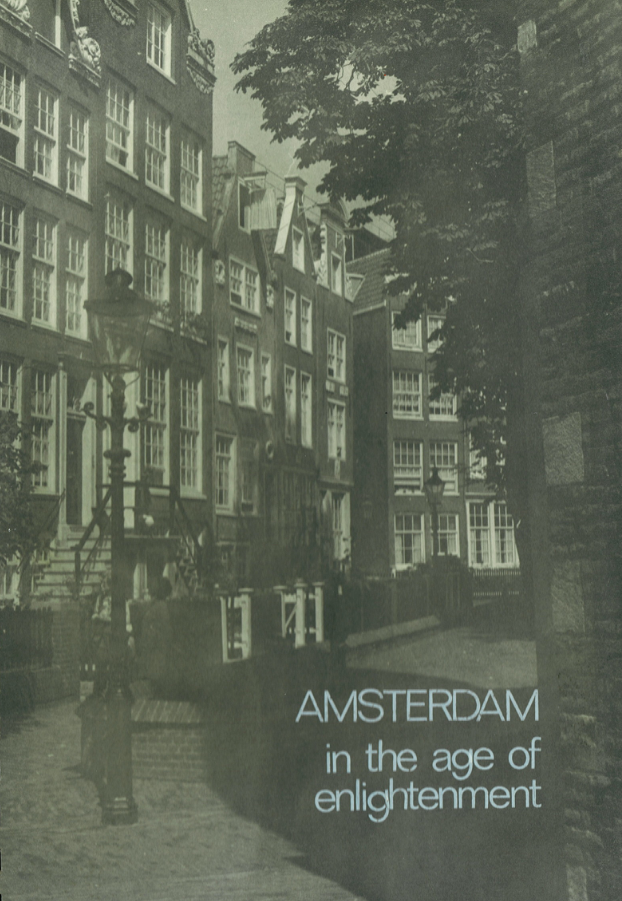
amsterdam 2The only award I ever won in Architecture was as a student in my final year at college in 1972. It was an annual prize awarded by the Royal Incorporation of Architects in Scotland for a design completed within a day. Without any hint of false modesty, I am convinced I only won it because the competition was itself so poor and most of the others were diligently concentrating on the push towards their finals. I was cavalier enough to think that I could afford the time-off to do it.  With the prize money and as newlyweds we were able to make our first trip to the continent of Europe on a student charter flight to Amsterdam.  It was a city of red lights and hippies, bicycles and cafes, canal houses and neckgables, with families eating, reading and socializing on the steps down to the street in the late afternoon sun, and everywhere that delicious smell of cigar smoke. It was at once an enchanting place full of light and learning. It seemed to be the epicentre of European liberal civilisation and culture.  The pretext of the visit was to investigate and write something about the planning of the old city and by a chance encounter, I was introduced to someone who gave me access to a university library and so I found enough material to write a short dissertation and thus fulfil my obligation to the awarding body. On the Sunday we went looking for a church and found the English speaking church in the centre of the Begijnhof green. It turned out to be affiliated to the Church of Scotland. After listening to a dreary sermon on butterflies and being kind to sheep we mingled over coffee in the hall.  There we met a young American student called Chip Carter clutching a copy of “Europe on 5 dollars a day” who in turn introduced to us a couple from the States, on their honeymoon, doing Europe, on a good bit more than 5 dollars a day. Our new found friends exuded the super confidence that we lacked and so we tagged along with them for the rest of the day, visiting the Van Gogh museum and skulking at the back in in embarrassment, when they insisted on asking every resident for directions in very loud English. It paid off, however, and in the evening we found a tiny evangelical church in a nondescript district of the city where we were told Hans Rookmaker worshipped.

Hans Rookmaker was a professor of history of art at the Free University of Amsterdam and wrote “Modern art and the death of a culture” It was a seminal work and played a significant part in my understanding of faith, philosophy, reality, art, the modern world and their mutual relationship. It sorted out my ideas on these subjects and helped me sharpen my thoughts on how architecture fitted into the grand scheme of things.  In the college studios during the sixties there was no clear way forward and a confusion of philosophies (1). Some still held to the principles of design “commodity, firmness and delight” credited to Vitruvius and the historical critical method of Reyner Banham. The modern movement had run out of steam and we were crippled by the restrictions of the “form follows function” philosophy. In this discipline, there was no room for decoration or delight. Inevitable everything had to be justified in terms of utility and cost so no curves, no awkward shapes, no expensive materials, no elaborate constructions, just follow the basic requirements of the building and beauty would automatically arise. If it didn’t, it wasn’t your fault.  Among my fellow students, Brutalism still had a strong following but some of my close friends were beginning to flirt with post-modernism.  While Hans Rookmaker seldom mentioned architecture, it was his analysis of the state of art in the 20c which opened a door in my mind and threw an enormous light into an otherwise murky interior. It is hard to describe how inspirational that was.  Suddenly the parts belonged to the whole, God was as much interested in the means as the end and beauty meant more than utility.

The service in the drab school hall was in Dutch and mainly lost on us but we felt welcomed all the same, at home and able to share in the worship.  After the service we were ushered over to meet the great man, our American friends enthusiastically holding aloft their copy of the volume for signature. “And this is Crawford – he’s from Scotland he’s read your book” The old professor, already lighting up his pipe, was bemused, didn’t want to be photographed and swiftly made a sharp exit, all the while pretending that he couldn’t  speak English.  The pastor, however, was more willing to interact socially and invited us to his home in an apartment far out on the edge of the city.  This was a massive scheme of modern apartment blocks and setting for the notoriously famous “Blue movie”. We enjoyed a lovely evening chatting over delicious potato salad and watermelon with a crate of Amstel Pils bought from a neighbour and the air soon thick with cigar smoke. The children were playing with a brightly coloured rubber toy.  In a crazy sequence of connections, it turned out to be a prop from the set of David Lean’s “Ryans daughter”, where the children tease the village idiot over the lobster he had caught and it is thrown around in the crowd. In the film it is perfectly realistic.  Handling and playing with the toy you could see why. But all of the connections were beginning to take too many bizarre turns and we had had quite enough excitement for one day, so we found our way back into the city, to our little room high up in a canal house in the Jordaan district. Hans Rookmaker was to speak at a conference in Scotland some years later but he died quite suddenly and so I was never able to hear him in the flesh.

But it didn’t matter, I had his book and other writings and now more than forty years later, reading again the well-thumbed volume, I find that it has lost none of its relevance and I can feel again the thrill and excitement of a new discovery and the possibility of more.

Crawford Mackenzie

Note

1 To be fair it was not all confusion. James Macaulay’s lectures on architectural history were inspirational. Looking back was the best way of making sense of where we were, so that we could begin to chart a way forward.