
GETTING USED TO IT
It as amazing what you can used to. The dismal dribble of water from the tap in the hand basin, the hit and miss electricity, the teasing hint of WiFi, the dust and rubbish, the incessant thumb of dance music pounding out at all times of day and night and even the heat and humidity, which you think your body could accommodate to, given time. But there are some things you just can’t get used to.
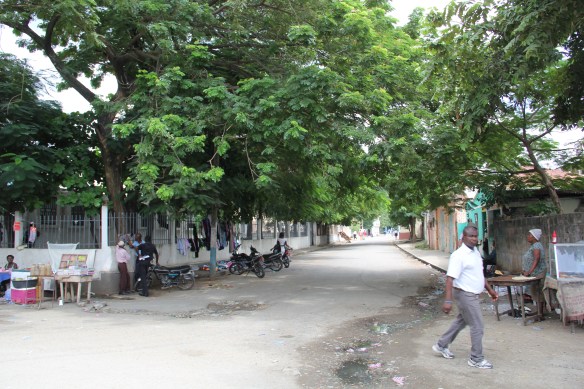
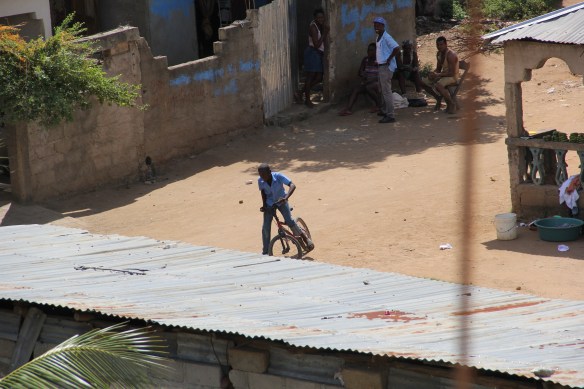
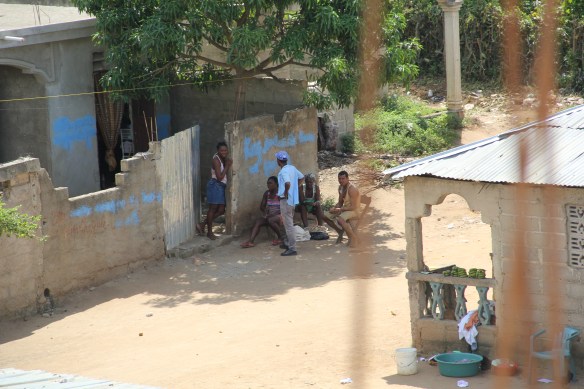 I went with the Pastor and Richard on my first, and only, home visit this time round. The pastor had identified some families who were particularly needy and so we purchased some food, a bag of rice, pinto beans, a tin of tomatoes, some biscuits, stock cubes, spaghetti and a jug of vegetable oil and took them to the home of a member of the church. I didn’t hear her full story but learned enough to know that her situation was desperate. We drove through the dirt streets, tightly packed with dwellings constructed from wood, corrugated iron, tarpaulin and rags and sometimes cardboard. It was shocking. We passed an open space piled with stinking garbage and smouldering fires, picked over by goats and chickens with a desultory donkey tied to a burnt out tree. Where there were flood drains at the side of the road, these were always full of rubbish, plastic bottles and polystyrene food containers. The smell at times was overpowering with slow moving and stagnant grey water and a strange black mould growing.
It was late in the afternoon, with darkness approaching and the air was tense. A group of young men gathered at the corner showing off the one possession they could boast of, an enormous speaker blasting out music. “We may have nothing, but we have noise” was the message. We left the car and followed the lady to her home up a narrow lane with all eyes on us and the odd cry of “Blanco”. When the children shouted to us in this way, it was with a smile and laugh. We laughed too. Now it carried just a hint of menace. There was suspicion in the eyes and a threatening body language. The home was the size of a garden shed divided into four for four families. We followed her round to the back squeezing through a gap in the corrugated iron. She parted a torn curtain and we deposited the food on the dirt floor. There was only a moment to take in the scene, a bench, a plastic bucket with clothes and a dish of beans. We spoke for a moment or two and then left. We didn’t pray with her and I am not sure why, but the pastor was anxious for us to be going. “This is a dangerous place” he said. I did wonder if picking her out for this food parcel might make her life even more difficult or if some of the watching eyes would pounce once we had left. I prayed that they wouldn’t. Earlier Richard said the visits are the best part. They were the worst. I was seeing things that I didn’t want to see.
Last night I slept in a hotel close to the airport transiting through the Dominican Republic. It was not the one I had booked but because of a mix up of dates the taxi driver found me another. I had a room to myself almost 10 times as big as the ladies home. (I measured it). I had free access to an all-day buffet, eat and drink as much as I wanted, beer and soft drinks in the fridge, a choice of three swimming pools and a private beach.
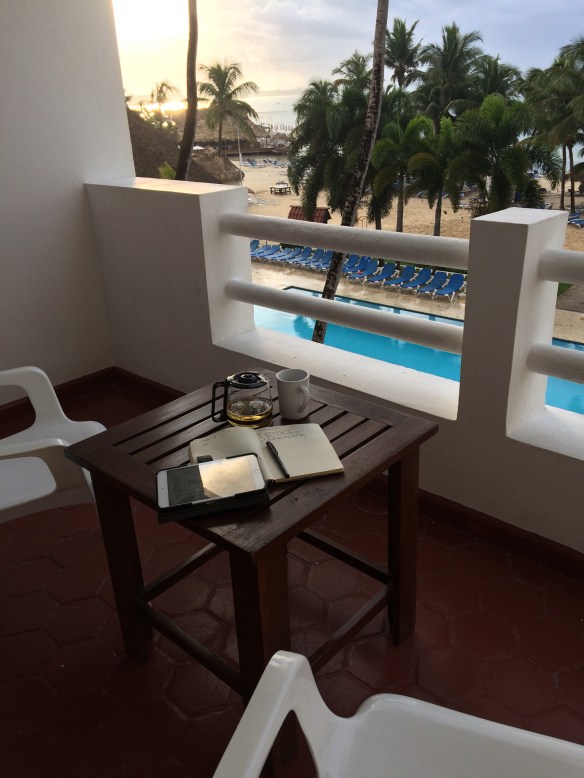 Watching the Caribbean dawn break spectacularly through the parting clouds of petrol blue, chromium and gold, I knew this grotesque divide was one that I could never ever get used to.
 THE SCHOOL
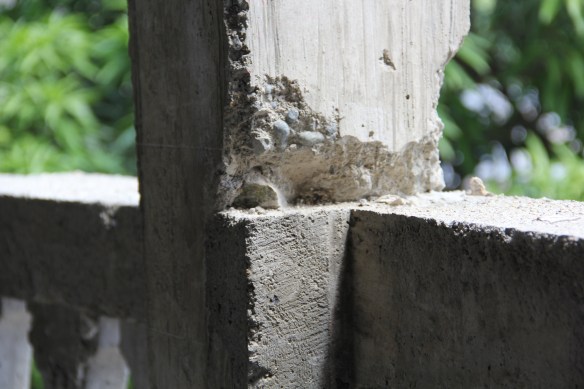
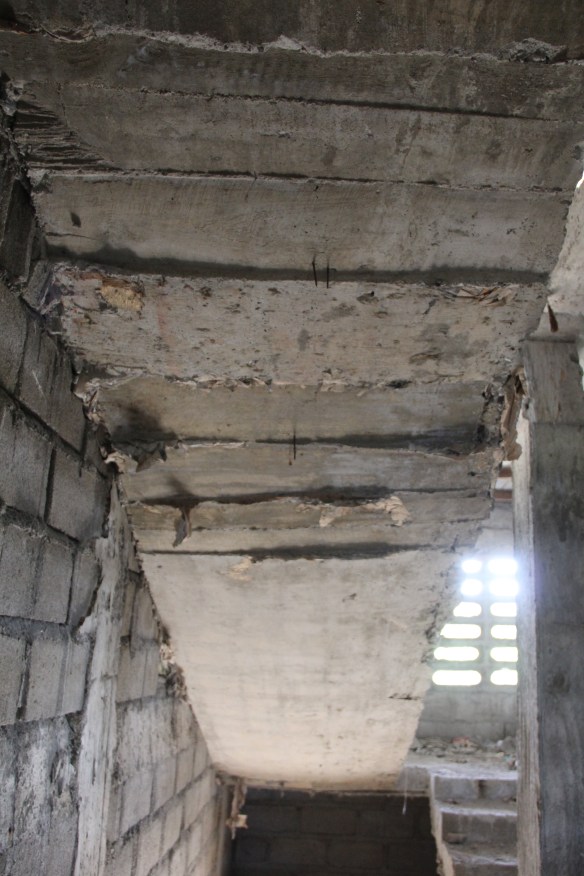
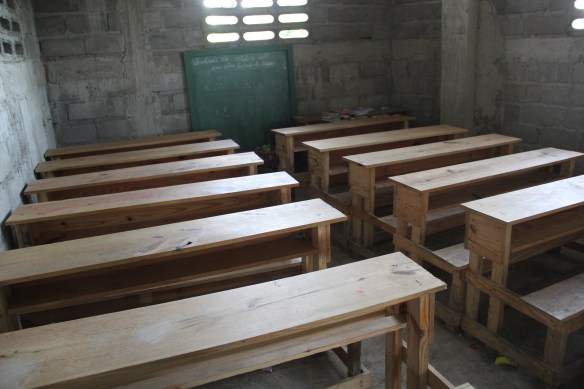
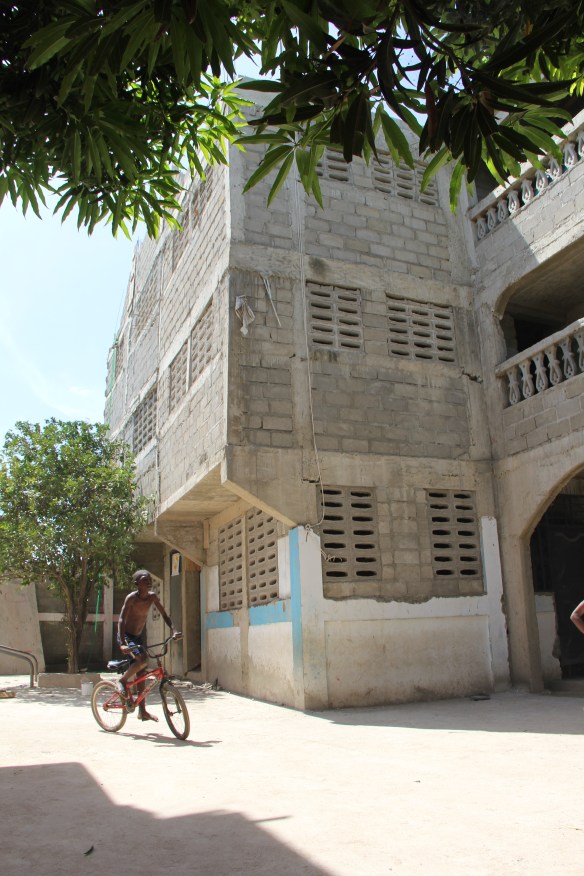
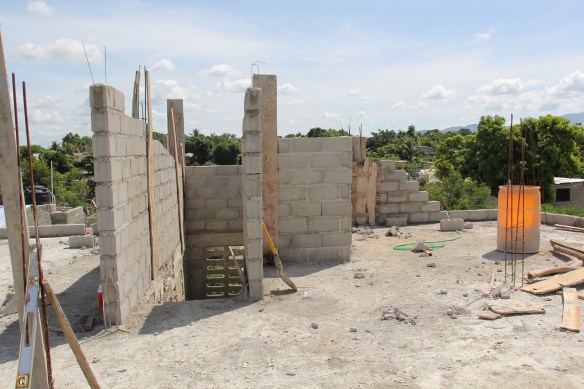 Later in the week we returned to see the school in action and stayed there for three hours. It was an amazing spectacle seeing hundreds of children in smart uniforms lining up for their classes and rounded up by stern teachers in immaculate grey uniforms with a belt in the hand which they used without hesitation, giving a child a smack across the ankles to get them moving. It reminded me of sheep being herded into pens but it didn’t make a lot of difference to the children who just took it in their stride and it clearly didn’t hurt. The playground was supervised by a man in a blue uniform also welding a belt. This time it looked more serious. It was made of leather like the Scottish tause and if there was any doubt about how serious he was, a rifle was under his arm and hand cuffs hung from his side. Security in and out of the playground was tight and parents had to demonstrate their authenticity before being allowed in to collect the children. The younger children were dressed in pink, the older pupils in grey and blue while seniors wore grey skirts and trousers and white blouses emblazoned with the emblem of the school “Institute Academique de Saint Israel”.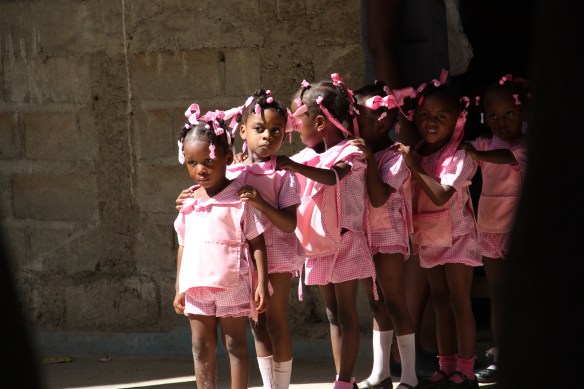
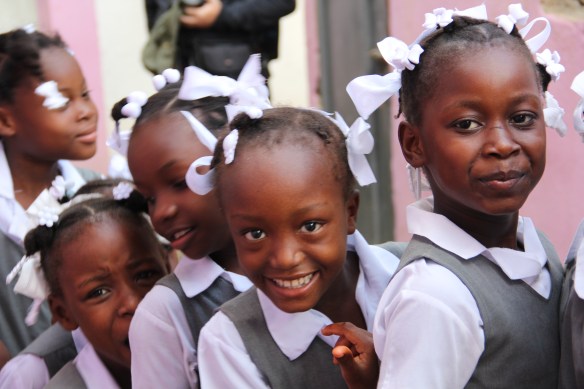
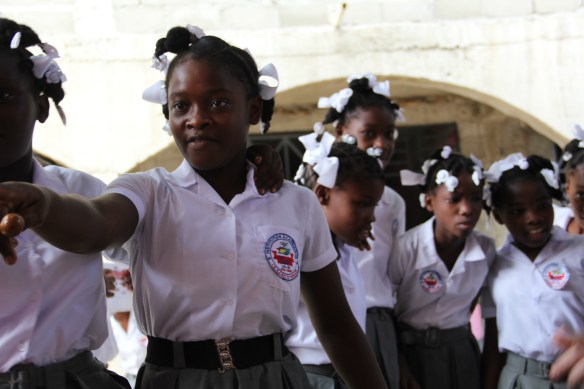
 The school has over 1,100 pupils and 25 teaching staff. I did wonder, if, in the longer term these children may have greater prospects than the children brought through the system in the UK. I just wondered. Haitians who can, and who have opportunity to, often leave for the Dominican Republic , the USA and most recently Canada, but the prospect of an educated population remaining to live and work in their own country could transform the nation economically, socially and culturally beyond all recognition. That is the hope and that is the main driver behind the project.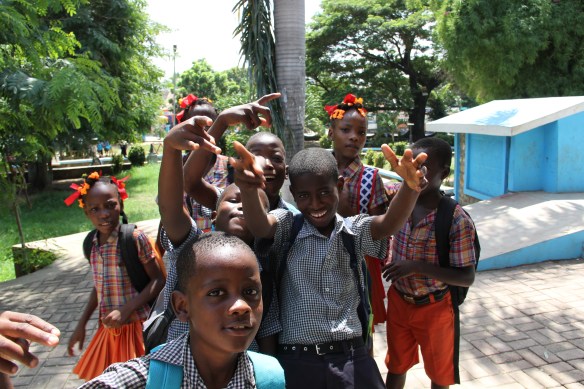
 Dàvid.
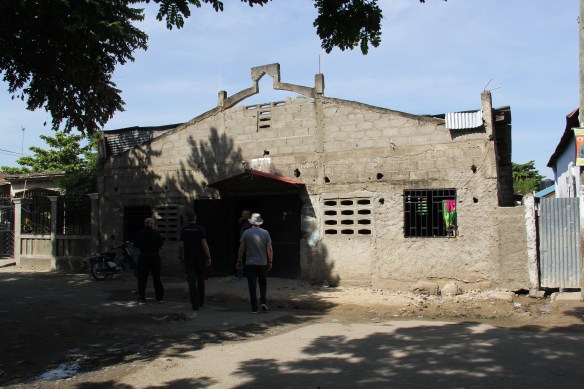 The Church
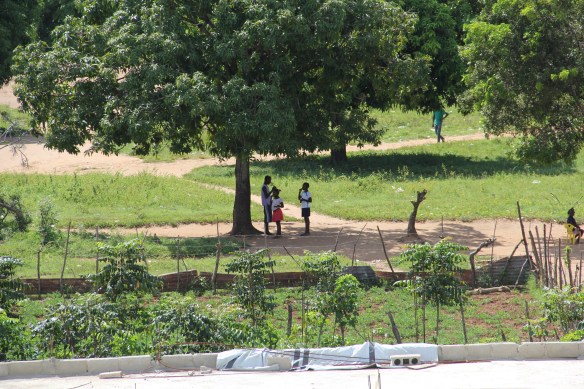 Morning is the best time. With no street lamps, when light does starts to come through the windows, you know that dawn is on its way and it moves quickly. There is a stillness in the air broken only by the birds singing as they scavenge in the undergrowth, the sound of water being poured from a bucket,the rumble of a motorbike, cockerels in competition and a dog barking in the distance. From the balcony we see across the yard, the cluttered houses beyond, framed with luscious palms and giant Stingingtoes, the mountains in the distance, before a perfect cloudless sky. We know it will be hot soon, unbearably so, but for the moment this a time to enjoy. We can be thankful for this special moment when we can be refreshed with a delicious breakfast of banana, papaya, egg and some fine coffee and sit around the table in the bar to talk about the day ahead, share experiences, discuss and plan, fired by laughter and soaked in prayer.
 This is a great team. Richard, Ross and Vic were the trailblazers making contact with Pastor Rolex Poisson and his church following the devastating earthquake in 2010. They simply asked if they could help and under the banner of Mission International visited, offered practical help and over the past seven years established a bond with teams, visiting, sometimes three times in the one year. The whole issue of helping poor communities in the world (Haiti is the poorest nation in the Western Hemisphere) is a vexed one. The tales of situations where aid makes matters worse are countless: teams coming to plaster and paint schools when there are good local artisans who could use the work, water pumps installed to villages that break down and the village women resort to carrying water for miles, the white man’s money buying some feel good merit being parachuted in and airlifted out and the crippling effect of aid like American rice which kills off the nation’s own rice growers who cannot compete with the low cost of the imported grain. These stories alone would make you reluctant to help at all, but that is not an option for the guys on this team. There is a sacrificial commitment that is humbling. They come at some cost to themselves and their families. The clear principle is simply one of enabling and encouraging the local church in its ministry within this benighted community. I think that is the right way. The work that is done will be by Haitians it will be the resource that they identify and they will own it.


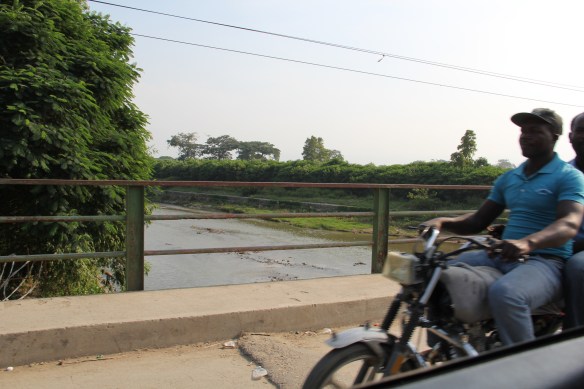 We finally crossed the border at about 5 in the afternoon. But it was not without incident. The form filling and checks at the Dominican Border were relatively smooth and things were trundling along ok at the Haitian border until a big row blow up. There was a lot of shouting and gesticulation and the official behind the desk refused to hand over the passports. He decided he wasn’t being given the proper respect and this was the time to take a break. He walked out of the office, sat down in a seat in the yard, plugged his earphones in and stared ahead in protest. There was nothing we could do. There was more raised voices with others now joining in and tension rising by the minute. Then, just as suddenly, everything calmed down, we picked up our passports and moved off to our accommodation in Hotel Ideal.
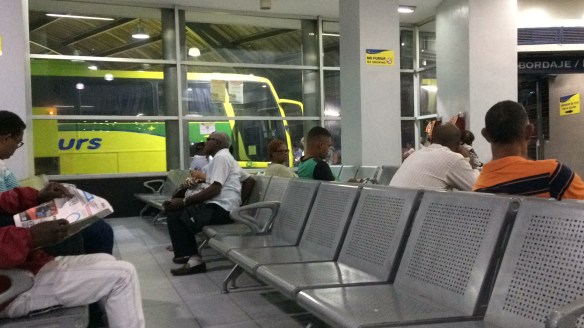 The bus left the Caribe station in Santo Domingo at 6.30 am, but by 6.00 most passengers were already in their seats patiently waiting. There were bags everywhere. A guy was helping his half paralysed brother into a seat with a loving tenderness that was touching. It was noisy with loud animated conversations but above the melee was one woman who was standing at the front speaking very loudly. She was standing under the reading light and the spotlight effect illuminated her gesturing hands. I couldn’t see who she was talking too but it sounded very passionate and urgent. It took some time before I realised that she was praying. Praying for our journey and giving praise to God with a “Gloria a Jesus, Hallelujah!” It was the point in my trip when I truly relaxed.
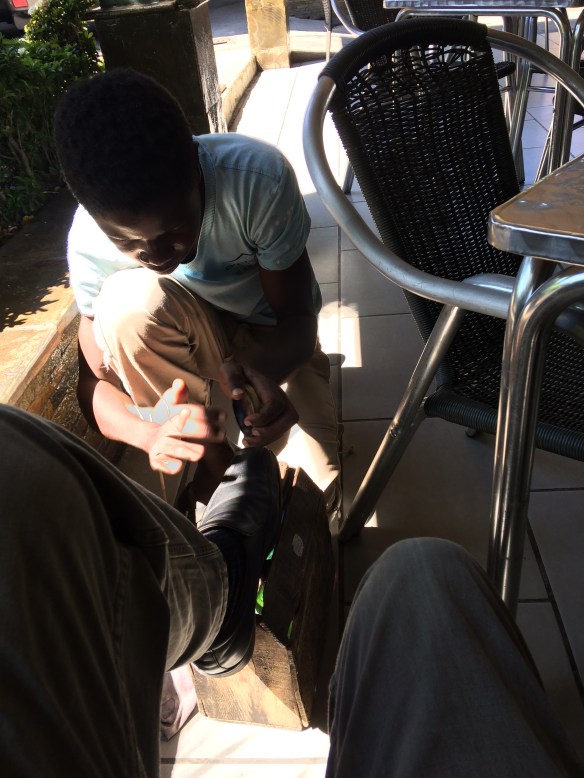 The Shoe-shine boys of Dajabon
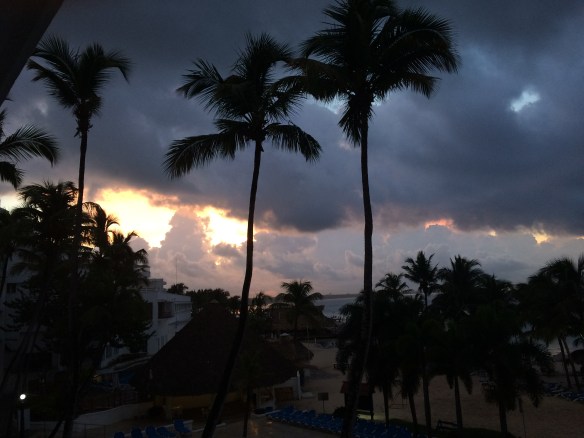 There is always an anxious moment when you are finally released from the maternal care of the airline transit system, where you are told where to go and what to do, what to fill in and where to sign and while it is quite humiliating being herded around like cattle, zigzagging as if impersonating a snake, there is something comforting in it. So when finally discharged the thrill of being free doesn’t last all that long and is quickly replaced with a new anxiety. It is a strange wild and different world out there. It is outside the garden gate and all the reassuring sounds and smells, the signals the signs, the time and food and language engender an irrational unsettling fear. I was a proud solo traveller suddenly feeling not so proud and just a little foolish. Wondering how I was going to negotiate taxis, trust myself to the dark unlit streets, being driven in a rattling cab with thumping music at great speed through scary traffic, a much longer distance than I expected. The fears of course dissipated when the driver true to his word got me there. A hotel with clean sheets and the possibility of sleep 22 hrs after leaving London. When I paid the driver he called me his friend and gave me a big hug. That was when I knew I had really been ripped off.
 Restless Spirit