How can it be?


We sang a new version of an old hymn last night. It was “How can it be” by Greg de Bliek of new Scottish hymns based on Charles Wesley’s “And can it be”.  In recent times there has been a growing appreciation of the real value of so many old hymns:  the clear theology and mind engaging words which often contrast with the often shallower themes of some contemporary praise songs. Many have reworked these for congregational singing with varying degrees of success. Inevitably personal taste comes in here and people are often unhappy about changes that do violence to what was for them a well-loved hymn but, in my opinion, this one really works.  I have to admit that I disliked the old hymn. The solid theology was lost on me because it was married to a light and almost frivolous tune (Sagina – Thomas Campbell), reminiscent of a Victorian foxtrot and belonging to the dance floor, It seemed completely incongruous and turned me off.  Greg de Bliek, on the other hand, has taken Charles Wesley’s words, almost as they are, with a few small changes, and with the simplest of tunes, an almost stark melody, allowed us to sing and think about what we are singing. He makes the last verse, the climax of the piece, into a chorus rising beautifully in the middle section and the whole is a very moving hymn. People will of course say “but I liked the old tune”  that may be true but it should not stop us thinking about the music, what it does,  what emotions it arouses, and whether it is appropriate or not. I think that what Greg de Bliek has done is not simply to dust down an old relic and make it a curiously but to open it up, bring it into the light and give us a hymn that is as relevant today as it was when it was written in the 18th century.

You can hear it at https://www.youtube.com/watch?v=EtmjMgsPImc but the YouTube video hardly does it justice. You need to hear a congregation singing it and you need to be in that congregation.

Crawford Mackenzie

“It’s not really that important”

la tablada

Sometimes it is the throw-away comments that get to you.

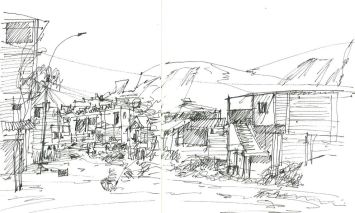
We were back in Lima after a full day travelling through some of the most spectacular scenery I have ever seen (described in an earlier post) through the Sierra, the mountains and valleys and rivers and through the desert on the edge of the mighty Pacific Ocean. Now we were back in this city of eight million inhabitants, the air was thick with diesel fumes, burning rubbish and dust: the fine grey dusty sandy that is everywhere, in your clothes and your hair, in your bed and sometime in the toothpaste. It is hard to escape and brushing and washing and wiping is a continual and perpetual chore. The streets are full of crazy traffic massive lorries and busses, combis and cars and mototaxis all fighting for one piece of the road that will carry them to the next, through massive potholes and rubbish piled high at the side, sometimes cleared away for a park with benches, a swing and sad bedraggled bushes and plants covered in dust. Sometimes, as in the vicinity of the fish market, the smell is overpowering . It was dusk. In the mixture of the grey air: the approaching darkness and the mass of humanity, busy trying to get what they needed to live, against the backdrop of hideous concrete half completed boxes, piled high, it seemed on top of one another and fighting for any available space on the side of the steep hills, with no relief save for a brightly painted wall or a modern office building, I was beginning to choke with weariness. I thought I had got used to the squalor of the city but now coming back a different way, it hit me like a concrete block in the stomach. There was something almost gross about it. That people should have to live like this in such ugliness was distressing. I wanted it to be better. I wanted it to beautiful.

The next day my friend showed me the piece of land his father-in-law had given him to build a house for himself and his new wife.  It was a yard at the back, surrounded on all sides with 2m high brick walls and on two sides with a three storey buildings. There was no view or outlook, save for a square of sky. We spoke about the design. Inevitable it would have concrete walls, floor and a tin roof. The kitchen would be formed with a concrete worktop sink and space for a cooker. I was suggesting that the construction could be improved dramatically with a ceiling and insulation, which would offer some protection against the fierce heat in summer and the cold in winter. It would make a lot of sense. It would not be difficult to do and it would improve the comfort of the house enormously. He listened silently to my advice and then he turned with a smile said. “Sí  sí  es verdad, yo entiendo , pero no es importante,… hay personas acá en la iglesia que no tienen nada” (yes I know, it would be good, but it is not really important…there are people here in the church who have nothing)

“It wasn’t really important”. He had grasped what the Hebrews in Haggai’s day had not, when God said  ‘Is it a time for you yourselves to be living in your panelled houses, while my house remains a ruin?’  For my friend, God’s house was his people and that had to be the first priority. It was demonstrated a few days earlier when he with two others visited a lady with cancer at an advanced stage. She was going for her first dose of chemotherapy the next day and the friends called at her home sat around her bedside and prayed for her. A week later she had died. It was the children, the young folk, the old people the sick and the wounded that he was compelled to care for and getting a comfortable home for his new bride was somewhere far down the list. There was the true beauty.

It was a throw away comment, but it stuck to me like cement and I couldn’t brush it off.  It rattled and shook me to the core. Even now back in my own home, surrounded by my own creaturely comforts and familiar things it shakes me still. I know could not be what I was not. I could not turn my back and despise the many wonderful things that God has blessed me with. I could not disown what I had been given and disavow the quest for beauty and fine things. I could not be an ascetic. Yet these simple throw away words continue to haunt me and when I think about all the good things, it makes me ask the question: “ are they then really that important?”

Crawford Mackenzie

The Bus to Lima (previously posted on facebook)

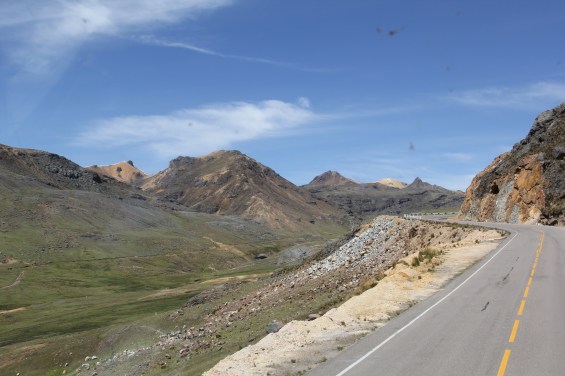
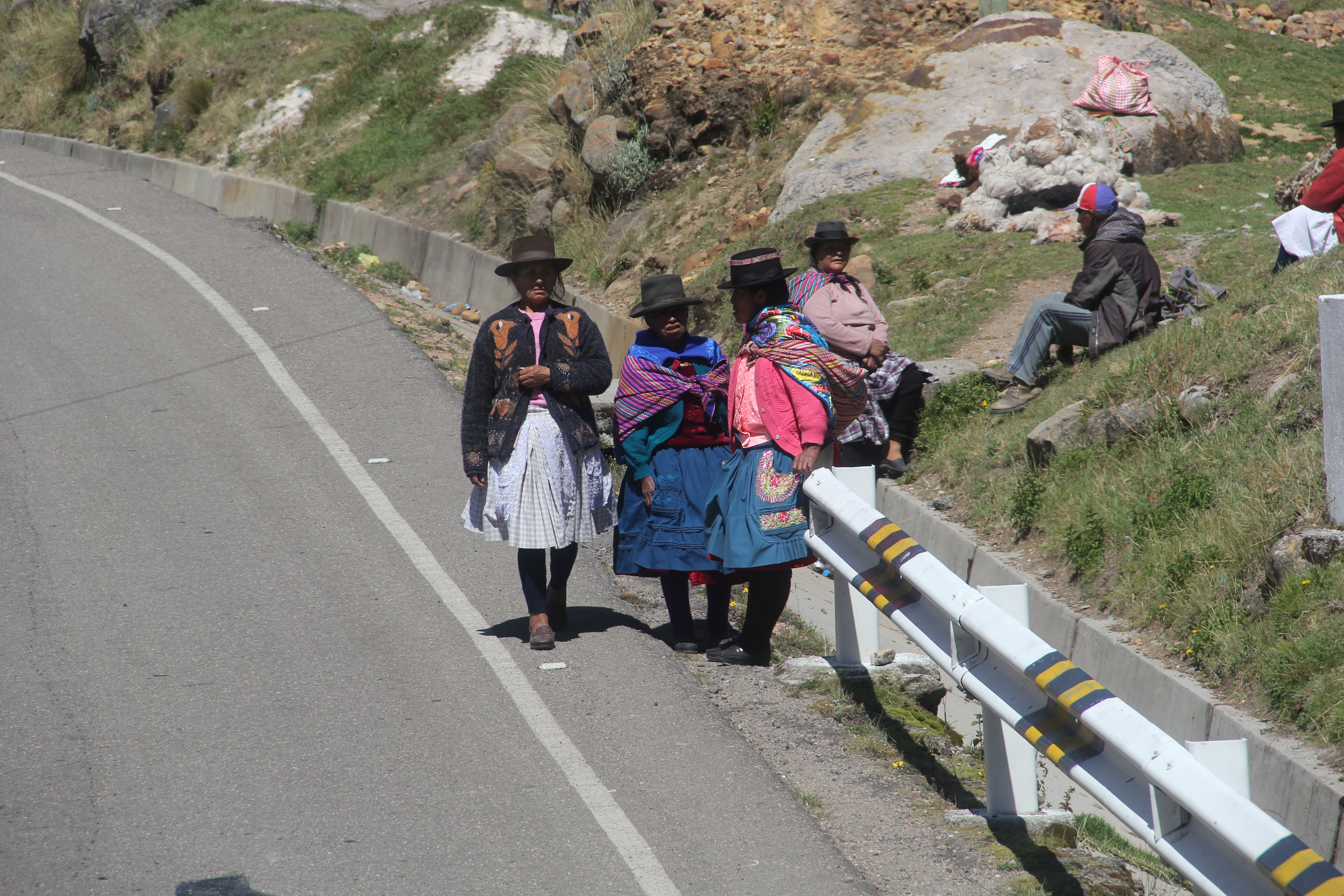
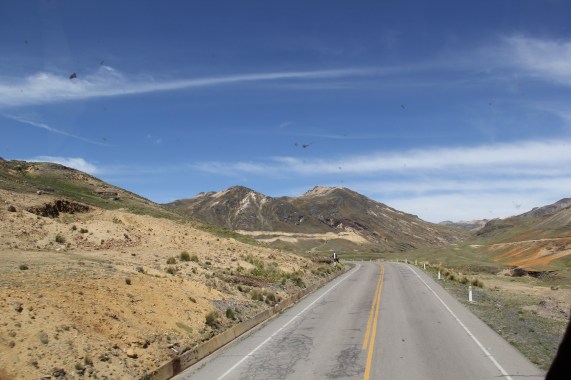
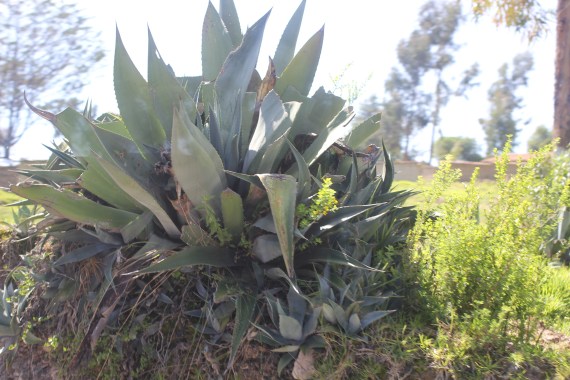
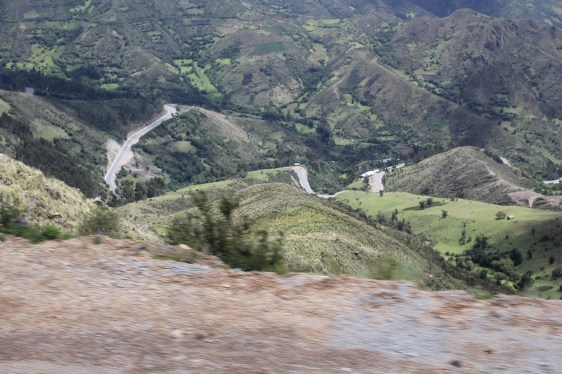
IMG_3952We opted for the daytime bus back to Lima with seats on the top deck right at the front which gave us a wonderful 180 deg view. At times we were seeing a bit too much when it seemed as if our driver was playing with our lives. Taking blind corners on the wrong side of the road at speed was his particular style. We left the scramble of Ayacucho and were soon in the wild grandeur of the Andes: rocky crags like saw teeth in the sky and light sandy coloured hills dotted with green. The proud eucalyptus, sometimes in clusters at other times standing sentinel in the hillside and cactus of many varieties in stupendous shapes rising stubbornly from the dry earth. In one particular variety, a cluster of sharp spikey leave-like forms with a strange tree like growth coming up from the centre, as if from a Doctor Zeus book. The fruit bearing cactus “Tuna” or “prickly pear” delicious and refreshing to taste, was also in abundance. Sometimes a small field with terraces would be carved out of the ridiculous steep mountainside, growing potatoes and alfalfa. We were zigzagging up and zigzagging down to small villages and towns and always in the rugged landscape a single or a group of figures in bright deep colours and black hats carrying enormous loads making their way here and there, sometimes with a donkey in toe, a group of grazing alpacas, goats, cows or a wandering dog. Finally, after six hours of this exhausting landscape and at the point when it was beginning to lose its allure, we settled down to the bank of a river with large swathes or fertile land: vineyards and orchards, olives and dates in an almost industrial scale. The river took us on to Pisco to the coasta (the great plain by the sea). With a welcome break from the aircon-less coach, and a stop for food and refreshment we found ourselves in a different world. All around was desert, smooth hills of clear sand where you would expect to see the odd camel caravan, all the way to the sea and the mighty Pacific Ocean. Now we were in dual carriageway and our driver had had his fun for the day and we continue the further three and half hours through this strange landscape to Lima. It has been such an awe inspiring journey; you wonder why you would ever choose to travel by night.

  IMG_3946 IMG_0865IMG_3960IMG_3949IMG_0788  IMG_0847

Crawford Mackenzie

The Bible Study

It is half past eight on Saturday morning. The room is dull dusty and sparsely furnished: a red painted concrete floor, two sofas covered with sheets, a table with some chairs, an empty bookcase, a make shift curtain separates an area for two double beds where a family sleeps, children pad in an out and a cat wanders through to the kitchen. We are four, three young men and myself. All three are married and two have lovely daughters. One is the new pastor of the local church; one has completed his studies and looking for work. One is blind. Those who can, read verses from the bible in turn. The study is focused on Ephesians 4: 17-32. The pastor leads while others chip in with thoughts reflections and questions. The aim is to understand. We speak about anger and abusive treatment of others, about how our thinking affects what we do and say, about practising honesty and forgiveness. The privilege (an overused word) of being able to share in this time is awesome (an even more overused word). Here in the dusty crumbling slopes of this great city, tucked away in an anonymous street, are a group of men who are grappling with what it means to live a life of faith. We are not talking about football, or cars or politics, we are talking about what really matters. When we finish, they ask me to pray, mercifully, in English. While my Spanish sometimes surprises me, I knew this is one occasion when it would not be up to the task.

It would be very hard to describe the breath-taking wonder and the sense of honour I felt, leading these men in prayer in that moment. I was humbled, challenged and, yes, truly blessed and it is something that I will never forget.

Crawford Mackenzie

A Deep Stain

My colleague who has travelled throughout Africa and inspired many significant projects with partners in Kenya, Burundi and Rwanda made the striking comment as we experienced Haiti for the first time. “It’s as if a chunk of Africa has been lifted and dropped in the Caribbean” he said. In people terms, this is exactly what has happened. In the history of the colonialist’s insatiable lust for the third world’s resources, the pillaging and raping of the land, nothing compares to the evil of the slave trade. It remains the deepest stain on our history. That individuals, people who have been made in the image of God, and who, solely because of their race and where they came from, could be dragged from their homes and land, bought and sold and disposed of, as property, as things, is both hideous and despicable. That governments could collude and benefit from the trade and the Christian church provide the necessary theology to back it up, makes it all the more damning.

The true depth of that stain can be felt here in Haiti. Brought from west Africa by the French to work the land they rose up and defied their masters to become the first independent nation in Central America with a government made up of former slaves. At first first few countries recognised them and they could only begin trade with their former colonial masters by paying a crippling fine as compensation for their loss of earnings – the loss of their slaves. The cruel irony and absurdity of what was happening is hard to swallow. They were obliged to pay their previous owners for the freedom to live in a land which had already been raped. (The deforestation that took place during the colonial period contributes enormously to Haiti’ current problems). At times in their history the Haitians were treated cruelty by their neighbours in the Dominica Republic. The darkest episode took place in 1937 when, under Trujillo’s orders, 10-20 thousand Haitians were slaughtered in a heinous act of genocide and ethnic cleansing. The Rio Massacre, which serves as a border between the two countries, at points, was literally flowing with blood. The recent earthquake and the series of coups and despots only serves to pour salt on the sore of this wounded nation.

Today the colonialists have been replaced with multinationals who have the Haitians by the throat. The innocent sounding “free trade zone” at Ouanaminthe where goods are produced for well known clothing brands, blatantly uses cheap labour in sweat shop conditions.

It is and remains a great stain and an inescapable burden. If you cared at all what could you do ? How could you respond?

For many, catharthis is found in political action when the anger and indignation at injustice propels them into raising the issue, getting people to listen. pillaring governments, writing letters, signing petitions and every legal method of forcing those in power to change corrupt and unjust business. For me it has to be another way. And what I observed my colleagues doing, on the ground at an individual human level, working and helping local people, partners in the communities, epitomised that.

The great stain won’t be removed with money or with years or with good intentions or with penance. The victims will only lose their victimhood when they find their true worth their true value their self respect and their unshakable dignity. That was what my colleagues were working towards and that was what inspired them.

The Fan

Why is that people use fans to cool things downs (hand fans or mechanical propeller fans in the ceiling) when our oven has a fan that seems to heat things up. A wind in winter can make you feel colder due to its chill factor but the chicken must feel even hotter in the fan assisted oven. So air movement cools thing down but also heats things up. There must a turning point where it flips over from one to the other. The reason why I am thinking this is I am trying to sleep with a fan blowing air around me. It is meant to cool me down but at times I feel I am in fan assisted oven.

The White Man

The White Man
One of the things that I hate about visiting a poor country (and let’s face it, that is most of the world) is being the white man. The assumption is that you are rich which is true (sometimes obscenely so in comparison) and that you are cleverer and wiser and more intelligent which it is manifestly not. This is such a big thing that it would put me off travelling all together It stands in the way of making true friends. But I am saved by one thing, and that is language. Once people find out that your knowledge of their language is patchy and ragged, the relationship shifts its footing. You become something a kin to a child needing to learn. Someone who needs to be taught new words and have conjugations and cases corrected. It is a swift change of roles and one more likely to form the basis of a good and lasting friendship. That more than anything else makes it worthwhile travelling.

San Domingo

We flew separately to San Domingo. ( I am not sure why. Maybe it was the royalty thing – we were two important to share the same plane or maybe there wasn’t one big enough for the three of us -you take your pick) . I had forgotten (not deliberately) my regulation tee shirt and just hoped I would spot Pastor Poisson (I had seen him on video). The arrival hall was packed as it always is in these occasions with family and friends eagerly awaiting their loved ones retun and screeching and cheering with children running wildly as the exiles came through the door. One couple met half way down the ramp and embraced and quite lost themselves in the unbounded joy of the union. They seemed quite oblivious to the throngs watching till they were finally brought back to reality with the spontaneous applause they provoked. One group was met with a little band accordion, drum, shaker and clapping that surrounded them and followed them out of the building into the balmy night. But I couldn’t find the pastor. I asked two look likely suspects but neither were him. By a miracle, going back and forward through the crowd, I spotted a small piece of ripped-off paper in someone’s hand with the word “Crawford” on it and I smiled.

Return to Ayacucho

Earlier this year I fulfilled a long cherished dream to visit Peru. It was an interest and fascination with the land and the people, the Costa, the Selva and the Sierra, the Incas, their startling independant civilisation and the massive stones knit together.  I felt for the Quechua in their struggles against their colonial masters and the indifference of the ruling class in Lima and I prayed for them during the dark days of the Shining path. But the reason for going was to keep a promise I made to our Peruvian son, Edwin. He lived with us 5 years ago and I always hoped to go, but it never seemed possible until this year. It was a trip ,I will never forget. We spent days in the dusty slopes of the pueblo jovenes in Southern Lima, a week in the jungle city of Tarapoto an idyllic few days in la chacra, a village deep in the Selva and an unforgettable trip to the Sierra to Cuzco, Macchu Pichu and Ayacucho .

It was a breathtaking experience, but I was totally unprepared for where this would lead. I had no idea what I would find. It was In a little hotel, up a narrow street in downtown Ayacucho, that I met Raquel Quicaña. Her family had suffered terribly during the civil war and I had read about her cousin Romulo Suane Quicaña a pastor and bible translator who was murdered along with four others by the Shining path as they were returning from a church dedication in 1989. Raquel was a nurse who ran a clinic inside the hotel and when we met, I felt I had known her all my life. It was as if she had been expecting me. She invited me to visit another clinic that she looked after which was 35 kilometres from the city and further up in the mountains.

The village of Quinua is famous as the site of the battle of Ayacucho when the patriots defeated the colonial army and Peru won her independence. Raquel had patients to see so with my companion we visited the battle site on a plateau overlooking the town with the city of Ayacucho far below and surrounded my the majestic Andes. It was a beautiful scene but the picturesque quality belied the desperate poverty of the people. The clinic a plain concrete building was desperate in its own way. Water was seeping between every wall and roof junction with green algae on the walls. There was no sealing of the buildings or protection from the elements. It was the middle of summer, but it felt quite cold and I shuddered to think what it would be like in winter. The medics described carrying out consultations wrapped in blankets with a hot water bottle at the feet and one on the lap. It was also desperately in need of accommodation for medics and patients on short stay. Some travel for days to get there. It is the only medical facility in the area and supported entirely by voluntary donations. When Raquel said “I hear that you are an architect… we have a problem with our building” I knew where this was going to lead and I knew I had to help.

So began a series of email discussions, plans and sketches, cost estimates and thinking through the feasibility of what could usefully be done. From the start there were challenges not least over effective communication, learning new construction terms and costings in Spanish. But there was also the deeper issue “what was I doing?” . In the controversy over short term mission, would this end up like so many ventures, doing more harm than good? Should I, Just because I could? Would it really help or was I simply feeling good about the idea of being needed? Was I coming in to do something locals could already do? Did they really need a white man to help? Were there no architects in Ayacucho ? It was important to ask all these questions. I had to face up to these challenges and examine my own motives. It would be easy to get carried away. It would be easy to spin the story and fulfil my own prophecy.


Sometimes, however, you first instinct is the right one. I knew in that moment on the rooftop among the puddles of water the debris of pipes and cables and makeshift solar panels, with the clouds receding over the Andes in the distance, I knew then, what I had to do and the later conversations with friends and family, the advice of experts and confidants and the support of so many people, simply confirmed it.

It seemed clear that I would need to make another visit, meet with folk involved, talk about the project, the practicalities of construction, the time scale, the costs and how it could be realised and what help we could usefully give. I needed to plan another trip across the Atlantic, south across the equator , down the coast from Lima and up into the Andes and that begins tomorrow.

The Bookend

First of all you have to understand that the church has always been part of my life. Not just a part but one of the most significant parts of it. It is family. Blood is thicker than water but this bond is thicker. So going to church has always been my habit. Not that the church is a place, it is people, but people come together in a place and unless you are a king or celebrity, people don’t generally congregate around you. You have to go to them.  So the term “Going to church” is a valid one and a vital part of life for anyone who is a follower of Jesus. Like family, however, it is not always sweetness and light, its history has not always been something to be proud of, its people sometimes drive you crazy and at times you stretch their patience too. We blow up, fall out, walk out and separate but one thing remains a constant, we are part of God’s family and he won’t change that. It is not a right but a gift and if I was a preacher I could probably explain that much better.

Now the church, which I belong to, has two services on a Sunday: a morning and evening service. This is not for convenience but deliberately as part of tradition going back many years. Nowadays, however, the question keeps coming up: “Why two?”  “Why would you need to want to go twice?” “Surely once is enough”. But it is not a rule thing. It is not a commandment. You would be hard pressed to find something in the Bible that lays down that law. But it comes, I believe, from how we view the day itself.  For followers of Jesus, Sunday is the “Lord’s Day”. It belongs to him. It is not our day. In one sense every day is His day but Sunday is especially for him and that is where the evening service comes into its own. It is a bookend. The morning and evening services are bookends to the Lord’s Day.

This Sunday, after a full on weekend wholly exhausted physically, mentally and emotionally with the stress of logistics, the heat of the kitchen, the intercourse with so many people from so many parts of the world (a weekend away with Friends International), we arrived back in the evening just in time for our evening service. While the voice of common sense said, “relax, unwind, sit down, have a bath, go to bed, chill out”, instead we went to church and joined our church family in worship, praying, reading, sharing and listening to God’s voice. Entering the building late we were met with the sound of singing, of many voices old and young, high and deep, together and in harmony, coming from the heart, rising to the roof and beyond.  It would be very hard to begin to describe the all-embracing sense of wholeness, healing, invigoration, revitalisation and excitement that overwhelmed us as we joined the people in this special time, this bookend to the Lord’s Day.  And …I thought… there is nowhere else I would rather be.

Crawford Mackenzie