Postcards from Haiti 3

The Bus to Dajabon

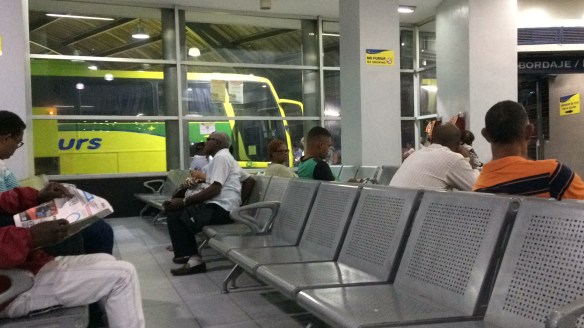
IMG_1734The bus left the Caribe station in Santo Domingo at 6.30 am, but by 6.00 most passengers were already in their seats patiently waiting. There were bags everywhere. A guy was helping his half paralysed brother into a seat with a loving tenderness that was touching. It was noisy with loud animated conversations but above the melee was one woman who was standing at the front speaking very loudly. She was standing under the reading light and the spotlight effect illuminated her gesturing hands. I couldn’t see who she was talking too but it sounded very passionate and urgent.  It took some time before I realised that she was praying. Praying for our journey and giving praise to God with a “Gloria a Jesus, Hallelujah!” It was the point in my trip when I truly relaxed.

Postcards from Haiti 2

IMG_1767The Shoe-shine boys of Dajabon

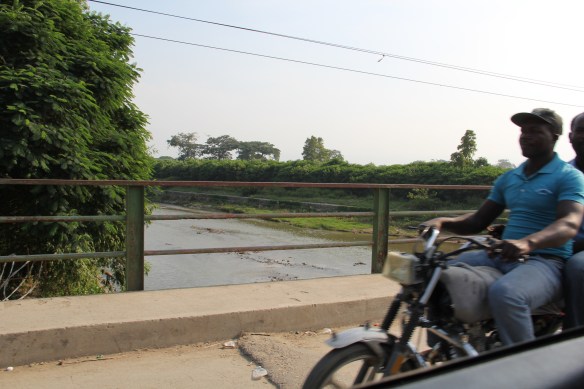
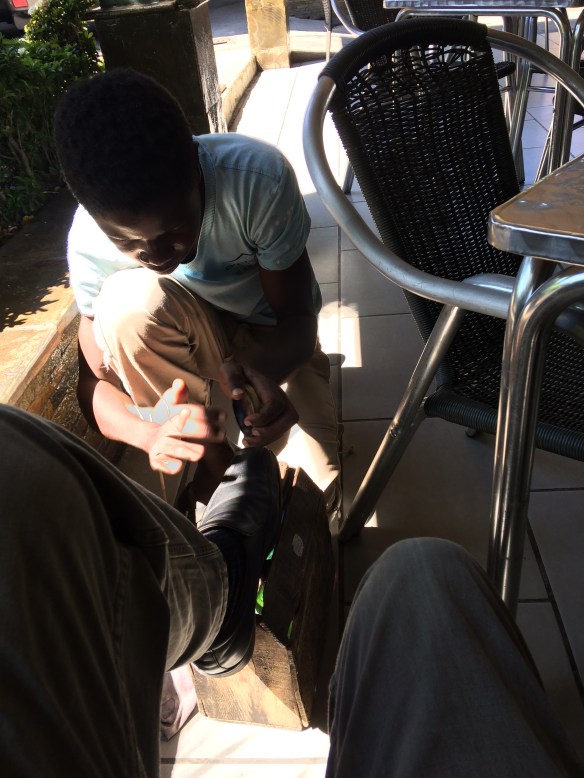
Leaving the bus I was met with the furnace like midday heat of Dajabon. Suddenly my case was heavy and steps were slow as I made my way out of the marshalling yard past the money dealers and motorcycle taxis offering lifts to Haiti. I was not sure if my memory of this part of the city was clear in my brain but I didn’t give any sign of being unsure or even lost and walked on purposefully. After a few directional errors I found my way past the basket ball yard through the garage and found the amenable Cafe Beller with a group of shoeshine boys following. I so wanted to have my shoes done but just could not work out what was an appropriate charge and only held big currency. 20 US$ seemed a bit over the top.

I met one of the boys on my return journey and tried to get from him what a reasonable charge would be. He said anything, so I made my own stab at it, gave him 50pesos (equal to 1$) and hoped that would help and encourage him. I have never had my shoes done before and felt there was something mildly humiliating about it until I heard how Romulo Quicano Suane (Return to Ayacucho) would use the shoe shine boys whenever he could. As a boy growing up in Ayacucho, he was one of them.

At the cafe I found a seat at a table under a fan and ordered a lemon drink,perfectly chilled though a bit on the sharp side. It was such a great feeling to get here for my rendezvous with the rest of the team. I could relax and simply enjoy the ambience and take in my surroundings. When they all arrived a half hour later, it was a joyous reunion. This was going to be good.

Postcards from Haiti 1

Santo Domingo

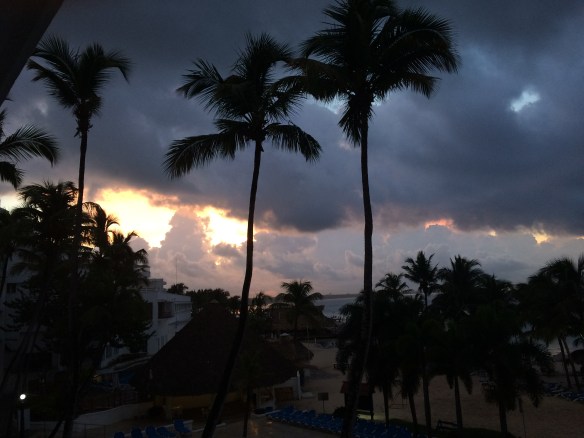
IMG_1781There is always an anxious moment when you are finally released from the maternal care of the airline transit system, where you are told where to go and what to do, what to fill in and where to sign and while it is quite humiliating being herded around like cattle, zigzagging as if impersonating a snake, there is something comforting in it. So when finally discharged the thrill of being free doesn’t last all that long and is quickly replaced with a new anxiety. It is a strange wild and different world out there. It is outside the garden gate and all the reassuring sounds and smells, the signals the signs, the time and food and language engender an irrational unsettling fear. I was a proud solo traveller suddenly feeling not so proud and just a little foolish. Wondering how I was going to negotiate taxis, trust myself to the dark unlit streets, being driven in a rattling cab with thumping music at great speed through scary traffic, a much longer distance than I expected. The fears of course dissipated when the driver true to his word got me there. A hotel with clean sheets and the possibility of sleep 22 hrs after leaving London. When I paid the driver he called me his friend and gave me a big hug. That was when I knew I had really been ripped off.

Crawford Mackenzie

Big Brother Chronicles VI The lord

iain 4

Between us there was significant distance in age and geography. We were seldom in the same place at the same time. In fact as a family we were only all together on, what could be no more than, three individual occasions. So the times when we were together and able to chat were limited. Often these were times when there was other issues and preoccupations or when Iain was distracted with various concerns he couldn’t share.  But in those special moments, when there was space and we had time to chat and to talk about what really mattered, a precious bond was forged and these times remain as gems in my memory. It was like the girl at school who hardly ever smiled but when she did, you know it was worth waiting around for. One of those was sitting outside in the picnic bench that Iain had rescued from the tip and rebuilt on a small plateau at the front of the house in Port Glasgow. It was a warm afternoon in the early summer, drinking homemade lemonade , looking down on the Clyde far below and across to Dumbarton and the Kilpatrick hills.

I was telling him about the recent death of a young women in our church that had deeply affected me, as it had all of our little congregation in the east end of Glasgow . She had struggled with cancer for some time and we had prayed seriously, earnestly and long, believing that God could and would heal her. She was so young. It didn’t seem right or fair. Her husband was bereft and we shared something of that grief. How could you make sense of this?  Ian responded in words that might at first seem harsh and uncaring but were anything but.

“..ah but you can’t tell God what to do….He is lord….He has his plan and we may never know the reason as long as we live…But it will be  for good…It will be for good”.

And he told me about Herbert Dickson. Herbert Dickson came from Port Glasgow and spent his life as a missionary in Nigeria, to the people who lived in the Que Iboe valley, in what was then known as the Que Iboe fellowship (now Mission Africa). It was founded in the late 19c by Samuel Bill who responded to a request from local chiefs in the delta region for a missionary to work with them. Herbert had spoken at our small bible study group on one occasion and I had read his biography “All the days of my life”. He was highly respected and greatly thought of for his work and commitment to the Que Iboe people for almost all his life. When he was old and quite ill he returned to Scotland confined to hospital and clearly dying. He was tired and weary and longed to escape. He prayed that God would take him and let him die. He had served his lord all his life, now he wanted to die, an absolutely reasonable request, by any standards.  But, to his dismay and frustration, that prayer wasn’t answered and he continued to live and suffer. His frustration turned to anger which almost consumed him until one morning, reading his bible, he was aware of God speaking  “Herbert… you know that 45 years ago you gave your life to me and said that I was the lord…that I was the Lord of your life… and I still am …and the time when you will end this life is not actually your business …it is mine.”  It was a moment of revelation when the blinds were lifted. His frustration and anger dissolved and he accepted whatever it was, it was in the hands of his Lord and it would be for the best.

I was with Iain briefly the night before he died.  He was distant and distressed and I was helpless. When I left my final word was “see you later”. It seemed almost flippant at the time, but I meant it. I still do and I can’t wait till later.


Crawford Mackenzie

Big Brother Chronicles V The meeting

resipole

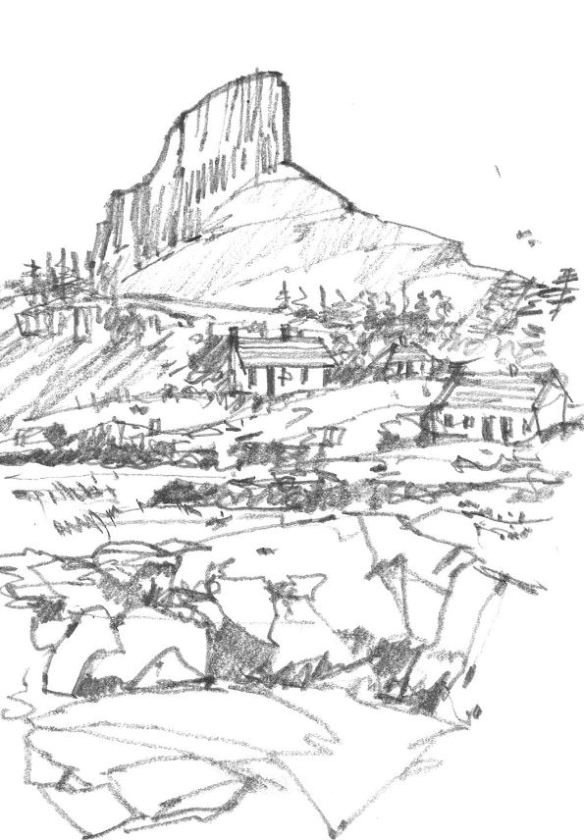
For any prospective son-in-law, bringing the parents together for the first time was bound to be fraught with anxiety and apprehension. So much is at stake as a first impression can be pivotal.  In my case it was a matter of establishing confidence. Confidence that this son-in-law to be, who was wanting in most, if not all, of the social graces, with a haphazard slightly incomprehensible and unpredictable character, was going to be ok for their daughter.  So on a beautiful Acharacle morning with the clear cut silhouette of Ben Resipole hanging in the mist over loch Shiel, the banks of daffodils bursting in yellow and the house looking more alike a stately home than the rambling manse which it was, the scene was set.  I had done my best to make sure that everything was ready: the house was clean and tidy and Jeannie was busy organising lunch. But it was the meeting with Iain that clinched it. He welcomed the visitors from Perth, engaged them in conversation, enquired after their journey and although really a visitor himself, acted the perfect host. The test had been passed.  I was so glad to have a big brother who was a gentleman too. It was what my future in-laws needed to know. Maybe with a big brother like Iain, he would be alright after all.

Big Brother Chronicles IV The Supper

watson street

The Watson Street flat was through a close and up a stone stair at the rear. Tuesday night was homework night and, surprising as it may seem, it was the highlight of the week. We were invited up to Iain and Anna’s new home. David was studying Latin, Jeannie on sums and I trying to polish up on spelling, but it was a fun night. There was more chatting and laughter than work being done, with the young ones listening in on Iain and David’s take on moral philosophy. It was here that the idea to write a weekly broadsheet  “The Gislet” was born.  Gislet was a cat left behind in Eigg and the sheet had contributions from all the family. For the first edition, my contribution was an ode to the lentil tin. “The lentil tin is empty, mourn for the lentil tin” but to make sense of it, you would have needed to have known that the lentil tin was where the household cash was kept. Iain had his own column “Gislet thinks” and the first, I recall was “ Gislet thinks… should the joiners work to rule?” It was purely for in house entertainment, but typical of the creative exercise we were slowly absorbing. The climax of the night was Anna’s wonderful suppers full of tasties we had never seen before. It was so much more exciting than saps at home. There was something grown up about it all. It made you want to study and learn, discover and create. It was so good to have a big brother who was not only a full grown man but a husband with a family and a home of his own.

Big Brother Chronicles III The Attic

the attic

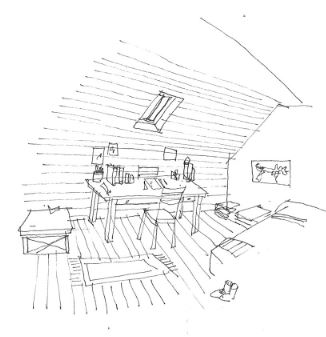
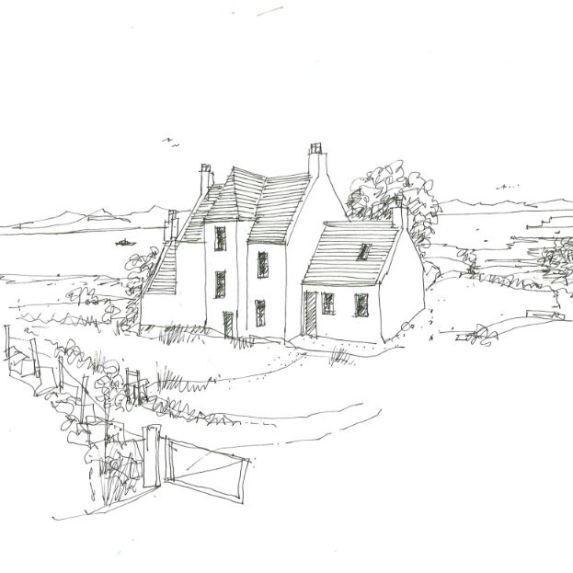
Iain had an attic room above the kitchen with lay-ins and a skylight. You got to it by climbing up a vertical ladder fixed to the wall through an open hatch at the back door. It was somewhere we seldom went and only by invitation. I remember the first time he called me up. Popping my head through the hatch, it was at once a magical place. While the rest of the rambling three storey house, that was the manse, was either chaotic and untidy or stripped bare and sterile, this was a space of calm order for work, reflection and enquiry. Books were carefully arranged on makes shift shelves pictures, photographs and maps, stones and shells from the beach.  On a desk an open book with a leaf as a book mark and a pad of white writing paper with what looked like an essay drafted in miniature writing with even smaller scribbles at the side, notes and small cartoons, explaining the thought process. A fountain pen with an open bottle of Quink black ink lay at the side. There was a neat rug on the floor with bare floor boards and the most striking thing, to my young eyes, in the middle of the floor, on an upturned fish box, acting as a coffee table, lay a pound note. I had seen a pound note before but there was something outrageously  defiant in the way it just lay there, gently rising and falling in the warm breeze through the skylight window, well used and creased but with such poise. It was the stamp of a character on a room. It was something that I never forgot. Somehow, and no doubt unconsciously my big brother had opened a door in my mind to a new world ripe for exploration, and discovery.

iain portmahomack April 2000

Big Brother Chronicles II The Dinghy


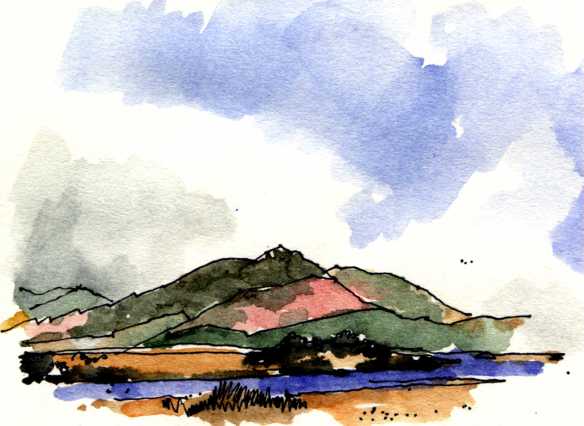
sgurr

Later he took me fishing. We borrowed a dinghy from the shore and set off round the coast on a balmy summer evening. Iain was at the front rowing, I at the back, occasionally bailing out the sea water that seeped through the clinkers. We caught no fish but had a great time. Leaving the jetty and castle island far behind, we explored the Grulin coast from the sea, rowing into tiny inlets and scraping the keel off the rocks as we looked for a good place to land. On the shore we collected buoys and odd bits of flotsam that they sea constantly threw up. We spotted a yacht moored not far from the shore and went to investigate. The man on deck was friendly. He was fishing too but catching and he invited us on board. The little yacht was magical inside. A tiny kitchen and a tinier bathroom, a little lounge with portholes, a low table with a bowl of fresh fruit. All brass and polished wood, fitted together perfectly with no space wasted and a warmth and luxury that entranced us. We were entertained for ages with tea and stories of their escapades around the western isles. The previous year they had moored in the harbour and were trapped on a sand bank. We didn’t notice the time nor the boat gradually rock to and fro and it was only when we were about to leave clutching our gifts, a week old Scotsman, a banana and two mackerel, that we became aware of the serious squall that was building up. Rowing back into the wind was hard.  The storm was growing in strength and at times we seemed to be hardly moving at all. The boat rocked and we were repeatedly soaked when waves crashed against the side. But to a little person it was still fun.  Iain was struggling to get to the bay so we decided to stop over on Castle Island in the hope that the storm would slack. It didn’t, it looked like it was getting worse, so we made one last dash for the harbour. It wasn’t far but the sea was now at its wildest. Finally after a mammoth struggle Iain pulled us round into the calmer waters of the bay where a crowd had gathered to welcome us.   Later we learned that the whole island were alerted and in a state of alarm. Several boats had been out searching for us. They had been scouring the shore for the missing sailors and were beginning to fear the worst. Years later, I understood the very real danger that we were in and how close to tragedy our little expedition was, but the thought didn’t bother me then, nor now. I was with my big brother and I knew it was going to be ok.

iain portmahomack April 2000


Big Brother Chronicles I The chair

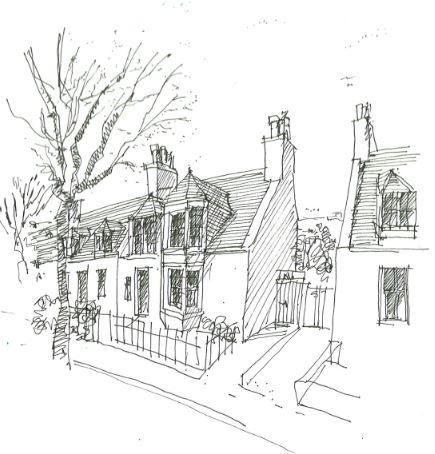
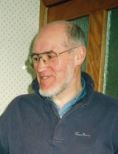
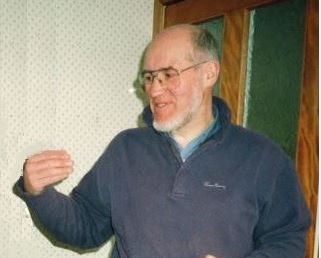
On Easter Day ten years ago my brother Iain died, after a short, painful and distressing few months of cancer.  He was my elder by 11 years and he was already an adult, a man and had left home by the time I knew him. He was always my big brother and while I became an adult too, there was always these twelve significant years between us. In the aftermath of his death I tried to put together a series of snapshots to chronicle something of what he was to me. Trying to sum up one person’s life, even with the finest of tributes, is a hopeless task. Inevitably, it is patchy, flawed, and one dimensional. When reading or hearing a tribute, I come away with the feeling “is that it?” “was that all?” These chronicles, which will follow, are not attempts to sum up a life but simply lantern slides capturing a moment in time when the character transcends the simple story revealing the person that was and is my brother.the manse

David said he learned to ride a bike down the slope to the hen house but I learned by freewheeling from the top of the hill behind the manse. There was only one size of bicycle – large. Small bikes and stabilisers were unknown and the trick was to carry a chair up the slope, support the bike with one hand, sit on it and push off. With feet only reaching the high point of the pedals you free-wheeled down, zigzagging through the grass and jumping clear just before the bike keeled over in a heap. Then you picked up the heavy beast, pushed it back up the hill and started all over again. Needless to say, when tired of the runs, the chair was left solitary on the hill and when the call for tea came, I was told to go back for it. Tired and reluctant and most likely complaining, I started for the door but Iain pushed past me. “I’ll get it” he said as he sprinted up the hill in his rolled up shirt, grey flannels and sandshoes. I watched in amazement at his astonishing agility. It seemed like nothing as he galloped down the hill with the chair in his hand. I was struck then by the unbounded joy he showed in this selfless act. My little heart glowed. It was so good to have a big brother

iain portmahomack April 2000

Death Star

death star

I am sitting in the pick-up queue at the station, waiting for the Glasgow train, looking up at the dark mass of our new icon, parked ominously on the river’s edge like the Death Star itself. I am trying hard to make sense of what it is and what it will eventually be, but I can’t. Plans, sections, elevations, the understanding and visualising of three dimensions is my trade but still this edifice remains a mystery. I would really like it to work. I do earnestly hope it will be a success and be a talisman of rejuvenation and revitalisation of our beautiful city on the Tay, so long a sad forth in Scotland and the butt of so many jokes. I really do. But try as I might I can’t quite stamp out the scepticism, the growing doubts and the deep unease.

It is hard, almost impossible to express these doubts in some quarters, because so much is invested in the building. It is already an “icon”.  In the age when people are legends before they reach reaching thirty, Nobel peace prizes awarded before any peace work is done, buildings can be iconic before any concrete is poured. My niggling fear is that it will become a concrete folly in a desolate vandalised landscape, with ugly spoilers for seagulls hoping to nest on the ledges, grotesque barriers to discourage would be climbers attempting to scale the “cliff face” and the very real worry that a panel might fall off. This cliff face, which in concept, represents “the long dialogue between earth and water” is made up of cast concrete panels stuck on to the façade. They don’t, as you would expect, run through to the interior. They are unashamedly fake. The building is pretending to be something it isn’t and yet that doesn’t seem to matter. The sloped walls themselves are explained by the architect as a means of drawing people in. Straight walls repel, apparently.  Yet to my eye, the scale and slope on the exterior has a distinctly threatening air about it. It almost frightens me. The interior which is also devoid of any reference to human scale, seems to be a series of anonymous spaces with disturbingly raked walls and absolutely nothing to say about what actually will be in it.

I hope, I do hope , I am wrong. Please tell me I am wrong.

Crawford Mackenzie