The Purposeful Habit 1

how to

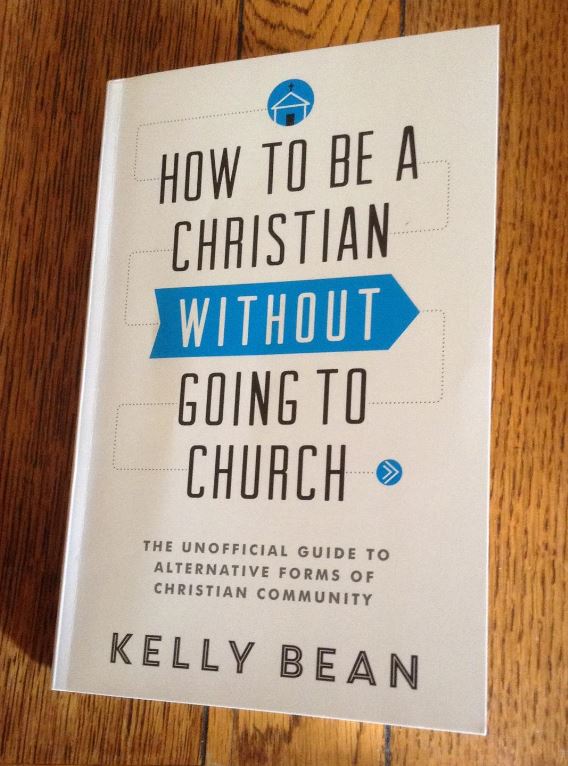
“How to be a Christian without going to church”  Kelly Bean       A Book Review

I am not in the habit of writing book reviews. I am such a slow reader and others do that so much better, but after creating a little stir with a rather flippant post using a play on the title of a book I had just read, I felt I had to explain myself. It was a light hearted jibe but one with a serious point.

It is “How to be a Christian without going to church”  by Kelly Bean, published by Baker Books.  The title catches the eye as it is clearly intended to do and the book addresses the issue of what the writer calls “No-Goers”, of which she is one. These are people who no longer go to church. They are not people who have been believers, have become disillusioned with the church , “lost their faith” and say that they no longer believe,  they are people who leave, yet maintain and continue to practice their orthodox Christian faith.  From the research, which the writer quotes, this has become, in recent years, an unstoppable flood.

There are a series of stories and testimonies from people who have left, to give put some flesh on the background and explain the reasons for leaving: “for their own sanity”, “the structure was killing my faith”,I felt undervalued”,  “I faced rejection and judgement”,  “The system was broken”, “It didn’t match my style” and many other painful stories. It seemed an endless list of damaged and frustrated people who appear to be stifled but flourish when they finally take the step to leave “After 17 years of not going to church my faith is stronger than ever”.  It is a sad and depressing catalogue of failure, but one than anyone who is involved in the church in the west today will easily recognise.

Kelly Bean makes it clear at the outset that she is not against the church. She wants it to be there, to continue and to grow. She would never discourage anyone from joining or sticking with it, she just feels, with a growing number of likeminded people, that it is not for her or for them. She is not, however, advocating being a solitary Christian in fact quite the opposite and here is where her argument seems a little confused and contradictory. She talks about the big shift from “Going to Church to “Being Church”. The first suggesting simply the activity of regularly going to a place, a building , to do whatever. It is understandable why this should be derided because we are called “to be” a holy nation, a people of God, a light to the world.  But if we are to share with any believing community, it involves some movement –we have to go there unless we are always living together. So “Going to Church” is just as relevant and expression. Towards the end of the book she describes intentional communities “ Something is taking shape and spreading as Christians far and wide come together (my emphasis) in a variety of small communities committed to a life lived in simplicity, humility and for others”  so clearly she sees the new movement of non-goers actually going somewhere and it looks like to another church.

I think she is also a little muddled. On the one hand she makes it clear that the church is, as we have always been taught, not a building, a structure, a denomination, an organisation, but the people of God, wherever they come together in twos or threes or in hundreds.  As a “Non-goer” she doesn’t want to be part of this church but, I believe, despite her protestations to the contrary, she is actually trying to set up another church. In her guide to “alternative forms of Christian community” there is alternative worship, alternative bible study, alternative money, alternative baptism and dedication of children, alternative missionary work and even alternative Sunday school and youth groups. In her turning away from all the structures of the church she has defined another church which looks remarkably like the one she has rejected. And what she fails to see is that this simply repeats so much of what has happened throughout the Church’s history.

All the problems she described in “Why are people leaving” are failings in the structures, the organisations, the leadership, and the people but not with its essential reason for being, or with its King and head. The church, I believe, needs reformation not rejection.

I was also struck by two things, which I have to say coloured my whole feeling about the book:

The first is that there is little or no mention of whose church it is. The church is seen as of the people, by the people, for the people, for the community and for the world, when all the time it is God’s. It belongs to him.  It is the church of Jesus Christ.  It is not ours. So we can’t decide what it should be, what it should be like or who should be in it. That is entirely God’s business not ours. Maybe this was taken as read but the fact that it was never stated makes me wonder if the thought was ever in the writers mind.

The second is that, while the Bible is mentioned in a few occasion and quoted very occasionally, there is no hint that these new alternative ways of being community are based or grounded at all on Scripture. Maybe that is also taken as read, but, again, I don’t think so. This omission is serious. At a stroke it knocks away the foundation, disconnects from the basis of the true faith and opens the way for any kind of whimsical and transient philosophy or personality cult to take over and lead to anywhere. The “Non Goers” movement doesn’t seem to be rooted in the Bible but centred on “shared values” and focused on “core beliefs” like those outlined in one quote:

  • God is good. I will practise trusting God with my life
  • God is love. I will practice taking care of myself and loving others
  • God is with me. I will practice peace and not being afraid
  • God wants to talk with me. I will practice listening to Him and talking with Him
  • God always forgives. I will practice forgiving myself and others
  • I feel blessed with this Good News. I will practice being thankful and celebrating moments
  • God has a story of love. He tells it through us. I will practice partnering with Him to bring it to others

At first sight it is maybe hard to find fault with this. But where does it come from? What is it based on? Where is the underlying authority for such statements? How are they defined? When you actually look at the list, there is nothing specifically Christian about it. There is nothing of Christ in it.  I am curious why his name is not mentioned. Is it because, in this creed, Jesus is unnecessary and redundant?  The “Good news” seems to be that “God always forgives”. He will forgive anyway. “It’s his job” as someone has said. If this is an example of where the “Non-goers” movement leads then it is not just alarming it is potentially very dangerous.

If you have read this far you, may not agree, but you will understand why I am concerned.

This is only my take. Go and read it yourself and see what you think and if you disagree let me know.

Crawford Mackenzie

The wedding


the band

I can’t pretend that I am a fan of weddings. I just can’t get excited about the details, the outfits, the flowers, the hair, the cake, the photographs, the music, the waiting around, the hours mingling with glass in hand, trying hard to make conversations, the partying before and after and the mountains of work in preparation and the outrageous cost that goes into just one day. But… and here is the strange thing, there is nothing that moves me so much, that chokes me up and causes tears to dribble down my face as that moment when you see the bride, radiant and beautiful, the friend, the niece, the sister, the daughter approaching with such confidence and poise, the one you have known for years or for just a little while, perhaps you have watched her grow from childhood and you see her now as you have never done before. Immediately all the mean thoughts are banished. She is worth every bit of it, all the work and all the expense. Nothing is to be spared for this, her day.  And then you catch the look on the bridegroom’s face and see the sheer delight in his eyes and the sense of unbounded joy that fills the whole place… and I am converted.

It is something that is very hard to explain or to understand but yesterday as we were basking in the wonder of Jesus’ first recorded miracle, the turning of water into wine at Cana -the subject of the sermon at our evening service, we were beginning to.

Crawford Mackenzie

the band

TEMPEST

titanic 1

I have almost all of Bob Dylan’s’ albums, can recognise and recall most of the lyrics from memory, and never tire of singing them. Without doubt he is the master of the genre and his work has so far never been eclipsed. In my book, he is the Shakespeare, the Beethoven, the Rembrandt of this art form – the English popular song. There are many fine singer/songwriters too, but none really come close. It isn’t surprising then that hundreds of books have been written about his songs and I guess all of it has been said before and better. But it is not only as a songwriter, but as a singer that he surpasses the rest. Many people have been fiercely critical of his singing voice, describing it as “one quaver short of an octave” or simply dismissed it by saying he can’t sing. But for the range (just try and sing some of the songs and you will find that), the expression and the timing, which alone is masterly, there is none like him. It is interesting that in his recent speech at MusiCares he asks why it is that so many singers like, Tom waits, Leonard Cohen, Lou Reed, Dr John, Charley Patton, Robert Johnston and Muddy Waters sing like they are being dragged across gravel, twist and distort their voices, scream and scratch but he is the one who is singled out for the dismissive treatment. I have wondered about this for a long time.  Singing styles are, of course, very much a matter of taste, what is not in dispute is the standard of the songs.

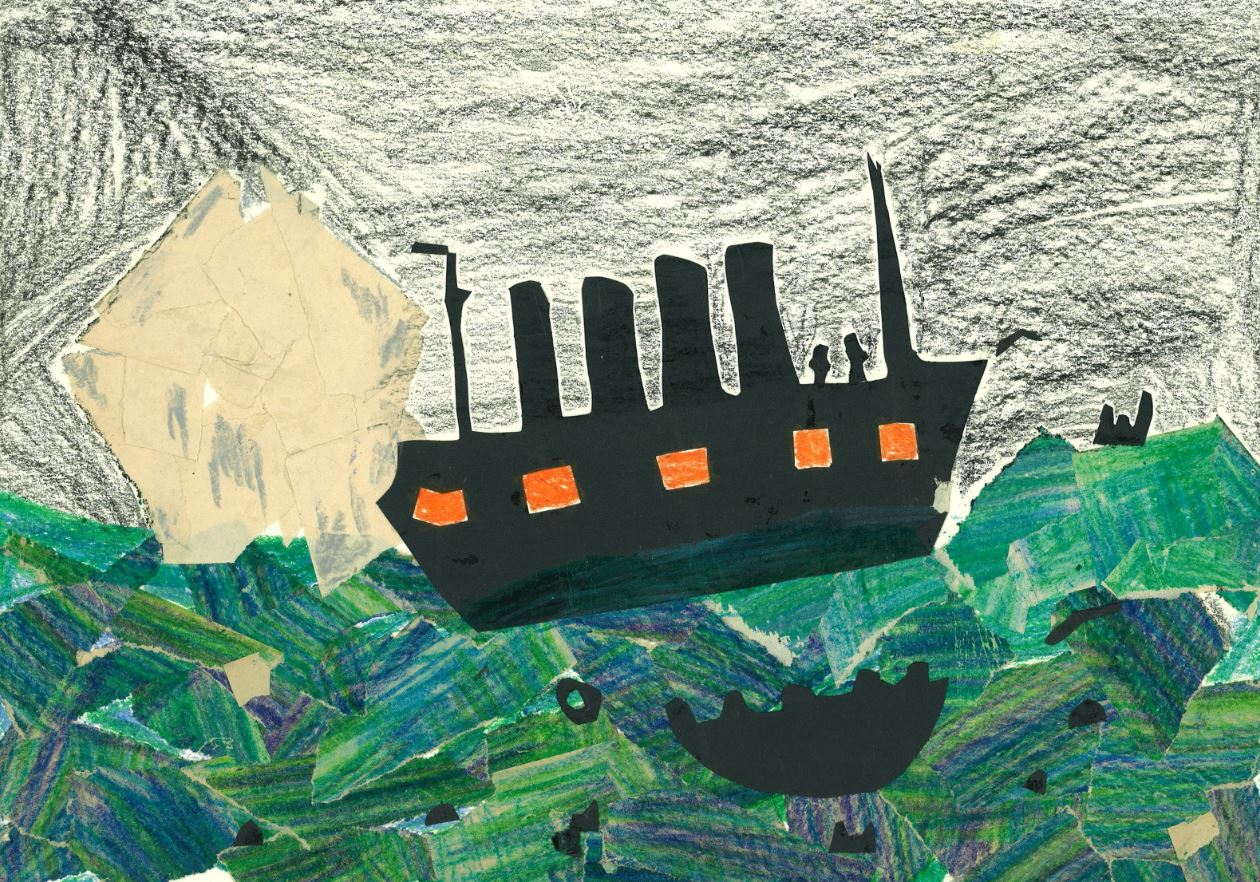
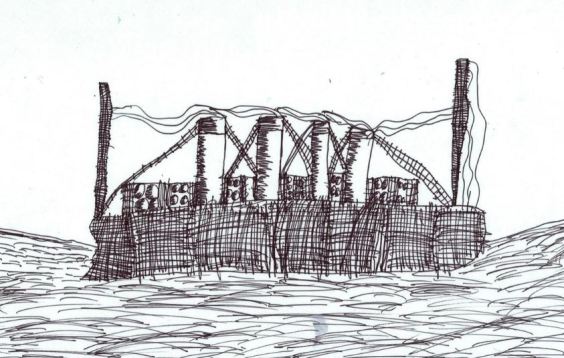
The one which, in my opinion represents Bob Dylan’s finest work, is  “Tempest”,  the penultimate song from the album of the same name.  Since hearing it a year or so ago, I wanted to write about it, review it and, hopefully, draw it to the attention of others. I didn’t got round to that until now. It is in the tradition of many of his ballads that tell a story with just enough detail to let you in on what is happening.  Like “Hurricane” telling a contemporary story introduced like stage notes for a film or the “Across the green mountain” following an observer through the tragedy of the American Civil War to a funeral drum beat, in “Tempest”  he takes a well-known event and without the hint of moralising or preaching lays out the story and lets the hearer decide, with a melody that glides across the waves.  The forty four verses, without a chorus or musical break, paint a gigantic picture where every brush stroke counts, its crafted understated descriptions makes the disaster all the more realistic and terrible.  Like “Cross the green mountain” the narrator observes what is going on in every level of the ship, the individuals and groups and families caught in that moment when all they have lived for and loved is about to disappear. It is inevitable that reviewers, commentators and critics will see different things in the tale. I have read quite a few but the best comes from “the gardener is gone” weblog

It is a terrific allegory for our dogged embrace of everything that does not ultimately matter in the very moment of its not-mattering. Every snapshot of sacrifice, affection, betrayal, heroism, faith, doubt, even the reckless gamblers, is set ruthlessly against the glimpses of implacable destruction. The song’s melody has a patient, rocking feel, and Dylan begins most verses with a merciless delivery of each syllable like a fist pounding a podium, and ends with softer, milder tones. So the sound of the song is a pendulum:  sacrifice and doom; affection and doom; valour and doom; faith and doom.  The vignettes range from the stock moment of the Astors unaware that their days of luxury sight-seeing are over, to the clever and sort of ballsy choice of having Jim Dandy “come to the rescue” of a crippled boy, to the subtle irony of Davey’s whores getting their final command from a man in the form of being released to their deaths. The web of religion that runs through the song is viciously tangled against itself: Jim Dandy dies in peace amid a vision of the rising Eastern star; the bishop admits at the last that human can’t save human; disembodied love and pity send useless prayers; there are angels, and they turn aside; the captain reads of apocalypse and weeps–this here-and-now apocalypse occurring under and over him was his to prevent. At one point Dylan undoes whatever transcendence you may want to glean from his tale by blaming “the wizard’s curse.”

The artist gets it right: in a single moment Leo grasps the disaster, acts with altruistic reflex, and loses his mind.  It’s the truest moment in the song for me; he’s the central character for me. His doomed sketches would have given the glorious ship art’s eternal life.  He’s struck and undone by love just as his muse the ship is struck and undone.  And he is the opposite of the watchman for whom the calamity is the phantom of his sleep: Leo the artist sees the calamity for what it is, acts because the impulse to preserve life is irrepressible, and in that moment knows the full weight of an absurd universe and goes mad.

titanic 3

Where I differ from the writer, is over the central character in the drama. For me is not Cleo but the watchman who, appears in regular stanzas through the song and who sleeps through it all. Even at the end he is sleeping in that dreadful line “He dreams the Titanic is sinking and he tries to tell someone”.  When you are dreaming you find you can’t run from the bear who is chasing you or from the building that is on fire. No matter how you try you just can’t move your legs.  The watchman can’t tell anyone, and this is the biggest tragedy, because he is fast asleep.  So in this apocalyptical scene the person who should have called out the warning is out for the count. If what is in the artists mind, and he is certainly not going to tell us, is the collapse of western civilisation, then the real tragedy is that no one foresaw and no alarm was given. If, what he sees is the final apocalypse, the end of time and the final judgement then the tragedy is that the ones who could have given the message, sounded the seven blast on the ships whistle, blown the trumpet, the prophets, the preachers, the churches, were silent and found sleeping at their post. This is a most sobering thought.

Crawford Mackenzie

IN THE PRESENCE

Paul's conversion 2

On Thursday our little group of internationals from China, Nigeria, Cyprus, Malaysia , Ireland, Latvia, Romania, Iran and Scotland shared a meal and sat round the fire to read and think about what Jesus said. We were studying the Sermon on the Mount in Matthew 5-7. We had come to the part where Jesus speaks about prayer and where he teaches the “how to” in the model for all prayer, which begins with these astonishing words “Our father in heaven…”  Before that he gives two negatives – two “how not to”s: hypocritical praise seeking prayers and mechanical repeating prayers. There was so much to think about but the first one stung. It clearly pointed out that you can’t be praising God and seeking praise for yourself at the same time. It was one or the other.

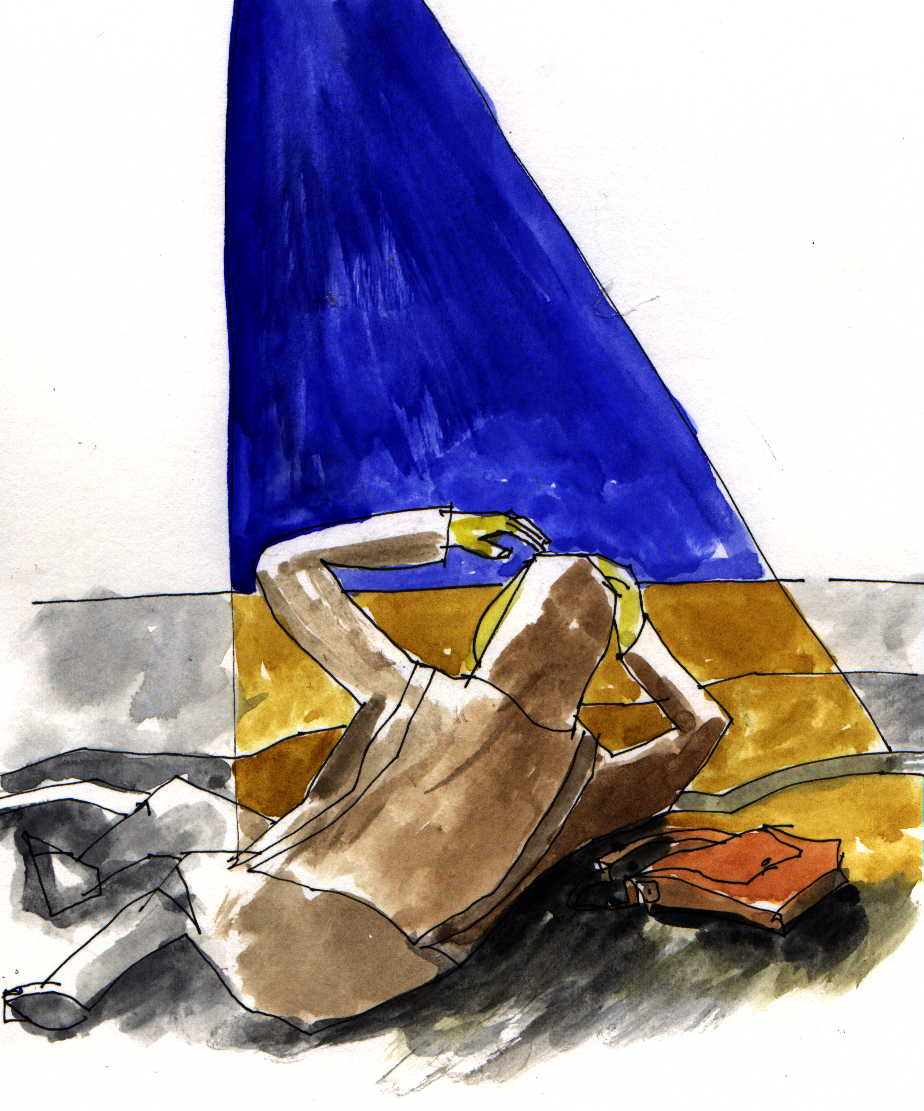
This was particularly on my mind as I prepared to lead the pastoral prayer at our church on Sunday morning.  I wanted it to be good, which was a worthy thought and I wanted people to think it was good, which wasn’t. I struggled with these two conflicting attitudes for some time and I thought I had it licked. But standing at the back of the church while the congregation were gathering, filling up with so many people, I began to panic and was almost overwhelmed with the dreadful thought of failure. The anxiety continued to grip me through the early part of the service and then something happened. We were singing our confession, a version of psalm 51 to the tune Ottawa, unaccompanied, with the tangible sense that we were in the presence of the almighty God- all powerful and all loving. It was as if the whole place was filled with a dazzling all-consuming light that penetrated every corner and crevice. Then it came to me with astonishing clarity “You are coming into the presence of the Holy God and you are worried about what these people think?!”  “You are coming before the creator of the whole universe, the judge of all the earth, the King of kings, the Lord of lords and your are bothered about this lot ?!

When I reached the podium, the Holy Spirt took over and gave me the words so that I could give voice to the prayers of the people, to our Father in heaven, in Jesus name. It is something I hope I will never forget.

Crawford Mackenzie

“All you really have is God”

I have been a Christian, a follower of Jesus, since as long as I can remember. You could say, I was brought up as a Christian, which was certainly true, but the faith which I saw in my parents had to be true for me too, I could not survive on borrowed faith no matter how strong. At various points, and continually, in my life I have committed myself to Jesus Christ, signed up, and effectively said, “you have saved me, I belong to you and you are boss” But there have always been doubts: sometimes small ripples, at other times gigantic waves that look almost certain to sink this fragile dingy. But doubts do a funny thing. They make you realise that you do actually believe. If you didn’t believe, doubts will never bother you. It is a bit like pain which is a sign that you are still alive. On the mountains when the artic wind is cutting through your clothes and skin to your bone the time to worry is when you stop feeling the pain in your fingers. That’s when frostbite strikes and they can almost literally fall off. The time to worry is when you feel warm and comfortable and just want to lie down in the snow and sleep. It is, of course, a sleep of death.  Feeling pain is a sign of life and having doubts is a sign of faith.

Doubts have many angles: over suffering, over exclusiveness, with science, over the bible, over the whole idea of the supernatural,  but for me it comes with an unannounced sense that the whole things is bizarre, ridiculous and absurd. To believe seems utterly insane and so much nonsense, but the strange thing is that it hits a rock and one that doesn’t seem to want to move. It is the conviction that there is nothing else: that I have nothing but God and that there is no other way but Jesus. It is what Jesus’ disciples said when people were turning away from him and his teaching. (John:6:68). He said “Do you want to leave too”. Peter responded “Lord, to whom shall we go? You have the words of eternal life”

It all struck home with a new force, when I read Kayla Mueller’s letter, which her parents released after her death, this week. It was not clear when the letter was written or what actually was her fate, but it was hard to read without becoming totally choked up, not so much by the tragedy for her and her family, or the blind wickedness of her captors, but by the sheer beauty of her expressed faith in God and her first concern, not for herself, but for the ones she loved.

“I remember mom always telling me that all in all in the end the only one you really have is God. I have come to a place in experience where, in every sense of the word, I have surrendered myself to our creator b/c literally there was no else … + by God + by your prayers I have felt tenderly cradled in freefall. I have been shown in darkness, light + have learned that even in prison, one can be free. I am grateful. I have come to see that there is good in every situation, sometimes we just have to look for it. I pray each day that if nothing else, you have felt a certain closeness + surrender to God as well + have formed a bond of love + support amongst one another … I miss you all as if it has been a decade of forced separation.”

Crawford Mackenzie


How can it be?


We sang a new version of an old hymn last night. It was “How can it be” by Greg de Bliek of new Scottish hymns based on Charles Wesley’s “And can it be”.  In recent times there has been a growing appreciation of the real value of so many old hymns:  the clear theology and mind engaging words which often contrast with the often shallower themes of some contemporary praise songs. Many have reworked these for congregational singing with varying degrees of success. Inevitably personal taste comes in here and people are often unhappy about changes that do violence to what was for them a well-loved hymn but, in my opinion, this one really works.  I have to admit that I disliked the old hymn. The solid theology was lost on me because it was married to a light and almost frivolous tune (Sagina – Thomas Campbell), reminiscent of a Victorian foxtrot and belonging to the dance floor, It seemed completely incongruous and turned me off.  Greg de Bliek, on the other hand, has taken Charles Wesley’s words, almost as they are, with a few small changes, and with the simplest of tunes, an almost stark melody, allowed us to sing and think about what we are singing. He makes the last verse, the climax of the piece, into a chorus rising beautifully in the middle section and the whole is a very moving hymn. People will of course say “but I liked the old tune”  that may be true but it should not stop us thinking about the music, what it does,  what emotions it arouses, and whether it is appropriate or not. I think that what Greg de Bliek has done is not simply to dust down an old relic and make it a curiously but to open it up, bring it into the light and give us a hymn that is as relevant today as it was when it was written in the 18th century.

You can hear it at https://www.youtube.com/watch?v=EtmjMgsPImc but the YouTube video hardly does it justice. You need to hear a congregation singing it and you need to be in that congregation.

Crawford Mackenzie

“It’s not really that important”

la tablada

Sometimes it is the throw-away comments that get to you.

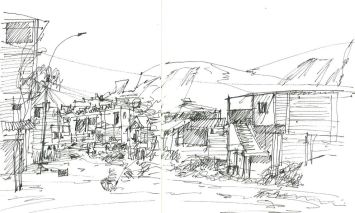
We were back in Lima after a full day travelling through some of the most spectacular scenery I have ever seen (described in an earlier post) through the Sierra, the mountains and valleys and rivers and through the desert on the edge of the mighty Pacific Ocean. Now we were back in this city of eight million inhabitants, the air was thick with diesel fumes, burning rubbish and dust: the fine grey dusty sandy that is everywhere, in your clothes and your hair, in your bed and sometime in the toothpaste. It is hard to escape and brushing and washing and wiping is a continual and perpetual chore. The streets are full of crazy traffic massive lorries and busses, combis and cars and mototaxis all fighting for one piece of the road that will carry them to the next, through massive potholes and rubbish piled high at the side, sometimes cleared away for a park with benches, a swing and sad bedraggled bushes and plants covered in dust. Sometimes, as in the vicinity of the fish market, the smell is overpowering . It was dusk. In the mixture of the grey air: the approaching darkness and the mass of humanity, busy trying to get what they needed to live, against the backdrop of hideous concrete half completed boxes, piled high, it seemed on top of one another and fighting for any available space on the side of the steep hills, with no relief save for a brightly painted wall or a modern office building, I was beginning to choke with weariness. I thought I had got used to the squalor of the city but now coming back a different way, it hit me like a concrete block in the stomach. There was something almost gross about it. That people should have to live like this in such ugliness was distressing. I wanted it to be better. I wanted it to beautiful.

The next day my friend showed me the piece of land his father-in-law had given him to build a house for himself and his new wife.  It was a yard at the back, surrounded on all sides with 2m high brick walls and on two sides with a three storey buildings. There was no view or outlook, save for a square of sky. We spoke about the design. Inevitable it would have concrete walls, floor and a tin roof. The kitchen would be formed with a concrete worktop sink and space for a cooker. I was suggesting that the construction could be improved dramatically with a ceiling and insulation, which would offer some protection against the fierce heat in summer and the cold in winter. It would make a lot of sense. It would not be difficult to do and it would improve the comfort of the house enormously. He listened silently to my advice and then he turned with a smile said. “Sí  sí  es verdad, yo entiendo , pero no es importante,… hay personas acá en la iglesia que no tienen nada” (yes I know, it would be good, but it is not really important…there are people here in the church who have nothing)

“It wasn’t really important”. He had grasped what the Hebrews in Haggai’s day had not, when God said  ‘Is it a time for you yourselves to be living in your panelled houses, while my house remains a ruin?’  For my friend, God’s house was his people and that had to be the first priority. It was demonstrated a few days earlier when he with two others visited a lady with cancer at an advanced stage. She was going for her first dose of chemotherapy the next day and the friends called at her home sat around her bedside and prayed for her. A week later she had died. It was the children, the young folk, the old people the sick and the wounded that he was compelled to care for and getting a comfortable home for his new bride was somewhere far down the list. There was the true beauty.

It was a throw away comment, but it stuck to me like cement and I couldn’t brush it off.  It rattled and shook me to the core. Even now back in my own home, surrounded by my own creaturely comforts and familiar things it shakes me still. I know could not be what I was not. I could not turn my back and despise the many wonderful things that God has blessed me with. I could not disown what I had been given and disavow the quest for beauty and fine things. I could not be an ascetic. Yet these simple throw away words continue to haunt me and when I think about all the good things, it makes me ask the question: “ are they then really that important?”

Crawford Mackenzie

The Bus to Lima (previously posted on facebook)

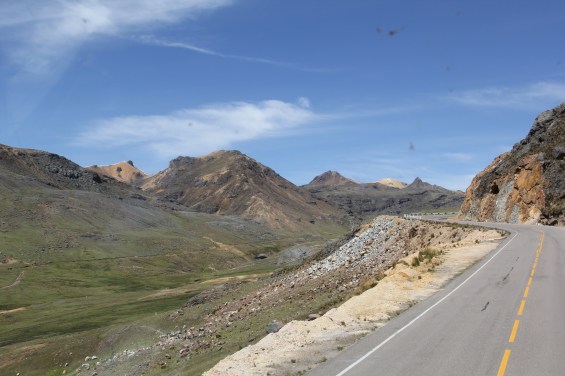
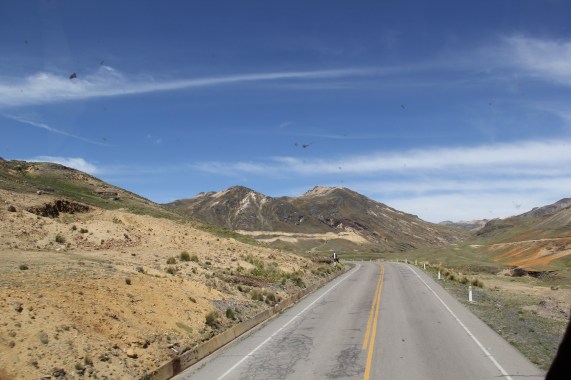
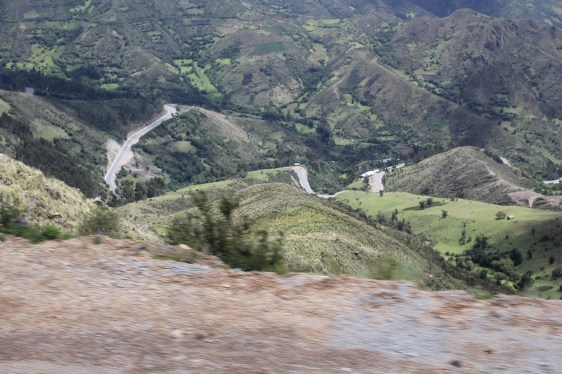
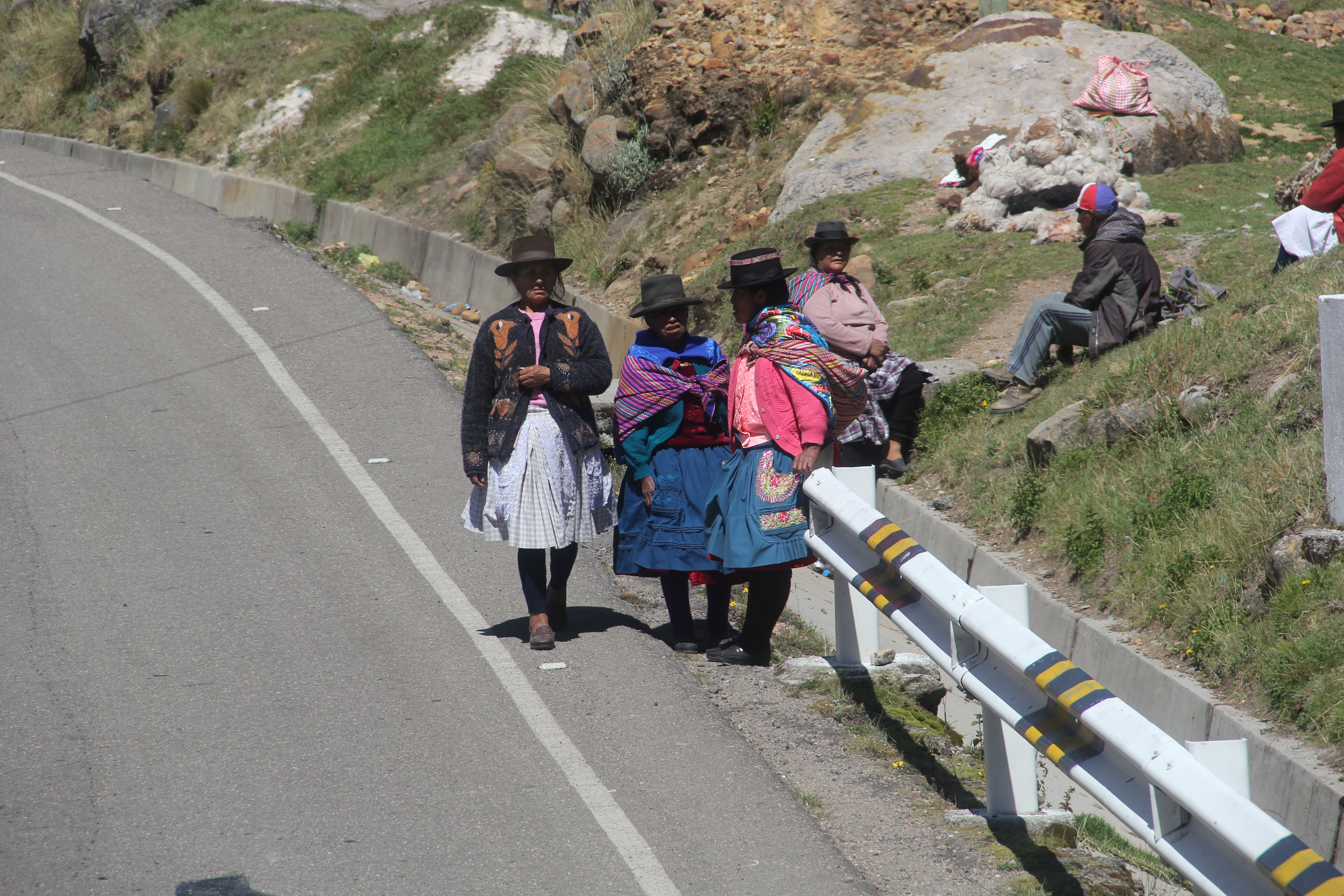
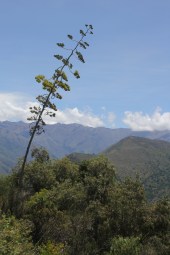
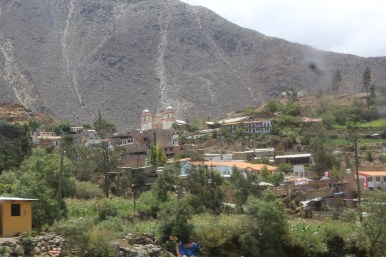
IMG_3952We opted for the daytime bus back to Lima with seats on the top deck right at the front which gave us a wonderful 180 deg view. At times we were seeing a bit too much when it seemed as if our driver was playing with our lives. Taking blind corners on the wrong side of the road at speed was his particular style. We left the scramble of Ayacucho and were soon in the wild grandeur of the Andes: rocky crags like saw teeth in the sky and light sandy coloured hills dotted with green. The proud eucalyptus, sometimes in clusters at other times standing sentinel in the hillside and cactus of many varieties in stupendous shapes rising stubbornly from the dry earth. In one particular variety, a cluster of sharp spikey leave-like forms with a strange tree like growth coming up from the centre, as if from a Doctor Zeus book. The fruit bearing cactus “Tuna” or “prickly pear” delicious and refreshing to taste, was also in abundance. Sometimes a small field with terraces would be carved out of the ridiculous steep mountainside, growing potatoes and alfalfa. We were zigzagging up and zigzagging down to small villages and towns and always in the rugged landscape a single or a group of figures in bright deep colours and black hats carrying enormous loads making their way here and there, sometimes with a donkey in toe, a group of grazing alpacas, goats, cows or a wandering dog. Finally, after six hours of this exhausting landscape and at the point when it was beginning to lose its allure, we settled down to the bank of a river with large swathes or fertile land: vineyards and orchards, olives and dates in an almost industrial scale. The river took us on to Pisco to the coasta (the great plain by the sea). With a welcome break from the aircon-less coach, and a stop for food and refreshment we found ourselves in a different world. All around was desert, smooth hills of clear sand where you would expect to see the odd camel caravan, all the way to the sea and the mighty Pacific Ocean. Now we were in dual carriageway and our driver had had his fun for the day and we continue the further three and half hours through this strange landscape to Lima. It has been such an awe inspiring journey; you wonder why you would ever choose to travel by night.
  IMG_3946 IMG_0865IMG_3960IMG_3949IMG_0788  IMG_0847

Crawford Mackenzie

The Bible Study

It is half past eight on Saturday morning. The room is dull dusty and sparsely furnished: a red painted concrete floor, two sofas covered with sheets, a table with some chairs, an empty bookcase, a make shift curtain separates an area for two double beds where a family sleeps, children pad in an out and a cat wanders through to the kitchen. We are four, three young men and myself. All three are married and two have lovely daughters. One is the new pastor of the local church; one has completed his studies and looking for work. One is blind. Those who can, read verses from the bible in turn. The study is focused on Ephesians 4: 17-32. The pastor leads while others chip in with thoughts reflections and questions. The aim is to understand. We speak about anger and abusive treatment of others, about how our thinking affects what we do and say, about practising honesty and forgiveness. The privilege (an overused word) of being able to share in this time is awesome (an even more overused word). Here in the dusty crumbling slopes of this great city, tucked away in an anonymous street, are a group of men who are grappling with what it means to live a life of faith. We are not talking about football, or cars or politics, we are talking about what really matters. When we finish, they ask me to pray, mercifully, in English. While my Spanish sometimes surprises me, I knew this is one occasion when it would not be up to the task.

It would be very hard to describe the breath-taking wonder and the sense of honour I felt, leading these men in prayer in that moment. I was humbled, challenged and, yes, truly blessed and it is something that I will never forget.

Crawford Mackenzie

A Deep Stain

My colleague who has travelled throughout Africa and inspired many significant projects with partners in Kenya, Burundi and Rwanda made the striking comment as we experienced Haiti for the first time. “It’s as if a chunk of Africa has been lifted and dropped in the Caribbean” he said. In people terms, this is exactly what has happened. In the history of the colonialist’s insatiable lust for the third world’s resources, the pillaging and raping of the land, nothing compares to the evil of the slave trade. It remains the deepest stain on our history. That individuals, people who have been made in the image of God, and who, solely because of their race and where they came from, could be dragged from their homes and land, bought and sold and disposed of, as property, as things, is both hideous and despicable. That governments could collude and benefit from the trade and the Christian church provide the necessary theology to back it up, makes it all the more damning.

The true depth of that stain can be felt here in Haiti. Brought from west Africa by the French to work the land they rose up and defied their masters to become the first independent nation in Central America with a government made up of former slaves. At first first few countries recognised them and they could only begin trade with their former colonial masters by paying a crippling fine as compensation for their loss of earnings – the loss of their slaves. The cruel irony and absurdity of what was happening is hard to swallow. They were obliged to pay their previous owners for the freedom to live in a land which had already been raped. (The deforestation that took place during the colonial period contributes enormously to Haiti’ current problems). At times in their history the Haitians were treated cruelty by their neighbours in the Dominica Republic. The darkest episode took place in 1937 when, under Trujillo’s orders, 10-20 thousand Haitians were slaughtered in a heinous act of genocide and ethnic cleansing. The Rio Massacre, which serves as a border between the two countries, at points, was literally flowing with blood. The recent earthquake and the series of coups and despots only serves to pour salt on the sore of this wounded nation.

Today the colonialists have been replaced with multinationals who have the Haitians by the throat. The innocent sounding “free trade zone” at Ouanaminthe where goods are produced for well known clothing brands, blatantly uses cheap labour in sweat shop conditions.

It is and remains a great stain and an inescapable burden. If you cared at all what could you do ? How could you respond?

For many, catharthis is found in political action when the anger and indignation at injustice propels them into raising the issue, getting people to listen. pillaring governments, writing letters, signing petitions and every legal method of forcing those in power to change corrupt and unjust business. For me it has to be another way. And what I observed my colleagues doing, on the ground at an individual human level, working and helping local people, partners in the communities, epitomised that.

The great stain won’t be removed with money or with years or with good intentions or with penance. The victims will only lose their victimhood when they find their true worth their true value their self respect and their unshakable dignity. That was what my colleagues were working towards and that was what inspired them.