Covenant Love

I listened to a very powerful and moving sermon last night. It was about marriage. It was not about the how to, the problems, the disintegration, the redefinition, or about the pathetic futility of trying to play around with, tamper or trample over something so precious and so beautiful. It was about a wedding that the whole of history and the cosmos is preparing for. It was about the pictures, the drama, the songs, the poetry and the demonstrations of covenant love woven through the pages of the bible, from beginning to end. It was about the one single event around which the whole purpose of existence is focussed, stretching, longing and aching for. It was about the ultimate drama which shapes our lives and is lived out even in our fragmented, disintegrated and dysfunctional relationships. It was about the final consummation of the restless longing that is indelibly printed in our hearts. It would be very hard to think of a bigger or grander theme.  It was simply breathtakingly.

It was Mike Reeves on “The Lord’s Delight” and you can hear it at http://www.stpeters-dundee.org.uk/resources-media/sermons/

Crawford Mackenzie

Book Review

I was asked to review a book recently.  It was not for publication or distribution but a friend, who I care about,  had simply asked me to read and comment on a book she had read which had made a big impact on her.  She didn’t say if the impact was negative or positive, so I was given a clean slate and approached it with an open mind.

I have to confess that I don’t read a lot and am amazed by friends who can devour several books in a day, who carry a pile with them on holidays and have their kindles loaded up with, what seems like, whole libraries. The little I read tends to be more in the non-fiction than in the fiction section and I often re-read books a number of times. I am also a slow reader. My English teacher, at school, tried to teach me to skim read but I never learned and now I don’t want to. I prefer to savour the language and the thought and to remember the phrasing and give time for the ideas to sink in. So this was a special and a tough task.

The book was not new. It was first published in 1995 and is reputed to be an international best seller, but it was one of the worst books I have ever read. The writer claims to have had a revelation or series of revelations over some years, directly from God, in which god speaks in everyday language with words of wisdom, stories and humour, contemporary references and many quoted words and verses, mainly from the Bible.  But unlike other recognisable forms of literature, with parables, myths and allegory etc, this writer clearly wants the reader to believe that it was in fact God who was speaking directly to him. This is made clear in the introduction.  “It happened to me” he says “I mean that literally” and “it was for everyone and had to be published”. He describes it as “gods latest word on things”.  Now I have known and heard of many people who claim to have heard God speaking directly to them and I have no reason to doubt that these have been true and real experiences but, in each case, God was speaking to the individual and usually over something specific like a decision or a direction or a calling. In this book, the writer maintains that God is not only speaking directly to him but charges him with telling the message, spreading the word to others and specifically to do this by writing the books, of which there are three. “You will make of this dialogue a book, and you will render my words accessible to many people. It is part of your work”  If he is to be believed and if he is accurately reporting what God was saying, then the Bible is deeply flawed from beginning to end and Jesus was either deluded, mad or simply a fraud.

It would not be difficult to catalogue the ridiculous, bizarre and contradictory claims that are made throughout the book, but here are just some of them:

1)      There is no right or wrong only love and fear

2)      God is not the creator he is merely the observer

3)      There was no such thing as the ten commandments

4)      There is no sin

5)      There was no need for sacrifice

6)      There is no heaven

7)      There is no hell

8)      There is no devil

9)      Self is all there is

10)   We are gods or in the process of becoming gods

11)   Jesus is a master on a level with Krishna and Buddha.

12)   All the gospel writers lived and wrote their accounts long after Jesus had died

13)   We only suffer because we chose to. At any moment we could stop suffering. We could be healed, we could be perfectly at peace and happy if we chose to be.

I can well understand why people would be drawn to this book especially if they have been hurt, disillusioned or damaged in some way with organised religion. It would make them feel better about themselves but so would morphine or heroin or alcohol, for a time. The book is poison.

On the cover, were a number of review quotes. From the Mail on Sunday; “An extraordinary book“ I couldn’t put it down”.

It was extraordinary; I couldn’t get it into the bin fast enough.

Crawford Mackenzie

Independance

I have always thought that independence was an honourable aspiration and something to celebrate when it was achieved. I remember, as a boy, sensing the excitement and interest when Ghana achieved independence from colonial rule in 1957, the first sub Saharan country to do so. Others followed. Zambia became independent in 1964 and while I remember little of that event, was able to visit that amazing country in 1985 and later in 2010. Despite many intractable problems there was still a real sense of celebration and pride that they had finally broken the chains of their colonial masters.  Last year I visited friends in Slovakia and when language allowed, asked how they felt about their break up with the Czech Republic.  The overwhelming view was that, while the economic difficulties were grave, still it was a good thing. “We are able to be friends again” said one.

So when it came to considering independence, I warmed to the idea.  I wanted to believe in it and I still do. There seems something good about being grown up, being able to stand on our own feet and more importantly take responsibility for our own decisions and actions and stop whinging and blaming someone else for our ills. But Scotland is not Ghana nor Zambia nor Slovakia. It isn’t Norway nor is it East Timor.  England has not colonised Scotland, we speak the same language, our families, friends, business, professions, scientists, academics, musicians and poets crisscross the border. Our histories are intertwined. Scotland’s golden period followed the union of the crowns and only in the past century have we begun to feel the poorer partner. The union seems to have been good for us.   And when it comes to emotion and passion, the things that seem to matter most are football, “bank” holidays, “For sale” signs which turns homes into commodities, using “shall” instead of “will”  and the south easterly bias of the weather reports.

What has finally disillusioned me and cooled my enthusiasm is the way the debate has been conducted over the past year. I have become less and less convinced that the leadership of the “Yes” campaign actually believe in it themselves. There has been an astonishing loss of nerve. Real conviction seems in short supply. There has been so much back tracking so many questions fluffed and unanswered. I am almost coming to believe in the perverse notion that the aim of the campaign is to be deliberately muddled and confused so that people vote against it and some semblance of pride can be retained.  They will be able to breathe a sigh of relief. “At least we tried” they will say. Like David Cameron’s very palpable sigh of relief when the commons voted against intervention in Syria

The most confusion, however, surrounds the word itself.  Politicians and pressure groups know how to reinterpret words to their own advantage so that it can mean something different from what you thought it did.  I thought I knew what marriage meant. Now I don’t. I thought being independent meant being in total charge of your own affairs. Now it seems to mean being dependant on another country, sharing a currency and a bank of last resort, being subject to a monarch of another country, submitting to a military authority based on the use of nuclear weapons and being subservient to the multinational giants who will always dictate the terms. It doesn’t look like independence. It looks like being fully dependant in all but name. It is like being an adult but still living at home with your parents on call, ready to lift and drop you, pick you up, dust you down and bail you out when you are in trouble. That is not independence so I think I will vote “No”

Crawford Mackenzie

Why do people hate Jesus?

I was coming back from the shops with my oldest grandson, down the steep cobbled lane with the early morning Saturday sun hitting our faces, past the tiny gospel hall and the Hindu temple next door, looking down towards the river with the railway bridge snaking its way round into Fife; when he stopped, retraced his steps, and said “Look”.  Pointing to the noticeboard on the wall he read “I am the way the truth and the life – Jesus“  Having recently discovered the new world that had opened up to him through the joy of reading, he read everything. “Good” I said and trundled on. “No!” he said pulling me back to the spot “Look” and pointed to a large “X” scratched across the glass. “Someone has done that – someone who doesn’t like Jesus” We walked on for a bit and then he asked “Why do people hate Jesus?”. At once two thoughts rushed into my mind;  “out of the mouths of babes and children… “ and  “Why do they always have to ask such difficult questions” and so I mumbled something like “I don’t know, but I think it is because Jesus is so good that people hate him”.  He was silent for a time and then, totally unconvinced, responded  with a “So that is it?”

As always happens, I thought about the question afterwards. I tried to come to a better answer but the more I did the more I became convinced that that was, in fact, it. People hate Jesus because he is good. Good people are often admired but seldom liked. It is as if  a good life points up how shallow, selfish and self-centred is our own and faced, with a pure one, we are so aware of our own hypocrisy, greed, lust, deceit  and pride. It is best to keep a good person at a distance. It might actually bring out hatred. At the root of most of the emotion is not so much over what Jesus said or who he was but what he did. What he did when he allowed himself to be led through the suffering and torture to his execution on a rubbish tip outside of Jerusalem 2000 or so years ago. I remember listening to a tirade from someone about the film “The passion of the Christ”. They hated it and went on and on about the violence. Somehow they could take Tarantino excesses in their stride but Mel Gibson’s portrayal of Jesus’ suffering was just too much to stomach. I am not a fan of Mel Gibson nor the film but was taken aback at the ferocity of the attack.  Violent the film certainly was, gratuitous perhaps, but the context and meaning of the film was clearly stated in the words from Isaiah, shown in the opening sequence -“by his stripes we are healed” and I think that was what caused the most offence. If the son of God should have justly suffered all of this, and if it was for me, then I must be totally messed up. My life a hopeless sham and the good that I thought I was, could be nothing more than pathetic childish pretences, what Paul calls “filthy rags”. That truth is hard to swallow and so much easier to ignore. But because it is true, then we hate every reminder of it and hate the person who, by their very presence and existence, reminds of it. That, I think, is why people hate Jesus.

Crawford Mackenzie

Practical Advice

We gathered together in the corner of the lounge, a bare handful of people in a dark and depressed November evening, mildly weary and tired, busy with lots of other things on our minds and with the unspoken question “what on earth are we doing here?”.  It was a congregational mid-week meeting for prayer, a centuries old tradition, the reputed “power house” of the church and we had come with a dogged commitment to something we believed in even although at times our enthusiasm and our sanity was seriously in question. Our pastor led us and read from Paul’s second letter to the Christians in Thessalonica. Specifically, the final catalogue of practical advice in the last chapter  Always be joyful and never stop praying. Whatever happens, keep thanking God because of Jesus Christ. This is what God wants you to do.” (CEV). It was something so beautiful and simple and intensely practical. It was one of these moments when a shaft of light suddenly breaks through into the gloom and disturbs the moribund weariness.

I went home and wrote these lines.

NEVER STOP PRAYING

“Never stop praying!”

But we leave it to the last

When there’s nothing left ..but to pray

When the crisis is already on us

When the water’s pouring in

When the cancer’s taken root

When the relationship is floundering

When the famine is already raging

When the war has begun

It’s then we stop and start to pray

When we’ve tried everything else

But

Lets pray

And be thankful

At the start of the day

Before we’ve seen it’s trouble

In health

Before we know of sickness

In ease

Before we come into discomfort

In happiness

Before we’ve tasted sorrow

In life

Before death comes knocking


Crawford Mackenzie

A Breathtaking Campaign

I got a response from my MSP this morning. It was slow in coming but detailed, reasoned and courteous all the same. I know him and he is a good guy.  But it told me what I already knew. He had made his mind up and would not be changing. He would be voting for the bill when it comes to parliament.  It was a matter of justice, of equal rights, of inclusiveness and while those with “deeply held beliefs” would be respected and would be protected in law, there was no going back.

For a long time now we could see it was a done deal, as the leaders of all parties were in line on this issue and the voices against restricted to a small minority, it was inevitable that the legislation would pass into law without a hitch.

Looking back, you cannot but be impressed by the way those agitating for same sex marriage went about their campaign. Any group wanting to change the way society works could learn much from it.  It was planned and executed with great skill and meticulous care. First the population had to be softened up and this was done with the introduction of civil partnerships.  Once this act was safely embedded in, then the main campaign could begin in earnest. An early tactic was to change the words from “same sex” to “equal”. It was so simple, clever and effective. No one could be against equality. Next, the pre-emptive strikes on anyone who would dare to oppose the change- witness the ferocious attack on John Mason for having the temerity to suggest that no individual should be forced to approve of same sex marriage. But the real weapon was the threat of the “H” word (homophobia). This weapon, more than any other, strikes fear into the heart and, the mere possibility of its use, silences the opposition and turns nerves of steel into quivering jelly.   With the public softened up, the lone voices ridiculed and the sensitive cowed and intimidated, there remained the rump of the opposition in the shape of the church and the mosques. Here the campaign was handed a series of gifts. An alliance of disparate religious groups (Unitarians, Quakers, Pagans, and Liberal Jews) lead by a celebrity cleric the former bishop of Edinburgh declared their support. The Church of Scotland dithered, wobbled and fudged their way through consultations, commissions and debates and the Roman Catholic Church in Scotland, while stoutly defending the case against all odds, was effectively torpedoed with the disgrace and demise of its leader and most vocal advocate.  Pockets of resistance remained in the Muslim community and the evangelical church but astonishingly, in the later, cracks were beginning to show.  Many evangelicals spoke of not coming to a settled view on the issue. Well known media evangelicals like Tony and Peggy Campolo could parade their doubts and uncertainties in a series of presentations disguised as a “dialogue” . The lack of any clarity was all that the campaign needed to push home its advantage and secure the victory.  It was a campaign of breath-taking boldness, and speed and one of which Norman Schwarzkopf would have been proud.  The instigators will be mighty pleased that it was carried off with such aplomb and in such little time. It is now left to the people of Scotland, to our children and their children, to come to terms with the reality of what this will in fact mean. For it is abundantly clear that none of the protagonists have the slightest idea of where this might lead or what they have so casually unleashed.

Crawford Mackenzie

In the Autumn

fintry from braes 2

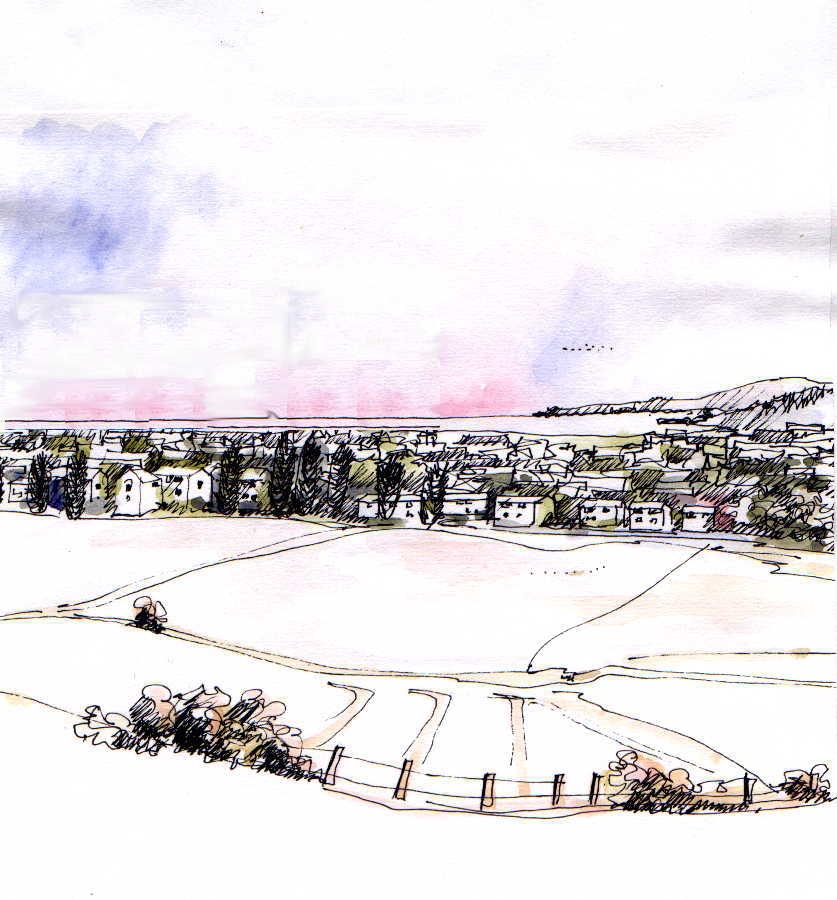
The first frost is beginning to bite, the geese are marshalling overhead and that’s all that it needs to remind me that Autumn is my favourite time.  Every season has its beauty and its charm; winter with the crisp frost and blanket of snow that covers so much ugliness and for a while transforms the city into a magical wonderland, Spring bursting through the ground, as hard as iron, with the continual surprise of new life and Summer with its early mornings by the green and long evenings on the beach, that seem as if they will never end. But, for me, Autumn has most to say and most to bring and like Keats, its colours, its songs ,its blessings far outstrip the other seasons  For me, It is packed through with memories: the time when I became one of the big boys and moved to secondary school, the time of leaving home and the first days at college, the time of coming to this city and later to our present home, the time when our daughter was married and when our granddaughter was born, the time when I fell in love.

It is the changing of the seasons that is part of the wonder. But the changes in life’s seasons carry something of the same magic. Moving on and up to the next step, the next phase, the next decade: like the new jacket, the new décor, the new strings on the guitar, the new horizons, ideas and possibilities, the new people. The breathtakingly realisation that it is all still so much bigger and grander than you could possibly have imagined.  Inevitably there is sadness and loss that is inescapable. There will always be sorrow.   I identify with Sandy Denny in “rising of the moon” “ there’s a heart in very place a tear in each farewell but that’s the way it is that is my fortune”  yes moving on is sad , saying goodbye is sad, leaving people is sad, but overwhelmingly there is the joy of the promise of the hope of the glory.  There is reminder of the reality that all that seems to be loss is in fact gain and giving up is getting more.

It is the beginning of autumn again and for me, a new phase, a new opportunity, a new beginning. I could try, but it would be impossible to describe that joy.

Crawford Mackenzie

Carers, Wasters and Losers

Lessons from the elephant herd
Image

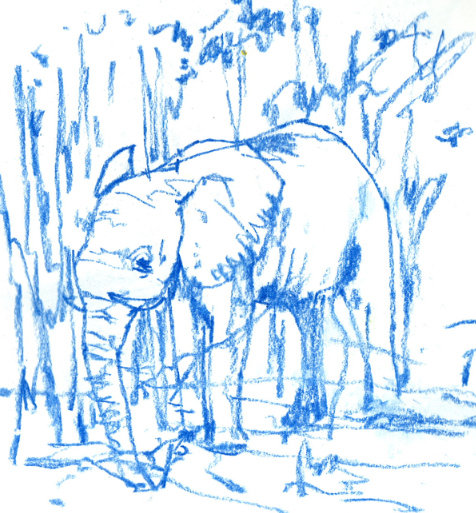
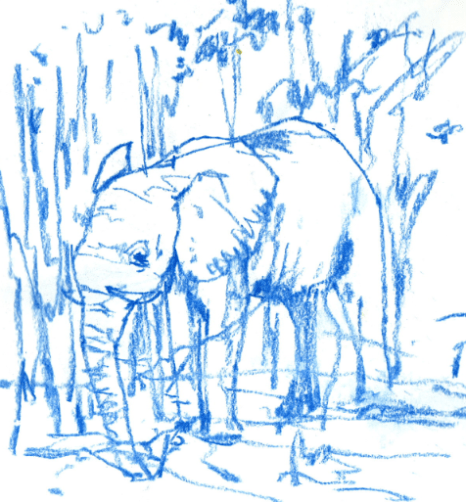
We were travelling the short distance form the ferry which had taken us across the Zambezi from Zambia on our way to the game park in Botswana, when our driver and guide suddenly brought the Landrover to a stop.  He had spotted a lone elephant at the side of the road and swung the vehicle as near as he could without startling the animal.  He need not have bothered. The elephant was fully absorbed in the business of grazing on the grass and small trees and quite unconcerned at his audience of wild life enthusiast leaning out of their seats in the high Landrover with hats, sunglasses and cameras clicking.  “This is an adult male” said our guide and he went to explain how, in common with other wild animals there were three groupings: the first group, the breeding herd, which consisted of the young , females and one significant male, the second group which he termed the “bachelor herd” which was made up of males who were kicked out of the breeding herd at puberty, and the third group which was not a group as such but consisted of the males who did not fit in or were kicked out of the “bachelor group” and who wandered on their own through the bush.  We watched this lonely looking creature with his dusty skin and deep sad eyes pull and munch at the long grass for some time. “This is a lone male” said our guide “He is a loser!”

The rest of the day was spent exploring the game reserve with many close encounters with, kudus, impalas warthogs, water buffalo, elegant antelopes, sinister crocodiles, sad hippos, numerous brightly coloured birds, majestic giraffes and the purposeful elephant breeding herd making their way through the bush in well remembered tracks.  What could not leave my mind was the thought of how the three groupings seem to mirror groupings that exist in society, and  in some measure, in the church. Here was a fascinating insight into clearly defined and differing roles.

We have the “Carers”, the breeding herd,  who are by far the largest and most influential group.  Their principal concern is with the care, protection and nurture of the young.  This demands the greatest priority, resources, time and money. This is necessarily so, as this group protects the future of the species.  The first responsibility of any grouping is just that, the care, protection and nurture of those who will come on after to continue the line.  Within the organisation of the church this is the dominant theme; children, young people and families.

Inevitably this means that there are those who do not fit in to this programme. They have no particular skill to offer and no emotional pull or burden to allow them to participate in this work. These are the “Wasters”.  They may not be described as such, or even spoken of as such, but deep within the psyche is a feeling that, as they don’t have a role with caring, they are in some senses irrelevant.  Perhaps they can find some non caring function on the edge of things but that only reinforces the feeling that they are on the outside.  The result is that they find their home and their fulfilment with the “ Bachelor herd” in sports activities, drinking, and work particularly in the heavy industries ,the miners and shipbuilders of previous years, trade unions and the armed forces. Here they find a common bond and a very deep loyalty to each other. Jackie Bird’s diary of her time with Scottish troops in Camp Bastion illustrates this very clearly. She spoke of the fierce loyalty that the troops had, not for their country, nor for their commander but to each other. In the past these would have been the ones who created the wealth, protected and defended, came to the rescue in disasters and emergencies and often with bare hands and physical strength brought the supplies, made the repairs, restored the peace. In a time of relative ease and calm, when military adventures are despised and when heavy industries have been degraded, their role is diminished. In the church it is almost non-existent.

Despite their complimentary and co dependant roles the carers and the wasters regard each other with a degree of mutual disdain. But there is another group the “Losers” who don’t fit with either “Breeding herd” or the “Bachelor herd”.  They are not club people have no affinity either with the macho world of sport, machines and militarism (usually of men) or with the homely world of the “Carers” . They wander through life on their own. They may have partners and families and they make take part in activities but that is not where there soul lies.  It is in the other world of solitude, of ideas, of beyond.  The “Carers” pity them and think they are lonely. The “Wasters” despise them and think them pathetic. Strangely they may not actually be unhappy and the sad look in their faces often belies a stout contentment.  They wander around on the fringe of society and while not strangers to the church, never seem to have found their potential there and sit on the edge

In our 21st century western smugness, it is easy to be lulled into an illusory sense that we have reached a plateau of civilisation and progress where we no longer need armies or miners or shipbuilders and that the “Wasters” should be given some soft toys to play with, fight with paintballs and vent off steam running naked through the woods. There is no place for the “Wasters” here.

It is also very easy to be lulled into a false sense of security and belief that things will go on just as they have done before.  The worst disasters happen elsewhere and are eventually tamed by television.  Even the most complicate international event will be explained once John Simpson gets to the scene. In this illusory world secured by health and safety, glossed by celebrity and covered by insurance, there is no place for a prophet of doom or a prophet of any kind for that matter. We know the future and there is no role for someone who sees over the hill and round the bend. There is no place for the “Losers”  here.

But the point is that in a healthy society each must have a part to play and in the Church every individual has a gift to bring to the work of the kingdom. Without the “Carers” there will be no future generation.  Without the “Wasters “there will be nothing left after the marauders, bullies and earthquakes have had their way. Without the “Losers” there would be no vision and where there is no vision the people perish.

Crawford Mackenzie

Everlasting Arms

Recently we were at wedding of a good friend. We had known her since she was quite young and it was a special joy to watch her grow and become the person that she is today. We shared many things over the years, including the playing and singing of songs together in a church band and it seemed fitting that I should write something for her and her husband on their special day.  It was not a specifically wedding song and strangely it has been most appreciated by those coming to terms with bereavement and loss. So for celebration or loss and for it’s worth you can find it at http://www.youtube.com/watch?v=O4FXdR6-D98&feature=youtube_gdata

EVERLASTING ARMS

There is a bond so strong and sure

Through changing times it will endure

No one on earth can every break

No power in hell can separate

There is a hope I know is true

It keeps me sane and pulls me through

Just like the sun shines on my face

I feel the warmth of his embrace

And when the storms are all around

When faith is weak hope almost is gone

He will protect me from all harm

For underneath are the everlasting arms

There is a friend and I know he’s there

He lifts me up and hears my prayer

When I fail to see or understand

Yet still he holds me in his hand

And when the storms are all around

My faith is weak my hope is gone

He’ll  keep me safe from life’s alarms

For underneath are the everlasting arms

There is a place where I belong

That knows no tears or pain or wrong

Where death is dead and night is day

Where sin and sorrow are washed away

And I long to be there in that place

To hear my name and see his face

But until then I will fear no harm

For underneath are the everlasting arms

Crawford Mackenzie ©2013 Tollcross Songs

Whatever it is, it is not rocket science

English is a very beautiful language but it is also a very powerful one.  In many ways it almost dominates the world, though the English speaking people (those for whom it is their mother tongue) are a relative minority.  It is also changing and evolving all the time and this process keeps accelerating and seems unstoppable.  New words are added to the dictionary every year, others are dropped and become anachronisms.  Nouns become adjectives (relation – relational) and verbs become nouns (transition – to transition). Sometimes the meaning changes to the opposite of the original meaning (wicked). Often politics changes the name to change the attitude (same sex marriage – equal marriage, spare room subsidy – bedroom tax) once the new name has been accepted the argument is won. It has all been said before, of course. It was in 1945 that George Orwell wrote his essay “Politics and the English language” and it has lost none of its relevance today.

Now and again you come across examples that in their passion for gobbledygook and meaninglessness, take the breath away. Here are four that came across my path recently.  1) Is a Wikipedia entry on Alan Hirsch, a contemporary Christian writer, 2) is my memory of what one individual said at a recent meeting. I was so captivated by the number of idioms strung together in a meaningless stream, I just had to write them down afterwards. 3) is Sir Humphrey from a transcript of BBC’s “Yes Prime Minister” and 4) is the instructions on who should sign a Building Standards Completion Certificate form.

1

Probably Hirsch’s most distinctive contribution was to articulate what can be called a phenomenology of apostolic movements. By probing the question of what comes together to create exponential, high impact, multiplication movements, he came up with the concept of what he calls ‘Apostolic Genius’ which is defined as “a unique energy and force saturating phenomenal Jesus movements.” Hirsch defines it elsewhere as “the built-in life force and guiding mechanism of God’s people. As to its phenomenology, it is made up of the symphonious interplay between six core elements, or “mDNA”.

2

Frankly there has clearly been a series of systematic and systemic failures and a litany of abuse that beggars belief. We have been avoiding the elephant in the room for too long and so we need to grasp the nettle and bite the bullet and carry out wholesale root and branch reforms, bringing forward a whole raft of measures and putting in place a series of robust safeguards with clear blue water between them. It will not be a silver bullet but we need to be singing off the same hymn sheet because the devil is in the detail. Now I would hold my hand up and be the first to admit that we don’t need to teach grannies how to suck eggs and we don’t want to re-invent the wheel, but it’s not rocket science.

3

“Its not fair with trident we could obliterate the whole of eastern Europe”

“But we don’t want to obliterate the whole of Eastern Europe

  It’s a deterrent

  It’s a bluff I probably wouldn’t use it”

“Yes but they don’t know you probably wouldn’t use it”

“They probably do”

“Yes they probably know that you probably wouldn’t but they can’t certainly know”

“They probably certainly know that I probably wouldn’t”

“Yes but even though they probably certainly know that you probably wouldn’t, they don’t certainly know that, although you probably wouldn’t, there is no probability that you certainly would”

4

The completion certificate must be submitted by the relevant person as defined by the Building (Scotland) Act 2003, that is –(a) Where the work was carried out, or the conversion made, otherwise than on behalf of another person, the person who carried out the work or made the conversion (b) Where the work was carried out, or the conversion made, by a person on behalf of another person, that other person (c) If the owner of the building does not fall within paragraph (a) or (b) and the person required by these paragraphs to submit the completion certificate has failed to do so, the owner.

All of the four, except one, are serious pieces and here is the question, which is also a serious one: Is it possible that that the English language will continue to change and evolve in an increasing rate and to such a point, where it becomes impossible to stay ahead or understand and then it becomes useless for communication and in future years become a dead language?

What do you think?

Crawford Mackenzie